
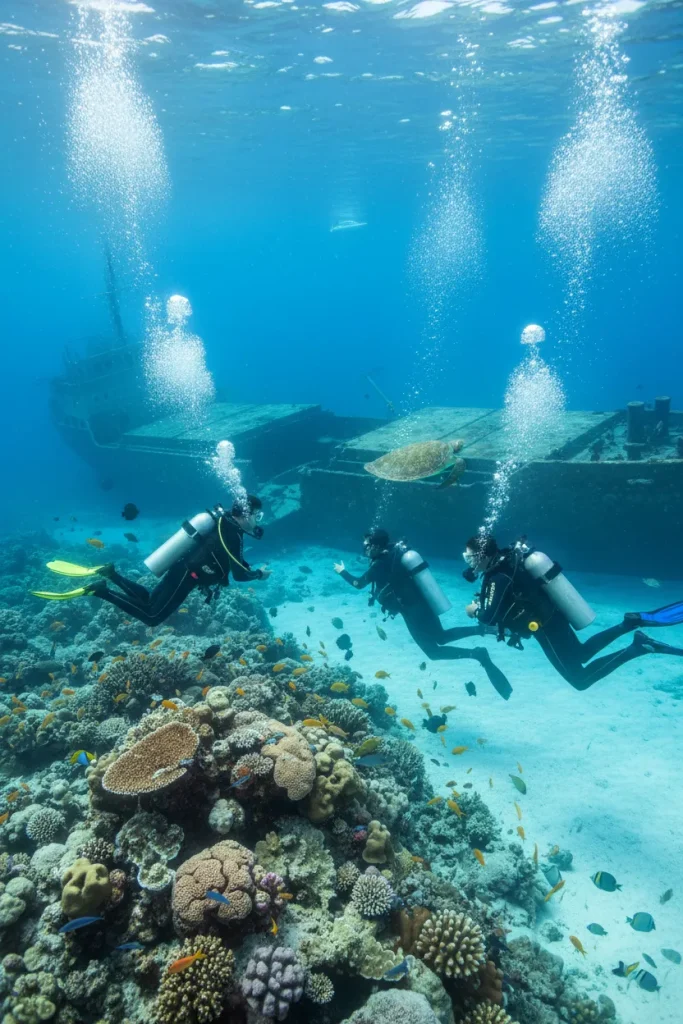
Ready to swap crowded beaches for underwater corridors of color? Scuba Diving Tours In Aruba deliver clear-water diving, lively coral gardens, and some of the Caribbean’s most famous wrecks. Whether you’re chasing the WWII hulks or shallow reefs perfect for photo-hungry snorkelers, Aruba wreck dives and Aruba reef diving offer something for every curious explorer.
You’ll find more than ten diveable wrecks around the island, plus intentionally sunk vessels that now hum with life. Local operators like Pelican Adventures and Red Sail Sports run Aruba dive tours from Oranjestad and Palm Beach, providing gear, guides, and short flights from the U.S. that make Aruba scuba trips easy to pack into a week away.
“The visibility was unreal—like swimming in a gin-clear aquarium,” says Lisa from Denver after a morning boat run to the SS Antilla. Another guest, Marcus from Atlanta, told us his Aruba clear water diving felt safe and relaxed thanks to calm currents and friendly guides.
Keep reading to learn where to book reef swims, plan Aruba wreck dives, and pick the right Aruba dive tours for families, solo travelers, or seasoned divers looking to explore deeper wrecks and vibrant reefs. We’ll help you choose the best Aruba scuba trips for what you want to discover underwater.
✅ Browse Aruba Tours On Viator
Planning what to do? Explore our Aruba Tours & Things to Do guide for tours, activities, and trip ideas.
Planning a trip to Aruba? Explore our Aruba Guides for hotels, tours, beaches, and travel tips.
Why Aruba Is a Top Choice for Caribbean Scuba Diving
Aruba draws divers with a mix of natural reefs and intentionally sunk wrecks, giving you variety in every dive. The island’s reputation for clear, easily accessible sites makes it a favorite for photographers and explorers looking for both shallow and mid-depth adventures.
Overview of Aruba’s diving reputation
Divers praise Aruba diving reputation for the sheer number and range of wrecks. You can explore World War II freighters, purpose-sunk aircraft, and shallow wrecks that host thriving marine life. Shops on Palm Beach and Oranjestad run daily trips, which keeps access convenient for independent travelers and families.
Visibility, currents, and year‑round diving conditions
Many sites offer excellent Aruba visibility, often exceeding 60 feet, which is perfect for wreck penetration and wide-angle shots. Some locations on the northeast coast can have stronger currents, so pick sites that match your experience and check local briefings.
Aruba sits south of the main hurricane belt, so most operators advertise year-round diving Aruba. Peak season runs December through April, when boat space fills up fast. Visit in the shoulder months for quieter sites and similar water conditions.
Marine biodiversity: reefs, sponges, turtles, and reef fish
Reefs and wrecks on Aruba host dense sponge gardens, colorful corals, and schooling reef fish. You’ll often spot angelfish, moray eels, lobsters, and green sea turtles around both natural and artificial structures.
Artificial reefs like the Debbie II and the sunken aircraft have developed full communities that attract macro life and larger visitors such as stingrays and batfish. This blend of species and structure explains much of Aruba marine biodiversity and keeps repeat dives interesting.
Scuba Diving Tours In Aruba
Aruba offers a mix of easy beach entries and short rides to blue-water sites, so you can pick a pace that fits your group. Local shops and liveaboard partners run Aruba dive tours that cater to families, certified divers, and photographers. You’ll find options that pair calm reef swims with deeper wreck explorations in a single day.
Types of tours available: guided shore dives, boat dives, and private charters
Guided shore dives are common near hotel zones and Renaissance Island, making them perfect for quick morning or late-afternoon dives. Shops that specialize in guided shore dives Aruba keep groups small and accessible for newer divers.
Aruba boat dives cover reef lines, the SS Antilla, and airplane wrecks. Many operators list two-tank morning trips and single-afternoon runs among their Aruba boat dives. Private dive charters Aruba let you tailor depths, sites, and timing for photographers or mixed-skill groups.
Typical tour itineraries focused on reefs, wrecks, and clear-water sites
Most itineraries follow a simple rhythm: a morning two-tank trip that mixes a shallow reef with a wreck, or an afternoon session concentrated on one historic site. Wreck-only days run for experienced divers and often include longer bottom times on deeper targets.
Private charters often combine a shallow, photo-friendly reef with a deeper wreck such as the SS Antilla or Debbie II. That split helps families and mixed-skill groups get meaningful dives without sacrificing safety or sightlines.
What’s included: gear rental, guide ratios, dive profiles, and certification requirements
Standard inclusions for Aruba dive tours are tank fills, weights, basic boat gear, and a pre-dive safety briefing. Many shops provide dive gear rental Aruba items like regulators, BCDs, wetsuits, and dive computers for a modest fee.
Guide-to-diver ratios vary by operator and dive type. Expect 1:4 to 1:6 for wreck dives where guides must manage depth and navigation. Shops enforce certification minimums: Open Water suits reef and shallow wreck sites, while Advanced Open Water and logged deep dives are advised for SS Antilla and deeper wrecks near 55–70 feet.
Operators require drift-diving experience or guided drift procedures on sites with stronger currents. That policy keeps profiles conservative and teams focused on safety and enjoyment.
Top Wreck Dives to Book on Aruba Tours
Aruba wreck dives rank among the island’s most memorable underwater experiences. You can choose sites that suit your comfort level, from shallow snorkeling wrecks to deeper targets for experienced divers. Below are wrecks commonly featured on guided tours and private charters.
SS Antilla — World War II German freighter highlights and depth profile
The SS Antilla dive sits on its port side at roughly 55 feet, with bow pointing back toward the island. At over 400 feet long, it stands as one of the largest wrecks in the Caribbean and draws photographers for its dramatic silhouette.
Coral and sponge growth cover much of the hull, creating habitat for tropical fish and occasional larger visitors. This site suits experienced divers because of depth and scale; guided tours focus on safe navigation and photo-friendly lines.
Pedernales — shallow historic tanker with on-deck artifacts and marine life
Pedernales Aruba rests in shallow water near 12 feet, making it ideal for snorkelers and novice divers. The mid-section exposes cabin fragments, washbasins and rusty pipelines that tell its wartime story.
Expect large schools of angelfish, damsels and resident moray eels weaving through the wreckage. Long bottom times help you study small details and watch marine life settle into the structure.
SS California and Debbie II — locations, currents to expect, and notable marine growth
The SS California lies off the northeast coast at about 45 feet. Currents can pick up around this site, so dive operators advise checking conditions before descending. Scattered hull pieces sit amid healthy coral formations.
The Debbie II wreck was sunk intentionally in 1992 as an artificial reef. This 120-foot fuel barge lies on its keel between 55 and 70 feet, with the wheelhouse roof and pipelines still visible. Barrel sponges, lobsters, stingrays and turtles make frequent appearances around the Debbie II wreck.
Airplane wrecks (YS-11 & Convair 240) — unique artificial reefs and wildlife communities
Aruba airplane wrecks lie on sandy bottom south of Renaissance Island. The Convair 240 broke apart during Hurricane Lenny in 1991, while the YS-11 was sunk later to form habitat and remains largely intact.
These metal frames attract coral polyps and small reef fish. They make easy swim-around dives for photographers and macro fans, and they work well for mixed-ability groups and snorkel tours.
- Tip: Ask your operator about guide-to-diver ratios and current forecasts before booking any wreck dive.
- Tip: Bring a stout dive light and a compact camera for detail shots on the shallow wrecks and airplane sites.
Best Reef and Clear-Water Dive Sites for Snorkelers and Scuba Divers
Aruba rewards both snorkelers and scuba divers with easy access to shallow coral gardens and glassy channels. You can step off a hotel beach or take a short boat ride to explore calm spots where Aruba clear water makes marine life pop. Families and independent travelers will find these sites simple to reach and gentle to swim.
Coral gardens near hotel zones
Shallow reefs sweep around high-rise hotels and Renaissance Island, creating classic coral gardens Aruba visitors love. Resorts and operators such as De Palm Tours or local dive shops run frequent Aruba snorkeling trips and shore dives that put you over vibrant coral and sand channels. Glass-bottom boats give a dry look while guides point out fragile patches to avoid.
Where the reef life gathers
Look for barrel sponges and dense schools of reef fish along ledges and patch reefs. Artificial structures like the Debbie II and various airplane wrecks attract lobsters, moray eels, and tiny macro critters hiding in crevices. If you want close-ups for Aruba dive photography, search sponge faces and crevices for shrimp and crabs while watching deeper wrecks or reef edges for turtles and larger visitors.
Visibility and the best light for photos
Morning dives usually offer the calmest seas and the most direct light, which helps color come through in photos without heavy strobes. Midday is great for shallow reef shots where natural light reveals bright corals and schooling fish. Deeper wrecks deliver dramatic scenes, but Aruba dive photography there often needs strobes to restore reds lost with depth.
Quick tips for planning
- Book morning slots during breezy months to reduce surface chop and keep Aruba clear water glassy.
- Ask guides about recent sightings if you want specific macro subjects or frequent turtle activity.
- Bring a short macro lens and a wide-angle setup if you plan mixed reef and wreck shoots on the same day.
What to Know Before You Go: Safety, Certification, and Logistics
Aruba offers gentle reefs and dramatic wrecks, so a quick checklist before you book will make your trip smoother. Pay attention to local rules, operator policies, and the kind of dives you want to do. This helps with Aruba dive safety and keeps your group relaxed on the boat and underwater.
Recommended certifications and experience
Shallow sites like Pedernales work well for snorkelers and newer divers because they sit around 12 feet. Major wrecks such as the SS Antilla and Debbie II sit deeper, roughly 55–70 feet, and suit divers with Open Water plus logged dives. Many operators suggest Advanced Open Water or proven deep-diving experience for large wrecks or drift-prone sites. If you plan penetration or overhead work, expect shops to require specific wreck dive certification Aruba or proof of training.
Safety briefings and current management
Every reputable Aruba operator runs a pre-dive briefing and a strict buddy-check routine. Guides outline entry and exit procedures, depth limits, and emergency signals. Sites exposed to currents, like the SS California on the northeast coast, are handled with smaller groups and experienced guides who choose launch times to minimize risk.
Boat safety and emergency plans
Before you board, confirm that the boat carries oxygen, a first-aid kit, VHF radio, and that crew members hold CPR and oxygen training. For deeper wreck trips, ask which recompression chamber covers the island or the nearest facility on the mainland. Clear emergency plans improve trust and reinforce Aruba dive safety for everyone on the trip.
Travel planning from the United States
Aruba is a short-haul option from many U.S. gateways, so flights fill fast in the high season from December through April. Book early if you have limited vacation days or specific dive goals. Keep in mind seasonal weather windows and hurricane season timing when you choose dates.
Insurance, permits, and local rules
Buy dive insurance Aruba that covers decompression illness, evacuation, and gear loss. For multi-day trips or liveaboards, trip cancellation coverage is wise. Check operator policies on no-penetration rules, marine-protection zones, and required permits for certain wrecks. Confirm gear rules and cylinder fills so you avoid day-of surprises.
Practical Aruba dive logistics
- Arrive with copies of certifications, logged dives, and emergency contacts.
- Ask the shop about guide-to-diver ratios and whether the trip suits kids or less experienced divers.
- Plan for airport transfers and any extra time for gear handling, especially if you bring your own tanks.
With these points checked, you and your group can focus on what matters most: clear water, rich reefs, and memorable wreck dives around Aruba.
Choosing the Right Dive Operator and Tour Package
Picking the right operator shapes your whole dive trip. Think about experience, safety, and how flexible the schedule is. Small choices now save time and hassle on-site.
Questions to ask dive shops
Start with straightforward Aruba dive shop questions about guide credentials and wreck experience. Ask whether instructors hold PADI, SSI, or NAUI certifications and how often they run the SS Antilla or Pedernales trips.
Confirm typical group sizes; for wreck dives a 1:4–1:6 ratio is common and safer for complex sites. Check rental gear age, maintenance records, and whether dive computers and backup regulators are available.
Clarify tank types and fills — aluminum versus steel affects buoyancy — and whether shops offer nitrox. Ask how operators manage drift dives, emergency procedures, and oxygen readiness.
Liveaboard vs. day trips vs. resort dives
For most Aruba stays, day trips and private charters provide excellent access to top sites without committing to long itineraries. Aruba liveaboard alternatives exist for divers wanting to visit multiple islands, but they suit longer Caribbean stretches better than short Aruba vacations.
Choose day trips for variety and convenience. Pick private charters when you want a custom plan for family groups or photo shoots. Resort dives work when you value ease and one-stop booking.
Match the format to your fitness and certification. If you plan multiple deep or drift dives, select an operator experienced with those profiles.
Booking tips, cancellation policies, and seasonality
Book early during peak season (December–April) to secure preferred dates and boat space. Off-peak months (June–November) often have lower rates but carry typical hurricane-season risks.
Read cancellation rules closely: check deposit amounts, refund windows, and weather or safety clauses. Confirm whether operators offer flexible rebooking for last-minute weather changes.
Use trusted booking channels or local dive-resort partnerships for added protection. Travel advisors can compare packages and may negotiate extras like free nitrox fills or gear discounts when booking dive tours Aruba.
- Tip: Ask for a written gear checklist and emergency contact details before you confirm.
- Tip: Compare a few providers to find the best dive operators Aruba that match your style and safety needs.
- Tip: If you prefer multi-day exploration, investigate Aruba liveaboard alternatives alongside day-trip itineraries.
Guest Quotes and Real Diver Experiences
Visitors often sum up Aruba dive experiences with a mix of awe and practical advice. Many Aruba diver reviews praise the mix of shallow, photo-friendly reefs and dramatic wrecks such as the SS Antilla. Read on for short firsthand impressions, practical tips, and the common threads that show up in guest feedback.
Firsthand impressions of big wrecks
- “The SS Antilla felt like stepping into history,” one diver wrote, noting the size and coral growth. SS Antilla testimonials frequently highlight clear visibility and abundant schooling fish around the hull.
- Shallow wrecks like the Pedernales get mentions for accessibility. Families and snorkelers point out the eerie on-deck artifacts that sit close to the surface.
What guests say about reef life and guides
- Reviewers report healthy barrel sponges, reef fish, eels, and lobsters on both natural reefs and artificial structures. These observations show up across Aruba dive experiences.
- Guide quality comes up in most Aruba diver reviews. Guests prefer small groups and guides who spot macro life and suggest the best photo angles.
Practical diver tips Aruba visitors share
- Morning dives often have calmer seas and better light. Many photographers plan wreck dives with strobes for deeper sites and mid-day reef shots without flash.
- Off-peak travel can mean fewer crowds and better rates, yet you should keep hurricane season timing in mind.
- Shallow wrecks and airplane sites are good options for snorkelers or mixed groups. For deeper or current-prone wrecks, confirm certification and ask for experienced guides and small group sizes.
Short takeaway from multiple guests
Across independent reports, the pattern is clear: operators that prioritize safety briefings, maintain small groups, and employ knowledgeable local crews earn the best Aruba diver reviews. Those SS Antilla testimonials and reef notes help future divers pick the right operator and plan smarter dives.
Conclusion
Aruba’s mix of more than ten wrecks, vibrant reefs, and crystal-clear water makes it one of the most flexible Caribbean dive destinations. From the WWII relics like SS Antilla and the shallow Pedernales to intentionally sunk sites such as Debbie II and airplane wrecks, you can choose family-friendly snorkeling or technical wreck exploration depending on your certification and comfort.
For most visitors, day trips, private charters, and resort dives are the best formats—liveaboards are less common here. When you book Aruba dive tours, prioritize operator safety standards, guide experience, and clear cancellation policies. Booking early for peak season helps secure your preferred times and vessels; consider off-peak travel for quieter sites and lower rates.
Practical Aruba dive planning means matching sites to skill level, scheduling morning dives for calm seas and better light, and carrying dive insurance for peace of mind. With a reliable operator and simple preparation, Scuba Diving Tours In Aruba conclusion is this: the island delivers accessible, authentic underwater discovery for independent travelers and families seeking reefs, wrecks, and clear Caribbean water.