
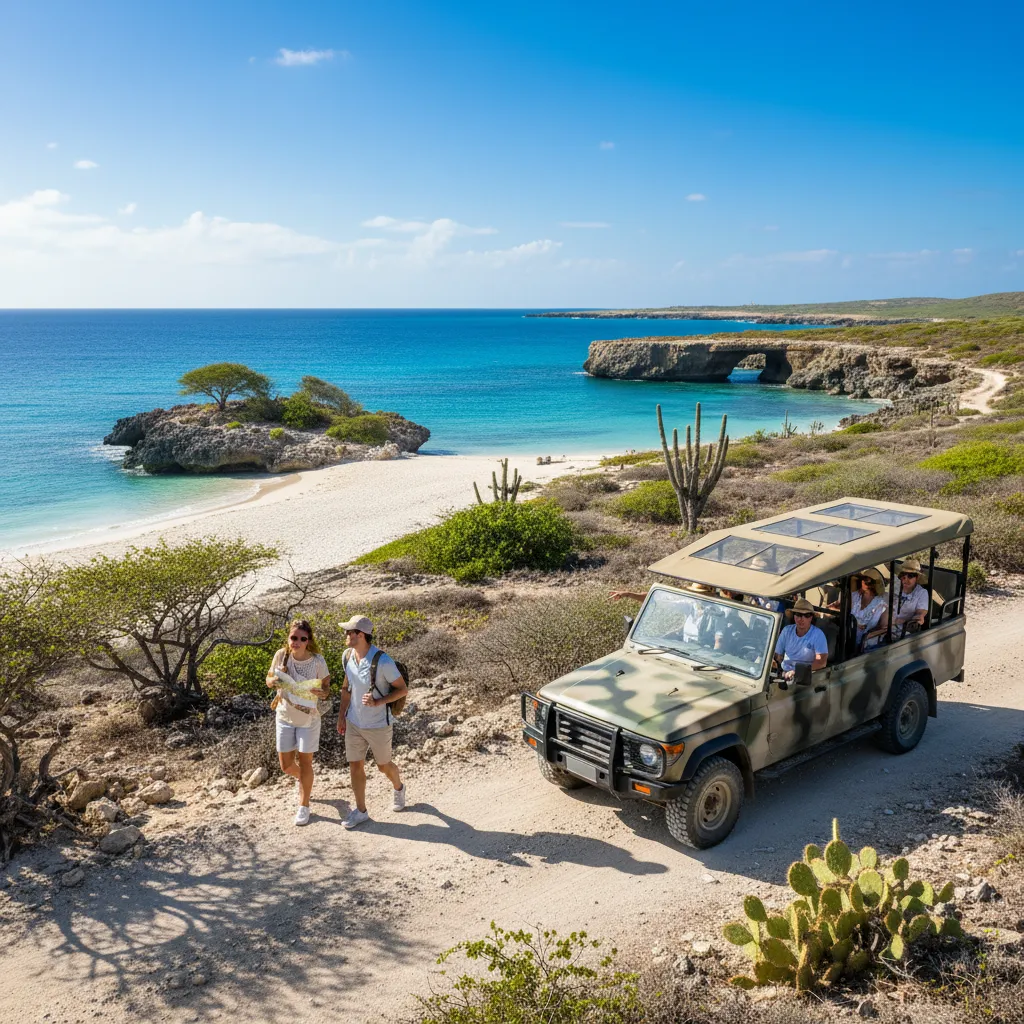
Trying to decide whether to book a guided tour in Aruba or explore independently? The best choice depends on your travel style. A guided tour is usually better for first-time visitors who want easy logistics, local insight, and less planning, while going on your own can be a better fit if you want more freedom, flexibility, and time to wander at your own pace.
Aruba is sunny, compact, and easy to get around, which is why both options can work well. Whether you want the structure of a Natural Pool tour or the freedom to linger at Eagle Beach, the real decision comes down to convenience versus control.
Guests say it best. “Booking a Natural Pool tour saved us time and stress — the guide handled permits and tough roads,” says traveler Sarah from Chicago. “But renting a car let my family find quiet coves we never would have seen on a group trip,” adds Miguel from Miami.
This first-time visitors guide shares practical travel tips, real traveler quotes, and quick takeaways so you can decide whether to book a tour in Aruba or explore independently with confidence.
✅ Browse Aruba Tours On Viator
Planning what to do? Explore our Aruba Tours & Things to Do guide for tours, activities, and trip ideas.
Planning a trip to Aruba? Explore our Aruba Guides for hotels, tours, beaches, and travel tips.
Aruba First-Time: Tour Or Explore On Your Own?
Deciding whether to book a guided itinerary or strike out on your own shapes how you’ll remember Aruba. The phrase captures a simple split: organized, guided experiences with set routes and logistics, or self-directed days using rentals, taxis, walking, or public transport. Both ways work on this compact, roughly 19-mile-long island. Your choice comes down to time, energy, and what you want to feel at the end of the day.
What the phrase means for first-time travelers
For many first-time Aruba decisions are about ease versus freedom. Guided trips remove planning friction and often include timed access to spots that can be tricky on your own. Independent plans offer flexible pacing and more privacy.
Typical tour formats
Aruba tour types range from short to all-day options. Half-day outings focus on a single activity, like snorkeling or a quick heritage stop, and usually include pickup and drop-off.
Full-day island jeep, UTV, or ATV safaris blend off-road driving with beach swims. Operators such as ABC Tours run Island Ultimate Jeep Safari-style experiences that visit the Natural Pool, California Lighthouse, and Baby Beach.
Snorkeling cruises travel by catamaran to reefs and shipwrecks and often feature lunch or a champagne brunch. Guided cultural tours include museum stops, Aruba Aloe Factory & Museum visits, and Bon Bini Festival-style shows.
Independent exploration options
Aruba self-drive options cover rental cars and UTV/ATV self-drive rentals from providers like Jeans Rentals Aruba or Ruff Riders. Cars make reaching remote places such as Boca Prins or Savaneta straightforward.
Self-drive UTVs suit adventurous groups who want off-road freedom. Walking, public transport, and taxis work well inside hotel districts like Palm Beach and Eagle Beach when you prefer short outings without renting a vehicle.
How to match your vacation goals to either option
If your priority is efficient sightseeing and curated highlights—Natural Pool, Renaissance Island flamingos, Bushiribana ruins—guided tours deliver those hits with local context and fewer logistics. Tours can also handle park entry and timed access.
If you want flexible beach days, to linger at snorkeling spots like Malmok and Mangel Halto, or to save by self-catering, independent travel fits better. Aruba travel formats let you mix a guided day with several self-led days so you get both structure and freedom.
- Quick sightseeing: choose a half-day guided tour.
- Off-road adventure and curated stops: book a full-day jeep/UTV safari.
- Flexible beach and snorkeling time: opt for rental cars or UTV self-drive.
Why Visitors Choose Guided Tours in Aruba
Picking a guided option can turn a busy day into a smooth, rewarding experience. You get a clear plan that moves you between highlights without the stress of navigation, permits, or parking. Guides handle timing, point out island history, and pick the best windows for weather-sensitive stops.
Benefits and curated highlights
- Natural Pool tour visits are routed to avoid long hikes when the surf is rough and to give you safe viewing or swimming time.
- Stops like California Lighthouse, Bushiribana Gold Mill Ruins, Fontein Cave, and Natural Bridge sites are scheduled so travel time between each feels efficient.
- Packages often combine snorkeling, scenic overlooks, and short hikes so you experience more of the 19-mile island in a single day.
Logistics made easy
- Pickup and drop-off from hotels removes the need to rent a vehicle or hunt for parking.
- Many full-day options, such as an Aruba jeep safari, include Arikok National Park entry or handle Renaissance Island access when tickets are limited.
- Guides know when to visit high-demand spots so you spend time enjoying the view rather than waiting in line.
Safety and local insights
- Local guides and park rangers share practical tips: best snorkeling spots, safe jump points around the Natural Pool, and how tides affect trails.
- Multilingual guides cater to English-speaking visitors and explain cultural context at sites like Fuentein Cave petroglyphs.
- Guides monitor conditions and will alter plans if ocean or trail safety is a concern, which is helpful for families and less-experienced hikers.
Who benefits most
- First-time visitors with limited time who want curated highlights without planning every detail.
- Families and travelers who prefer a chauffeur-style day and structured activities.
- Anyone who values convenience and wants the value of multiple experiences—snorkeling, a Natural Pool tour, and flamingo viewing—packed into one outing.
A guided day can cost more than going solo, but for many it offsets time lost to planning and driving. If you want to relax and let a knowledgeable local show you the island, guided tours Aruba and an Island jeep safari are easy ways to get the most from a short stay.
Why Visitors Opt To Explore Aruba On Their Own
Choosing to explore Aruba independently gives you control. You set the pace, pick the beaches you love, and return to spots that deserve extra time. This approach fits travelers who prefer discovery over a fixed itinerary.
Flexibility
With a build-your-own itinerary you can linger at Eagle Beach for sunrise, move to Palm Beach for water sports, or spend a slow afternoon at Baby Beach. Quiet coves like Boca Prins and Savaneta are easier to visit when you drive yourself. If the wind picks up, you can chase calmer waters without waiting on a group.
Cost control
Renting a place and cooking cuts lodging and dining bills. Many visitors report Airbnb Aruba savings when comparing a three-bedroom house with a washer, grill, and pool to a small beachside hotel room. An Aruba rental car lets you stay outside the resort strip and shop at local groceries, keeping food costs down and freeing budget for special meals at places like The Flying Fishbone.
Freedom to linger
Aruba snorkeling beaches such as Malmok and Mangel Halto reward slow visits. You can spend hours spotting reef fish, eels, and nudibranchs without rushing back to a tour schedule. Photo ops — the I ♥ Aruba sign, the Big Red Anchor, and San Nicolas murals — fit naturally into a day when you drive between stops.
Who this suits
- Experienced drivers comfortable with right-hand traffic and local road signs.
- Budget travelers who want to trade some convenience for lower nightly rates and grocery savings.
- Repeat visitors who know favorite beaches and prefer unstructured discovery.
An Aruba rental car or UTV expands choices and neighborhood options. If you want to explore Aruba independently, this method gives you freedom, savings, and the chance to craft a trip that feels wholly yours.
Practical Things To Know Before You Book a Tour or Rent a Vehicle
Aruba fits comfortably into a long weekend. The island is about 19 miles end to end, so plan roughly an hour for cross-island drives. Keep in mind Aruba driving rules: you drive on the right, rental cars and UTVs display visitor “V” plates, and typical trips from hotel zones to spots like the Natural Pool or San Nicolas range from 30 to 90 minutes depending on roads and traffic.
Transportation basics
Pick the vehicle that matches your plans. A standard car handles paved roads and beach parking. UTVs and ATVs reach rugged trails and secluded coves but cost more and demand careful handling on rocky sections. Estimate extra time for unpaved stretches and slower UTV driving when mapping your day.
Permits, park fees, and safety
Arikok National Park covers a big portion of the island and often charges entry. Check current Arikok National Park fees before you go. Some tours include park entry and ranger guidance, which simplifies logistics.
Natural Pool access depends on sea conditions. Guides and rangers monitor safety and may restrict swimming when waves are strong. Respect their advice and wear sturdy footwear for rocky exits.
Sunscreen rules protect reefs. Pack reef-safe sunscreen Aruba approved varieties only; banned formulations have been enforced since 2020 to preserve marine life.
Costs and budget tips
Tours vary: half-day outings cost less, while full-day Island Ultimate Jeep safaris often include remote stops and command higher rates. UTV rentals let you reach off-road sights but expect higher daily fees than standard cars.
- Car or UTV: compare per-day rates and insurance options.
- Snorkel gear: buying a set for about $15–$30 usually beats repeated rentals and is handy for return trips.
- Dining: groceries plus an Airbnb meal or two can lower costs compared with dining out daily.
Packing and preparation
Bring water shoes or lightweight sneakers for uneven shorelines and UTV days. A compact travel snorkel set and a dry bag protect gear on wet excursions. Carry small cash for museum admissions like Fort Zoutman and local festival tickets.
For comfort and safety, include sun protection beyond sunscreen: a wide-brim hat, UV-blocking sunglasses, and a reusable water bottle. These items keep you exploring longer and reduce impulse purchases on the island.
Top Experiences to Consider Whether You Book a Tour or Go Solo
Aruba rewards both planners and wanderers. Pick a guided day to reach remote highlights safely, or map your own path to the island’s best spots. Below are standouts that fit guided itineraries and DIY days alike.
Must-see attractions often included in tours
- Natural Pool Aruba (Conchi) sits inside Arikok National Park. Guides know the safest routes and surf windows, yet you can reach it by hike or UTV if you prefer independent adventure.
- Arikok National Park covers a big slice of the island and holds Fontein Cave with Arawak rock art and coastal trails that reveal dramatic geology.
- The California Lighthouse perches on the north coast and offers wide ocean views and nearby restaurants for a relaxed stop.
- Fontein Cave features stalactites and indigenous drawings; park rangers often share context that brings the site to life.
Beaches and snorkeling spots ideal for independent visits
- Eagle Beach is a classic stretch of soft white sand, perfect for laid-back beach days and sunset photos.
- Palm Beach sits in the hotel corridor and gives you easy access to water sports and dining.
- Baby Beach offers calm, shallow water that suits families and snorkelers looking for colorful fish close to shore.
- Malmok and Mangel Halto provide some of the best shore snorkeling. Bring your own gear to linger where coral and reef fish concentrate.
Unique island stops that work guided or self-directed
- Renaissance Island flamingos are a rare, iconic draw. Book access through Renaissance Wind Creek Aruba Resort or plan ahead if you want to walk among the birds.
- Bushiribana Gold Mill Ruins make for dramatic coastal photos and a quick stop on a rugged route.
- San Nicolas murals turn a short walking tour into a deep dive in local art and culture; you can join a guided mural walk or explore at your own pace.
Adventure options for thrill-seekers
- UTV and ATV rentals let you explore off-road beaches and hidden coves. Choose a guided run for safety and local tips, or go self-drive if you have off-road experience.
- Guided jeep safaris mix sightseeing, snorkel stops, and island lore in one active day, which makes them a great match for travelers who want both thrills and context.
Whether you chase Aruba attractions with a guide or follow your own curiosity, plan around conditions, carry reef-safe sunscreen, and leave time to simply sit and watch the sea. That slow hour often becomes the trip’s favorite memory.
Who Each Option Is Best For — Traveler Profiles and Scenarios
Deciding between a guided day and exploring solo comes down to how you like to travel. Below are clear profiles to help you choose. Read them and match your style to the right option.
Guided tours suit travelers who want a lot packed into a short time.
- First-time visitors with only a few days on the island often prefer organized itineraries like the Island Ultimate Jeep Safari for efficient sightseeing.
- Families appreciate hotel pickup, child-friendly pacing, and staff who handle logistics and safety, which makes Aruba family travel smoother.
- Visitors seeking curated access—such as Flamingo visits on Renaissance Island or guided access to the Natural Pool—gain value from experienced guides.
Independent exploration works best for people who value flexibility and cost control.
- Budget-conscious travelers who save on lodging and meals by using Airbnb and cooking can stretch a trip further while enjoying beaches at their own pace.
- Repeat visitors who know the routes prefer to linger at Eagle Beach, Baby Beach, or snorkeling spots like Malmok without a schedule.
- Adventurous drivers comfortable with UTV or ATV rentals enjoy off-road discovery and hidden coves that guided routes might skip.
A hybrid approach blends both methods for balance.
- Book one or two highlight tours—Natural Pool or a full‑island jeep—and plan self-led days for snorkeling, shopping at Paseo Herencia, and casual beach time. This Aruba hybrid travel plan keeps guided insight and personal freedom in balance.
- Mixing options helps control costs while ensuring you don’t miss signature sites that require local knowledge.
Accessibility and family considerations deserve special attention.
- Families with young children find De Palm Island and the Butterfly Farm easy, calm choices that work with guided or self-planned days, reinforcing Aruba family travel comfort.
- Travelers with mobility limits should avoid rugged paths to the Natural Pool unless a tour offers vehicle access; accessible sites include Fort Zoutman and the Aruba Aloe Museum.
- If you wonder who should book Aruba tour options, consider whether you want driver-free days, extra supervision for kids, or guaranteed entry to timed attractions.
Use these Aruba traveler profiles to pick the path that fits your trip. If you want time savings and curated highlights, book a tour. If you prefer discovery and low cost, plan to go solo. If you want both benefits, adopt an Aruba hybrid travel plan that blends guided days with open-ended beach time.
Guest Quotes and Real-World Examples From Recent Travelers
Travelers shared quick snapshots that help you decide whether to book a tour or go it alone. These Aruba traveler quotes and Aruba trip examples highlight real choices, small savings, and memorable moments from stays across the island.
Cost and saving strategies:
- “We rented a three-bedroom Airbnb for about $150 per night and cooked most dinners. That cut dining costs a lot compared with hotels charging roughly $250 a night for a small room.”
- “Buying a snorkel set for $25 was smarter than renting gear every day. Little purchases like that added up to clear Aruba cost savings.”
Vehicle rental and freedom:
- “Renting a compact car made exploring pockets of the island easy. We stayed in a quiet neighborhood away from Palm Beach and loved the extra freedom.”
- “We rented a UTV for a day and reached the Natural Pool faster. Off-road tracks and rugged views turned that rental into the highlight of the trip.”
Guided tour highlights:
- “The Island Ultimate Jeep Safari with ABC Tours was worth every penny. Full-day pickup, Natural Pool snorkeling, Baby Beach stops, and dune rides packed a lot into one great day.”
- “I debated the hike to the Natural Pool but went anyway. The calm water, fish for snorkeling, and safe cliff-jumping made it my favorite memory.”
Ease for American travelers and local vibe:
- “Aruba felt familiar—English everywhere, U.S. franchises, and driving on the right. That comfort makes it a relaxed first Caribbean trip.”
- “People were friendly, the sun was out most days, and family spots like De Palm Island and the Butterfly Farm kept everyone happy. It really lived up to the ‘one happy island’ feeling.”
Below are compact Aruba trip examples you can use when planning.
- Couple on a budget: Airbnb base, grocery meals, bought snorkel gear, rented a car for island drives.
- Active explorers: UTV day for Arikok access and Natural Pool, guided jeep safari for a full-island overview.
- Family-first plan: mix of a half-day guided tour to see flamingos and a self-led beach day at Eagle Beach.
These Aruba guided tour reviews and firsthand statements show why some visitors pick tours while others value independent pacing. Use the examples and cost notes to match plans to your travel style.
Conclusion
Choosing your path on Aruba comes down to how you want to spend your time. For many first-timers, a guided tour delivers curated highlights, local context, and logistical ease — think Natural Pool access, Arikok guidance, and a driver who knows the roads. If you have limited days or are traveling with family, this option simplifies the Aruba first time decision and keeps the focus on experiences rather than planning.
If you prefer freedom to linger at Eagle Beach, hunt murals in San Nicolas, or snorkel at Malmok on your own schedule, exploring alone rewards you with flexibility and cost control. Renting a car or UTV, booking an Airbnb, and buying a snorkel set can lower daily costs and let you tailor days around mood and light for photos. This is a common route for repeat visitors and independent travelers who prioritize pace and discovery.
Most travelers find the best balance by mixing approaches. Book one big guided trip — a full-island jeep safari or a Natural Pool excursion — then spend other days self-directed at Palm Beach, Paseo Herencia, and local restaurants. That hybrid path makes it easy to choose Aruba tour or explore alone based on the day’s goals.
Final tips: pack reef-safe sunscreen, plan for park fees and Renaissance Island tickets in advance, and consider a snorkel set for repeat use. Use the island’s English-friendly vibe to ask locals for tips, and pick the style that matches your curiosity and comfort. This Aruba travel conclusion is simple: both guided tours and solo exploration shine here — pick the mix that turns your trip into the kind of adventure you want.