
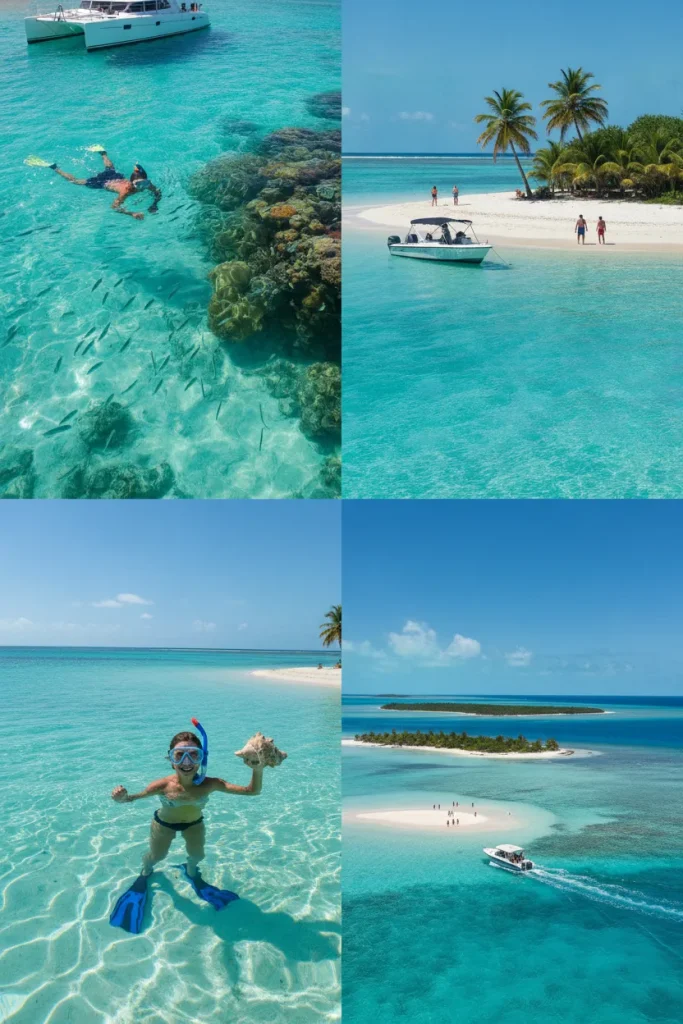
Ready to explore turquoise waters and island secrets southeast of Nassau? Snorkeling tours in Exuma offer clear bays, white beaches, and outdoor fun. You can’t fit all the adventures into one day.
Exuma snorkeling is like a key to hidden caves, mangrove channels, and famous swimming pigs. You’ll also find chances to hike, kayak, paddleboard, and fish.
For those who love to travel on their own or with family, Exuma Cays excursions are perfect. They offer flexible trips from half-day boat hops to liveaboard dive trips. These trips connect remote beaches and wildlife without the rush of cruise stops.
Guests often share amazing stories. They talk about seeing nurse sharks, iguanas, and the clearest reef. They also mention finding a private cay that felt like their own island for the afternoon.
This guide will help you find the best snorkeling spots in the Bahamas. You’ll learn about different trip styles and must-see island stops. Booking time in Exuma is worth every minute.
Why Choose Snorkeling Tours In Exuma for Crystal-Clear Water Adventures
Exuma is perfect for easy, memorable snorkeling. Its shallow banks and sandy bottoms keep the water clear. This makes it great for families and first-timers who don’t need to dive deep.
What makes Exuma’s water visibility exceptional
Exuma’s geography is key to its clear water. It has many cays, channels, and seagrass flats that calm the water. Calm bays act like windows, letting you see the reef below.
The shallow depths of snorkeling sites add to the clarity. Light reflects off the sand, showing the reef’s structure. This makes Exuma’s clear waters famous.
Typical marine life and coral species you’ll see
Exuma’s marine life is diverse and easy to see. You’ll find colorful fish, young species in mangroves, small crustaceans, and vibrant nudibranchs.
Nurse sharks are common at Compass Cay, where encounters are safe. Rocky Dundas caves have a stunning Elkhorn coral, perfect for photos.
Healthy mangroves support this ecosystem. Each snorkel feels like exploring a living classroom.
Best seasons and weather for optimal snorkeling conditions
Dry-season months have calmer seas, making visibility better. Plan for light winds and low swell for the best conditions.
Weather can change, so guides choose the best spots based on the day. For calm, clear days, ask local operators about the best time to snorkel.
Top Island Stops Included on Exuma Snorkeling Excursions
Exuma tours are packed with amazing sights. You’ll see everything from sunlit grottos to quiet mangroves. Here are the top island stops you’ll see, along with tips for enjoying them responsibly.
Big Major Cay (Staniel Cay area) — meet the famous swimming pigs
The swimming pigs at Big Major Cay are a big draw. They’re friendly and make great photos. The story of how they got there is a fun mystery.
Guides often bring fruit to feed the pigs. This makes for unforgettable photos. If you’re near Nassau, Ship Channel Cay is another great spot to see pigs.
Thunderball Grotto — cinematic snorkeling in a James Bond filming site
Snorkeling at Thunderball Grotto feels like a movie scene. It was featured in a 1965 James Bond film. You swim through sunlit chambers filled with coral and fish.
Braver swimmers can jump through a roof opening into the water. This adds excitement and great photo opportunities. Always follow the guide and watch for strong currents near the entrance.
Compass Cay and Rachel’s Bubble Bath — nurse shark encounters and unique rock formations
Compass Cay is famous for its nurse sharks. Visitors can see them safely under guide supervision. These sharks are calm and guides teach how to observe them.
Rachel’s Bubble Bath is nearby. Waves create bubbling pools in honeycombed rock. It’s a fun spot for a break between snorkeling.
Warderick Wells — hiking, blowholes, and park highlights near snorkeling spots
Warderick Wells Exuma Park is the heart of the Exuma Cays Land and Sea Park. Trails lead to lookout points and blowholes. There’s also Boo Boo Hill where visitors leave signs.
A beach has a large sperm whale skeleton. This reminds visitors of the importance of conservation. The park’s waters are protected, making nearby snorkeling spots rich and preserved.
Shroud Cay — mangrove snorkeling, kayaking, and the Washing Machine drift
Kayaking through mangrove tunnels on Shroud Cay is like discovering a new world. The tunnels are home to juvenile fish and colorful nudibranchs.
The Washing Machine drift is a fun surface current. It carries swimmers around sandy coves. Camp Driftwood offers beach camping and cookouts for those who want to stay longer.
Allan’s Cay — watch and feed Bahamian rock iguanas between dives
Allan’s Cay iguanas are friendly and love grapes. Visitors often feed them under guide supervision. Don’t wear purple nail polish; it attracts the iguanas.
Feeding the iguanas is best done with a guide. This keeps them healthy and wild. Always follow distance rules and avoid giving them the wrong food.
Snorkeling Spots and Underwater Highlights Worth Booking
Choose a tour that includes nurseries, wrecks, and caverns for a mix. You’ll see easy snorkeling spots, dramatic tunnels, and quiet mangrove areas. Guides plan stops for the best light and visibility.
Elkhorn coral at Rocky Dundas caves and underwater cave features
At Rocky Dundas caves, a big thicket of elkhorn coral welcomes swimmers. Inside, colorful corals and rock formations like stalactites and stalagmites await. These formations frame passageways.
Some cave walls have fossilized beetles in ancient limestone. This shows the connection between geology and marine life. Swimming through caves can lead to beams of light in clear water.
Shallow wrecks and reef systems around Staniel Cay
The wrecks near Staniel Cay are perfect for beginners and families. They support coral growth and hide fish like angelfish and snapper. This creates lively underwater scenes.
Visiting wrecks and grottos in Staniel Cay keeps things interesting. Guides show you how to see reefs without harming corals. This is great for less confident swimmers.
Mangrove nurseries: juvenile fish, crustaceans, and nudibranchs
Mangrove snorkeling in Exuma shows busy root systems. They are nurseries for young fish and crustaceans. You’ll see small snapper, barracuda, and fiddler crabs.
Look for nudibranchs and hermit crabs in the roots and seagrass. Kayaking or shallow snorkeling is best for these calm areas. Families can observe without disturbing the wildlife.
Unique swim-throughs and light shafts at underwater caves
Underwater caves in Exuma offer stunning moments with sunlight. Swim-throughs vary from short tunnels to longer passages. Guides ensure safety and brief you on how to navigate.
Guides plan for low tide or calm seas for the best visibility. These light-filled chambers make for unforgettable photos and a sense of discovery.
What to Expect on a Typical Snorkeling Tour: Logistics and Safety
Most tour operators make things easy so you can enjoy the water more. They offer tours from short half-day trips to full-day adventures. These tours often start from Staniel Cay or big marinas near Nassau.
Boats vary, from fast speedboats for island hopping to big day-charter vessels and dive liveaboards for longer trips.
Common tour lengths, departure points, and boat types
Half-day tours last three to four hours and visit one or two spots. Full-day tours are six to eight hours, with more stops, lunch, and breaks on land. Liveaboards offer overnight stays and access to more reefs.
If you want more freedom, ask about pickup times and shuttle services from local docks.
What gear is provided vs. what to bring
Many tours give you masks, snorkels, and life jackets. But, bringing your own mask and fins makes a big difference. Choose a snug mask, well-fitting fins, and a lightweight snorkel for comfort.
Don’t forget a hat, rash guard, and a quick-dry towel for sun protection.
Tip: Use reef-safe sunscreen like Badger or Sun Bum to protect coral and avoid skin problems. Guides often ask you to apply this sunscreen before swimming.
Safety briefings, tides, and entry/exit tips
Every trip starts with a safety talk about currents, tides, and how to safely enter and exit underwater spots. Guides plan entry times with the tide. Some spots are best at low tide or calm seas.
Practice calm breathing and stay with the group in underwater passages.
How guides manage wildlife interactions responsibly
Guides have strict rules for wildlife encounters. Feeding is limited or supervised for animals like iguanas and nurse sharks. They remind you to keep distance, avoid touching coral, and never chase animals.
Choose operators who clearly state their environmental practices to protect habitats for future visits.
- Check operator gear lists and confirm snorkel gear Exuma options before booking.
- Ask about emergency gear, life jacket sizes, and first aid on board.
- Confirm Exuma snorkeling tour logistics like meeting points and timing the day before departure.
- Prioritize Exuma tour safety by choosing guides with local permits and clear environmental policies.
How to Pick the Best Snorkeling Tours in Exuma: Tips and Booking Advice
Choosing the right trip starts with what you want to see and how much time you have. A short option works if you only want one highlight. A longer route lets you see Thunderball Grotto, swimming pigs, mangroves, and iguanas in one day. Think about pace, number of stops, and how many hours you want on the water before you book.
Comparing half-day vs. full-day and multi-stop itineraries
- Half-day tours: great for focused visits to a single site or if your schedule is tight. They often center on one popular stop and return early so you can explore on land later.
- Full-day and multi-stop tours: better for island-hopping. You can visit pigs, grottoes, mangroves, and local cays in one run without rushing through each stop.
- Liveaboards and extended trips: suit snorkelers and divers who want remote reefs and longer dive windows away from crowded launch points.
Reading reviews and verifying credentials
Scan traveler feedback to see how guides handle safety and wildlife. Exuma tour reviews will reveal common strengths and red flags, like punctuality, gear quality, and honesty about conditions. Check that operators follow park rules, promote reef-safe sunscreen, and outline their conservation practices before you commit.
Accessibility and family-friendly options
Many operators welcome families and non-swimmers. Look for tours that supply life jackets, offer beach-based snorkeling, and keep snorkel sites close to shore for easy exits. Confirm boarding assistance, child safety measures, and whether staff are trained in basic first aid when you book family snorkeling Exuma outings.
What to budget for: costs and extras
- Exuma tour cost varies by duration, group size, and inclusions. Half-day trips are cheaper than full-day island-hopping options.
- Factor in park fees, fuel surcharges, tips for the crew, and optional extras like equipment rental, guided shore walks, or meals.
- Compare what each operator includes—meals, snorkel gear, park permits—to avoid surprise charges on the day of your trip.
Before you book, weigh the itinerary, read Exuma tour reviews, and confirm safety and environmental practices. When you choose Exuma snorkeling tour options that match your pace and budget, you get a smoother day on the water and memories that last.
Conclusion
Snorkeling tours in Exuma offer clear waters and vibrant marine life. You’ll also visit beautiful islands that feel like hidden gems. Highlights include nurse sharks, coral reefs, and playful pigs at Big Major Cay.
Exuma’s snorkeling adventures are packed with stunning sights. You’ll see dramatic grottoes, light-filled caves, and mangrove nurseries. It’s all in one exciting trip.
When you book a snorkeling tour in Exuma, choose one that fits your energy and schedule. Half-day tours are perfect for families, while full-day trips reach remote spots. Make sure to pick a tour with a strong safety record and care for the environment.
Remember to bring reef-safe sunscreen and your own mask if you have one. Also, listen to your guide’s advice on wildlife viewing and feeding rules.
Plan your trip with curiosity and respect. Exploring the Exuma Cays offers a unique and unforgettable experience. It’s a chance to see pig beaches, shimmering grottoes, and iguana-lined shores. If you’re looking for a memorable and responsible adventure, book a snorkeling tour in Exuma.