
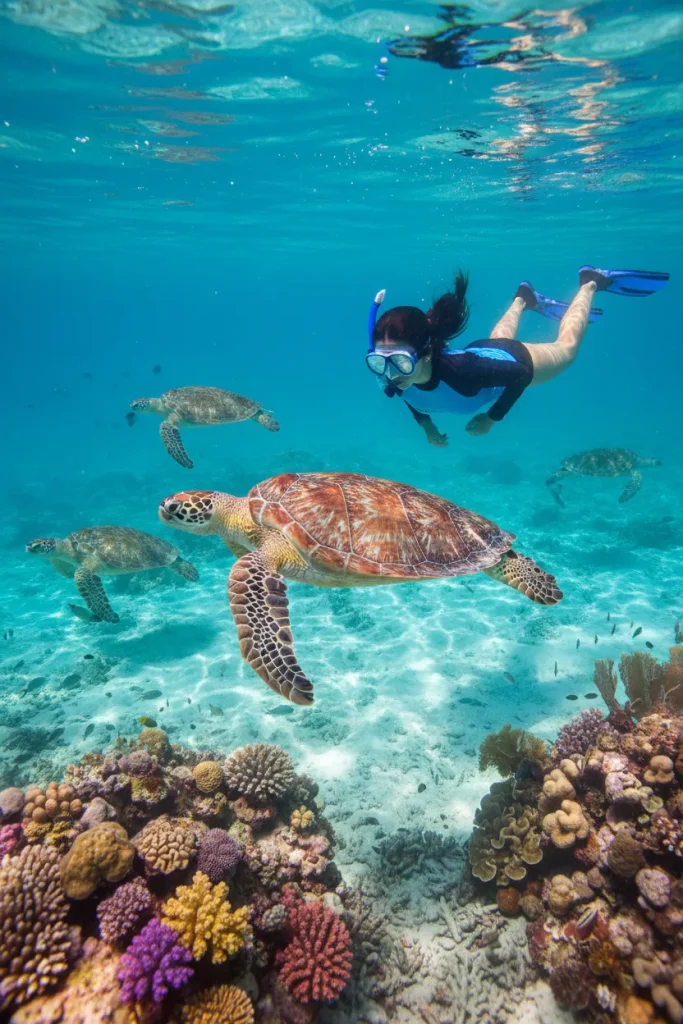
Is an Aruba turtle spotting tour worth it, or is it better to snorkel on your own? A turtle spotting tour is usually worth it if you want local guidance, easier logistics, safety support, and better odds of seeing turtles, while DIY snorkeling is better if you are confident in the water and want more freedom, lower costs, and a quieter pace.
Both options can lead to beautiful blue water, coral, and the chance to see a sea turtle glide by. A guided tour gives you structure and local knowledge, while snorkeling from shore near places like Malmok, Boca Catalina, Arashi, or Aruba Sunset Beach Studios gives you flexibility and a calmer, self-paced day.
Guests say it best. “We walked out of the studio and were snorkeling within minutes—turtles showed up near the wreck about 100 yards out,” says Maria, a recent visitor. Carlos, another guest, adds, “Eve and JP gave us the best tips—Arashi and Boca Catalina were a short drive and less crowded than expected.”
This guide compares guided turtle tours with DIY snorkeling in Aruba, including who each option is best for, what to expect, what to check before booking, and how to improve your chances of a good turtle spotting experience.
✅ Browse Aruba Tours On Viator
Planning what to do? Explore our Aruba Tours & Things to Do guide for tours, activities, and trip ideas.
Planning a trip to Aruba? Explore our Aruba Guides for hotels, tours, beaches, and travel tips.
Is The Aruba Turtle Spotting Tour Worth It
Deciding whether to join a turtle tour or snorkel alone depends on what you want from the day. If you value local knowledge, a relaxed pace, and the highest chance of sightings, a guided run can save time and stress. If you prefer quiet, flexible exploration, DIY snorkeling may suit you better.
What the organized turtle spotting tour typically includes
Most operators pack essentials into a clear itinerary so you can focus on the water. Expect local guides who know frequent turtle areas, a safety briefing, and transport to curated spots by boat or shore. Tours often schedule early departures when seas are calm to improve visibility.
Equipment varies by operator. Many provide snorkel gear rental and life vests for less confident swimmers, while some confirm your equipment needs ahead of time so nothing is forgotten. Hosts at Aruba Sunset Beach Studios frequently recommend trusted companies and can help with bookings.
Pros of booking the tour
Guided turtle tours can increase the odds of seeing sea turtles because guides follow tried-and-tested routes and read current conditions. That local expertise can also uncover other marine life and better photo angles, which is helpful if you want memorable underwater moments.
Families and first-time snorkelers benefit from reduced planning and extra safety. When your host or tour operator handles logistics, you simply show up with sunscreen and a towel. The time saved and stress avoided are often the main selling points.
Cons and common complaints
There are trade-offs to consider. Tours can cost more than shore snorkeling and sometimes run with larger groups, which reduces privacy and quiet moments on the reef.
Sightings remain subject to nature, so even the best guides cannot guarantee turtles. Weather or choppy seas may force cancellations or route changes. Some guests report preferring the solitude and slower pace of DIY trips when group dynamics feel limiting.
How Snorkeling On Your Own Compares To The Tour
If you like exploring at your own pace, snorkeling without a guide can be freeing and efficient. Staying at Aruba Sunset Beach Studios puts you close to some of the island’s best shore options. You choose when to go, how long to stay, and which nearby spots to visit.
Accessibility of top shore snorkeling spots near Aruba Sunset Beach Studios
Aruba Sunset Beach Studios sits within short reach of Malmok, Boca Catalina, and Arashi Beach. A short walk or quick drive lands you at clear entry points and shallow reefs. Guests often spot a small wreck about 100 yards off the porch in roughly eight feet of water, which makes shore snorkeling especially convenient for quick outings.
Cost, convenience, and equipment considerations
Snorkeling on your own cuts costs when you bring your own mask, snorkel, and fins or rent inexpensive gear nearby. Studio rentals and local shops stock what you need, letting you skip tour prices. Renting a car helps you hop between sites, buy groceries, and keep gear in the trunk for flexible plans.
Expect to handle logistics yourself: timing your trip around tides, carrying gear across sand, and checking weather. That trade-off buys privacy and the chance to linger in calm coves when turtles or fish appear.
When DIY snorkeling is likely to succeed
Independent snorkeling works best for confident swimmers, experienced snorkelers, and budget travelers who value solitude. If you can read light currents and fit a mask properly, you will get more time in the water and fewer interruptions.
Hosts at Sunset Beach Studios often share local tips and best entry points, which improves success for DIY outings. For less confident swimmers or first-timers, consider flotation aids or booking a guided trip for safety and local knowledge.
Who This Option Is Best For — Tour vs. DIY
Choosing between a guided turtle spotting trip and striking out on your own depends on priorities like safety, budget, and the kind of day you want. Read on to match the experience to your group and skill level.
Best for families and less experienced snorkelers
Families and newer snorkelers often find the guided route easier. Tours supply flotation devices, safety briefings, and hands-on guidance that calm nerves and speed learning. That support makes the outing feel manageable for kids, older adults, and anyone who worries about currents or spotting turtles.
Hosts at Sunset Beach Studios frequently tailor recommendations, arrange kid-friendly trips, and handle logistics like gear and timing. If you are wondering whether a turtle tour is right for your group, think about safety, convenience, and a higher chance of seeing wildlife without the stress of planning.
Best for experienced snorkelers and budget travelers
If you’re comfortable in open water and love exploring at your own pace, DIY snorkeling stretches your options. Experienced guests often head straight from Sunset Beach Studios to nearby reefs and wrecks. That short walk to shore saves money and lets you dive when conditions look best.
For families who are comfortable snorkeling independently, shore-based spots can be quieter and easier to control. Check local currents, carry a float, and scout entry points before committing to a route.
Best for people seeking a social or guided experience
Many travelers choose a tour for the stories and camaraderie. Guides from local operators share natural history, point out hidden spots, and bring groups together. Shared sightings and easy conversation make the day feel like a small adventure with new friends.
Guests often praise hosts such as Eve, JP, and Marit for arranging group excursions and matching outings to skill levels. If you want more than a swim—if you want context, safety, and social energy—you’ll likely prefer a guided trip over solo snorkeling.
What To Know Before You Book A Turtle Spotting Tour
Booking a turtle outing calls for a few checks so the day goes smoothly. Read the fine print, ask specific questions, and set realistic expectations about wildlife sightings and weather.
Check inclusions, group size, and safety measures
Before you book, confirm what the tour includes. Ask whether snorkel gear, life vests, transportation, and park fees are covered. Verify guide-to-guest ratios and the maximum group size so the experience stays personal and manageable.
Ask about safety practices, too. Find out if guides carry first-aid kits, have CPR certification, and run brief safety talks before entering the water. Check cancellation and refund policies for bad weather and medical issues.
Timing, seasonality, and realistic expectations
Plan for early departures. Morning trips usually bring calmer seas, clearer water, and fewer boats, which raises your chances of seeing turtles. No operator can promise sightings; turtles are wild animals and sightings depend on luck and conditions.
Read recent guest reviews to judge an operator’s consistency. Look for reports on visibility, crowd control, and whether guides know the best local spots. These details help you set sensible expectations for your outing.
Local recommendations and booking tips
Use local hosts and vetted operators when possible. Many guests staying near Aruba Sunset Beach Studios trust host referrals to book tours and confirm what is included. Booking through your accommodation can add convenience and local accountability.
- Ask hosts which companies they recommend based on recent guest feedback.
- Compare prices and what’s included rather than picking the cheapest option.
- Confirm pickup logistics and exact meeting points to avoid last-minute stress.
When you book, keep copies of reservation details and emergency contact numbers. That small step makes the outing easier and safer for everyone involved.
Guest Quotes and Real Experiences About Snorkeling and Turtle Spotting
Travelers write about days that blend slow mornings, porch coffee, and easy swims right from shore. Many guest reviews mention direct beach access and calm coves that make spontaneous snorkeling simple. Comments from Aruba Sunset Beach Studios guests often highlight relaxed rhythms: cook a meal, stroll to the water, and slip into clear shallows without a schedule.
Guest experiences highlighting DIY snorkeling advantages
- Several guests praise Malmok and nearby coves for calm water and a visible wreck that’s perfect for shore-based exploring.
- Guests appreciate uncrowded beaches and the freedom to move at their own pace, noting they often snorkeled multiple times in a day and returned to the studio between swims.
- Renting gear or using studio rentals made DIY days easy. Many guests recommend a good mask and snorkel for clearer views and longer, more comfortable sessions.
Guest experiences supporting guided tours
- Multiple travelers reported hosts like Eve, JP, Marit, and Edna arranging guided outings or booking boat trips that led to turtle encounters. Positive accounts emphasize the hosts’ local knowledge and quick bookings.
- Visitors who joined tours valued the safety briefings, route choices, and tips on where turtles were most often seen.
- Tours were praised for raising the odds of wildlife sightings on busy days when shore spots felt less promising.
Practical guest-sourced advice
- Bring or rent quality masks and snorkels; many guests recommend reliable gear from local shops or studio rentals to avoid fog and leaks.
- Rent a car to reach varied shore sites and grocery stores, giving you flexibility for morning trips or switching beaches based on wind and swell.
- Plan early morning outings for calmer water and clearer visibility. Combining a DIY day with a guided trip is a common tip for balancing independence with higher encounter chances.
- Trust host recommendations when they offer insider tips. Guests often note that local advice made the difference between a routine swim and a memorable wildlife sighting.
These first-hand notes form a practical picture for travelers deciding between quiet, independent snorkeling and the focused guidance of a tour.
Practical Tips For A Better Turtle Spotting Or Snorkeling Experience
A few simple habits make a big difference on the water. Respectful behavior keeps turtles safe and keeps snorkel spots open to visitors. Small preparations make each outing more relaxed and rewarding.
Safety and conservation-minded practices
Keep a respectful distance from sea turtles and avoid touching or chasing them. Use reef-safe sunscreen or wear a long-sleeve rash guard to protect coral and marine life. Follow guide instructions closely and obey posted rules at beaches.
Gear, timing, and local logistics
Bring well-fitting snorkeling gear: a mask that seals, comfortable fins, and a snorkel you trust. If you’re not a confident swimmer, add a flotation vest for ease and safety. Mornings usually offer calmer seas, clearer visibility, and fewer crowds.
Renting a car gives you the freedom to visit Arashi, Malmok, and Boca Catalina in one day. Ask your accommodation about snorkel rentals to save packing space and time.
Leveraging host knowledge and community tips
Talk to your host for trusted tour operators and the best local spots. Aruba Sunset Beach Studios hosts often share insider tips, suggest quiet coves, and sometimes accompany guests to turtle sites. Local advice speeds up planning and improves your chance of a memorable sighting.
- Before you enter the water: check conditions, reef rules, and any wildlife advisories.
- While snorkeling: move slowly, float horizontally, and let animals choose the distance.
- After your trip: rinse gear and report any unusual wildlife encounters to local authorities.
Conclusion
Deciding whether an Aruba turtle spotting tour is worth it comes down to priorities. If you want higher odds of turtle sightings, fewer logistics, and guided safety—especially for families or beginners—a turtle spotting tour is likely worth it. Tours bring local knowledge, set timings, and equipment so you can focus on the view and the story the guide shares.
For travelers who value independence and lower cost, DIY shore snorkeling from bases like Aruba Sunset Beach Studios may be the better fit. With solid snorkeling skills, you can access reefs, wrecks, and quieter coves at your own pace. Pack reef-safe sunscreen, reliable gear, and aim for morning outings when visibility and calm seas improve your chances of spotting turtles.
Use local hosts such as Eve, JP, and Marit and recent guest reviews to choose trusted operators or shore spots. A hybrid approach often works best: take one guided trip to learn where the wildlife gathers, then spend a few independent days exploring with that knowledge in hand.
Both options deliver authentic Aruba marine experiences. The right choice depends on your comfort in the water, budget, and desire for guided storytelling versus quiet, self-directed discovery. Respect wildlife, follow local rules, and plan so your memories stay meaningful and the reefs stay healthy.