
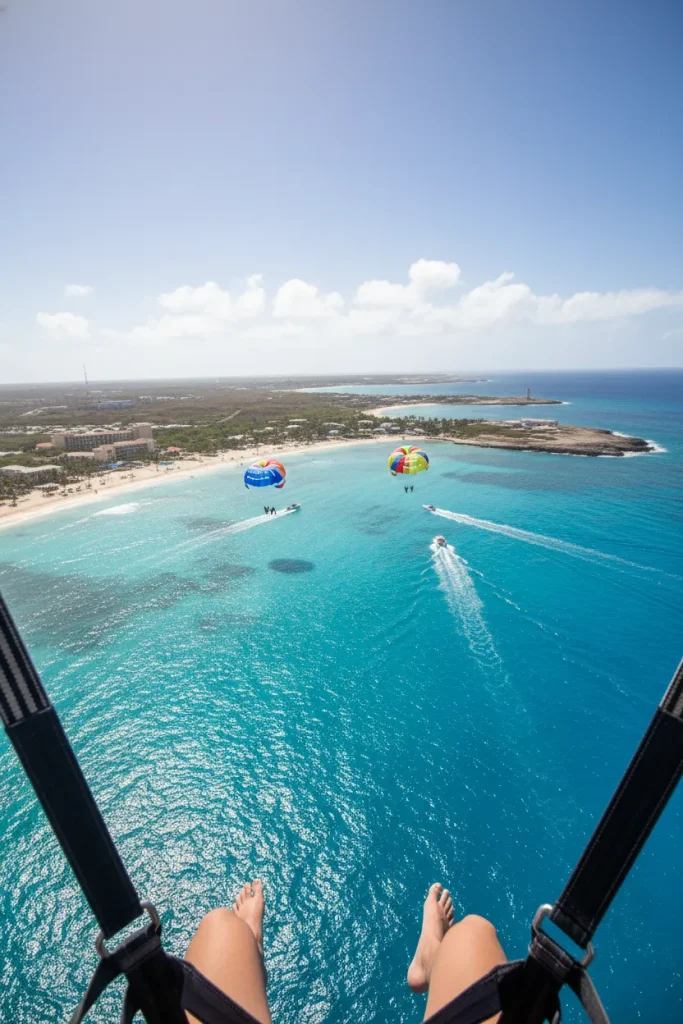
Is Aruba parasailing worth it for those postcard-perfect shots? If you love big views and a quick thrill, it usually is. You get wide Aruba aerial views over Palm Beach, with clear blue water, sandbars, and the coastline spread out below you.
Picture yourself high above Palm Beach, with the coast stretching out beneath you. That is exactly why so many travelers add parasailing to their Aruba plans.
This guide is for independent travelers, families, couples, thrill-seekers, and anyone asking, “is parasailing worth it Aruba?” We give a clear, practical take on the Aruba parasailing question: what you will actually see, how the views compare to other activities, safety basics, timing and weather, and smart booking tips so you do not overpay for a cloudy or windy day.
Real guests say it best. Photographer Alex Atwood posted, The Aruba aerial views from parasailing were unreal — reefs and sandbars looked like a painting.
Family traveler Maria Gonzalez shared, “Kids still talk about the moment we floated above the coast; worth every minute.” Those snippets reflect what many travelers say after the experience: the views are the biggest payoff, with wind and photo timing making a real difference.
✅ Browse Aruba Tours On Viator
Planning what to do? Explore our Aruba Tours & Things to Do guide for tours, activities, and trip ideas.
Planning a trip to Aruba? Explore our Aruba Guides for hotels, tours, beaches, and travel tips.
Is Parasailing In Aruba Worth It? — A Quick Verdict for View Seekers
If you love wide ocean panoramas and easy thrills, this quick verdict helps you decide whether to book. We’ll define what “worth it” means for a view-focused traveler, describe the typical flight experience, compare Aruba to nearby islands, and share a short snapshot of social buzz that shapes expectations.
Views, Thrill, And Cost
360-degree panoramas of turquoise water, white sand, and reef patterns that you can actually photograph from altitude.
Typical single and tandem flights give several calm minutes aloft, enough for big views without an extreme adrenaline spike for most people. That balance matters if you prefer scenery over stomach-dropping thrills.
Cost and time factor in like this: a short flight plus boat time makes a half-hour to two-hour outing depending on operator pick-up and extras. Many guests say the views justify the price when skies are clear and the sea is calm.
How parasailing views in Aruba compare to other Caribbean islands
Aruba’s steady trade winds and low seasonal rain create more reliable clear-sky chances than some Western Caribbean spots that see muddier runoff or more cloud cover. The island’s flat horizon and bright, shallow bays show reef shapes and sandbars that read well in photos.
When weighing Aruba vs Caribbean parasailing, note that some islands have taller coastal trees, rugged cliffs, or darker water that change the look. If your main goal is pure, photogenic water color and broad seascapes, Aruba often comes out ahead.
Snapshot of typical guest satisfaction from social posts and reviews
On Instagram and review sites, posts usually show wide blue-green expanses, smiling faces in harness shots, and comments calling the flight a “must-do.” These posts form a clear pattern: good lighting and calm seas equal high satisfaction.
- Positive themes: vivid water color, relaxed flights, great photo ops.
- Critical themes: cancellations for wind, brief airtime, and variable operator service.
Overall, social buzz supports the idea that is Aruba parasailing worth it for people who prioritize views. For others who need longer flights or extreme thrills, the experience may feel less valuable on busy or windy days.
What You’ll See From Above: Iconic Aruba Views
Take a breath at launch and let your eyes map the shoreline. Aruba aerial views unfold like a postcard: long white beaches, fringe palms, and a coastline that curves with easy clarity. From the harness you notice differences between busy strips and quieter coves in a single sweep.
Eagle Beach parasailing view delivers a broad, open panorama. You’ll spot the famous fofoti trees, wide sand bars, and people dotted along the shore. The scene feels roomy and relaxed, with the shoreline’s gentle arc highlighted by changing water tones.
Palm Beach from above shows the hotel row, boardwalks, and the livelier beach crowd. From altitude you can read the strip like a map: resort rooftops, beach bars, and pools form a grid that contrasts with the natural sweep of sand and surf directly offshore.
- Coastal panoramas reveal Aruba’s low, flat profile and distant points such as Malmok and Boca Catalina.
- Ocean gradients move from pale aqua in the shallows to deep navy where the reef drops away.
- Parasail photos often capture both busy development and untouched sea in the same frame.
Natural features become clearer at height. Coral reef formations appear as darker patches while sandbars and shallow flats shine in turquoise. Channels used by boats cut lines through lighter water, making snorkeling spots obvious if the day is clear.
Man-made landmarks help you orient. Major beachfront hotels, piers, and small marinas are visible and recognizable from above. In the distance you can pick out Oranjestad’s cruise terminals and the pattern of beachfront developments that hug the western shore.
- Look for reef shelves and shallow flats when the sun is high for the best color contrast.
- Use visible piers and hotel clusters to judge distance and frame photographs.
Who This Parasailing Tour Is Best For — Ideal Travelers
Parasailing in Aruba fits a wide range of visitors. The ride balances gentle lift with open-air views, so you can chase that wide blue horizon without a harsh drop. Pick a time and operator that matches your comfort level and goals, and you’ll leave with clear memories and sky-high photos.
First-time flyers and thrill-seekers: what to expect
If this is your parasailing first time Aruba will feel inviting rather than extreme. Operators give a short safety briefing before a slow, steady ascent. Expect an approachable adrenaline surge, steady harnessing, and plenty of time to soak in panoramic coastlines.
For thrill-seekers, tandem flights let you test comfort before stepping up. Crew members from reputable companies guide takeoff and landing, so the focus stays on the view rather than worry. This combination makes it one of the best for parasailing Aruba when you want thrills with reassurance.
Couples and photographers: best times for photos and lighting
Golden hour—sunrise or late afternoon—gives soft light and warm tones that flatter faces and add romance to shots. Midday delivers the clearest turquoise water, which is great for wide-angle landscape images but can cast harsher shadows on portraits.
Bring a wrist strap for your camera or phone and work with the pilot to orient toward Palm Beach or Eagle Beach for recognizable backdrops. Choosing the right window makes a big difference when you want memorable couple portraits or professional-style photos.
Families and kids: age/weight considerations and safety notes
Aruba parasailing for families is common. Many operators allow children on tandem flights with an adult. Typical minimum ages run from about 6 to 8 years, and combined weight limits apply to harnesses, so confirm rules before booking.
Guests with pregnancy, serious back problems, or heart conditions should avoid the activity. Wear a swimsuit, secure sunglasses, and follow crew instructions during harnessing and reboarding. When safety rules are followed, Instagram posts often show smiling families and relaxed kids mid-flight.
How Parasailing Works in Aruba — Safety, Operators, and What’s Included
Parasailing in Aruba begins simple and steady. You check in at a beachfront kiosk or marina, listen to a short safety briefing about harness use and hand signals, then board a boat or platform. The tow-line launch lifts you smoothly; flights usually last 5–15 minutes while the whole excursion from check-in to return runs about 45–90 minutes.
Typical tour flow
- Arrival and registration at Palm Beach, Eagle Beach, or Oranjestad pick-up points.
- Safety briefing covering life vests, harness fit, and emergency signals.
- Boat or platform boarding, controlled tow-line launch, airborne flight time.
- Gentle descent and return to the boat, followed by disembarkation and optional transfers back to your hotel.
What to watch for with safety
Prioritize Aruba parasailing safety by checking for USCG-style life vests, professional-grade harnesses, and well-maintained tow lines. Ask about local licensing, crew experience, and maintenance schedules. Confirm that the captain and crew run visible safety briefings and that the operator has a clear cancellation policy for weather or wind windows.
Certifications and crew standards
- Local licensing and documented maintenance logs.
- Experienced captains familiar with Aruba’s wind patterns.
- Regular staff training and first-aid readiness onboard.
Common operator offerings
Many parasailing operators Aruba include photo and video options, often available as add-ons or bundled packages. You can find combo tours that pair parasailing with snorkeling or boat rides. Hotel pickup and return from major resort zones are a frequent part of parasailing inclusions Aruba, but always confirm what’s in writing before you pay.
Booking and payment tips
- Reserve online or in person; check accepted payment types—some accept cards, others prefer cash.
- Verify cancellation and weather policies up front to protect your plans.
- Look at recent guest posts on Instagram for real examples of included photo packages and operator transparency.
Timing, Weather, and Best Conditions for Spectacular Views
Timing makes a big difference for parasailing in Aruba. Pick a slot that matches the view you want and the comfort level you need. Morning trips tend to be calm and clear, while late afternoon adds golden light that flatters photos. Midday delivers vivid turquoise water but can be harsh on faces and shadows.
Best time of day for lighting and calm seas
Early morning is the sweet spot for visibility and smooth seas. Fewer boats are on the water, so wakes are minimal and reef details stand out. If you chase dramatic photos, aim for golden hour in the late afternoon when shadows add depth and color warms the scene.
Seasonal weather patterns and impact on view quality
Aruba’s dry climate keeps views clear most of the year. Trade winds blow steadily, which helps keep clouds thin and the air crisp. Winter months often offer the best window for long stretches of clear skies. Short, passing showers may blur a view briefly but rarely spoil an entire day.
Wind windows, cancellations, and what to do if your flight is rescheduled
Operators watch wind speed and sea state before launch. Strong gusts or choppy water can trigger parasailing cancellations Aruba-wide for safety. If your flight is moved, ask about the next available slot, flexible rebooking, or a refund policy before you book.
- Check real-time forecasts and local wind reports the morning of your trip.
- Bring sunscreen and a light windbreaker for changing conditions.
- Confirm cancellation and reschedule terms when you reserve to avoid surprises.
When you line up timing with Aruba weather parasailing trends, you raise your odds of crystal-clear reef views. Pick the best time parasailing Aruba for the scene you want, keep a flexible schedule, and you’re set for a memorable flight above one of the Caribbean’s most photogenic shores.
Cost, Booking Tips, and Getting the Best Value
Planning the jump into the blue is easier when you know what to expect from price tags and packages. Below are clear points to help you compare offers, time your booking, and spot real value while you look up at Eagle Beach or Palm Beach from the deck.
Typical price ranges
- Solo flights usually fall into a moderate range per person for shorter rides; longer airtime costs more.
- Tandem flights are commonly mid-range, with peak-season rates higher than offseason listings.
- Packages that include photos, videos, or hotel transfers raise the final total; confirm flight duration and media fees before you pay.
How to compare operators
- Look for transparent pricing that lists flight time, number of flyers per session, and any extra fees for photos or transfers.
- Read recent TripAdvisor and Google reviews and check operator Instagram posts to confirm service consistency and the quality of included media.
- Ask whether the quoted parasailing cost Aruba covers boat time, instructor guides, and safety gear so there are no surprises.
Booking strategies to save
- Book early to secure sunrise or golden-hour slots; top time slots fill fast in high season.
- Consider combo tours—parasail plus snorkeling or a coastal boat tour—to lower the per-activity price and add value.
- Check resort concierge offers and search for parasailing deals Aruba; last-minute discounts sometimes appear during lower demand days.
Payment and cancellation tips
- Confirm refund and rescheduling policies for weather cancellations and ask if operators hold flexible rebooking windows.
- Request family, tandem, or group rate details before payment to secure any available discounts.
- If you plan to book parasailing Aruba through a third-party vendor, verify whether they pass along the same guarantees as direct bookings.
Follow these steps and you’ll spend less time hunting for bargains and more time choosing a flight time that fits your photo plans and comfort level.
Real Guest Quotes and Social Proof — What Visitors Say About the Views
Visitors post quick snapshots of sky-high moments that show why many pick Aruba for parasailing. Reading Aruba parasailing reviews and scrolling parasailing Instagram Aruba posts gives a useful mix of praise and real-world detail. Below are short, paraphrased guest quotes parasailing users share that capture moods and expectations.
“Unbelievable turquoise from above — totally worth it.”
“Best views of Eagle Beach — so calm and clear.”
“Crew made us feel safe, photos were great.”
“Canceled once for wind but rebooked quickly.”
Common praises in Aruba parasailing reviews highlight the water’s contrast against white sand, friendly crews who focus on safety, and strong photo opportunities for couples and families. Guests often note that calm days deliver images that match the best social posts.
Frequent complaints include wind-related cancellations, surprise fees for photos or videos, and flights that felt shorter than advertised. A smaller number mention hazy conditions or rough seas that reduce the dramatic colors seen in parasailing Instagram Aruba highlights.
Interpreting social photos takes a light touch. Wide-angle lenses, boosted saturation, and perfect lighting make scenes pop. Real-life views align with those images on clear, low-wind days, but they can look different under overcast skies or choppy water.
Practical takeaways drawn from guest quotes parasailing posts:
- Check recent Aruba parasailing reviews for trends over the past few months.
- Compare operator-tagged photos on parasailing Instagram Aruba to spot consistent quality.
- Expect the best match to social images on calm, sunny days; plan flexibility for weather changes.
Conclusion
Aruba parasailing worth it conclusion: for travelers who want clear aerial views and a gentle adrenaline boost, parasailing in Aruba is generally worth it. You’ll see turquoise reefs, long sandy beaches, and the hotel-lined coastline in a way that photos from shore rarely capture. Book with an experienced operator and pick a calm, sunny slot and the rewards are real.
So, should I parasail Aruba? If you’re a photographer, a couple after a memorable date activity, a family comfortable with harnesses, or an independent traveler chasing unique perspectives, yes — this experience fits well. Morning and late-afternoon flights give the best light and smoother seas, which makes a big difference for both comfort and photos.
Final practical tips: confirm safety practices, check included photo/video options, and verify cancellation policies before you pay. Ask operators about age and weight rules and read recent Instagram posts to set realistic expectations. If wind forces a reschedule, take it — the view is much better when conditions cooperate.
We’ll say it like a friend who’s flown: go with your camera ready and an open mind. With the right timing and a reputable operator, parasailing in Aruba often delivers unforgettable, picture-perfect views you’ll talk about long after the flight ends.