
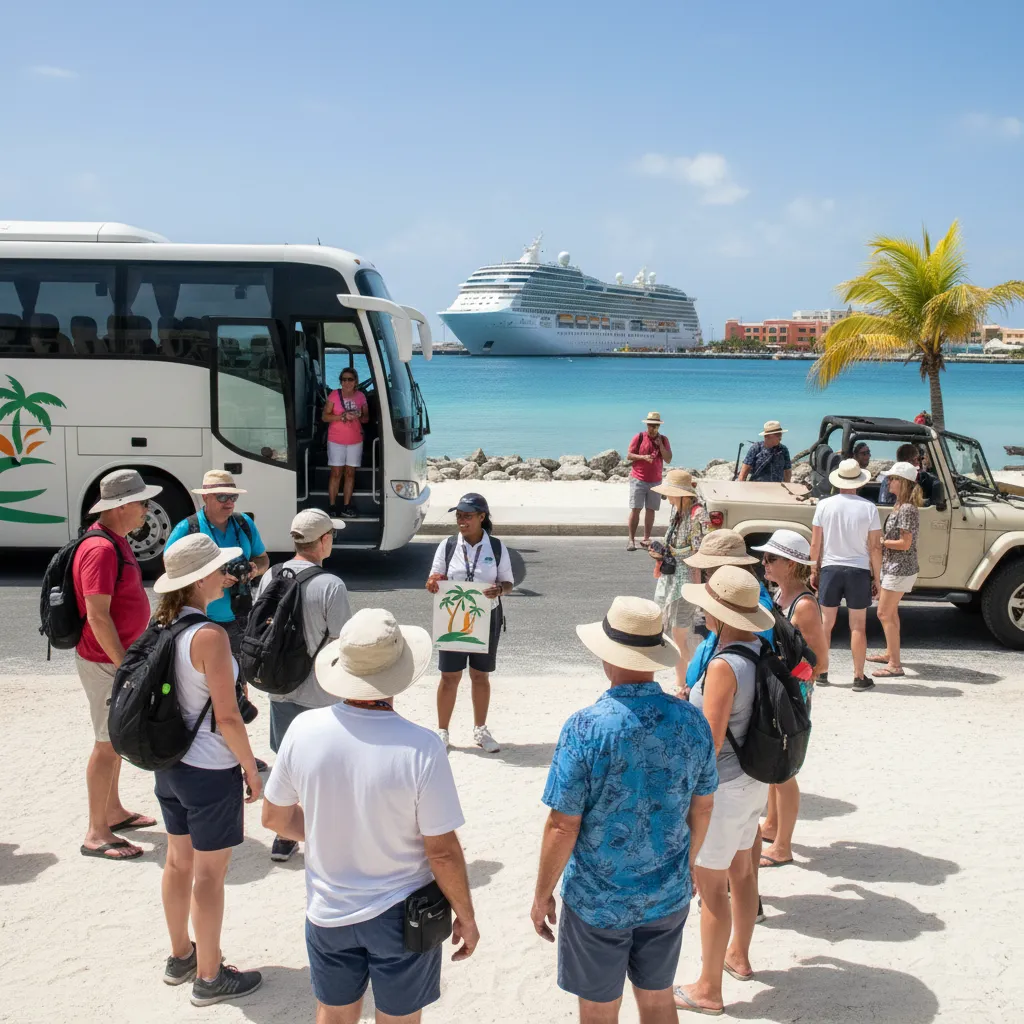
Trying to decide between a guided Aruba tour and exploring on your own from the cruise port? The best choice depends on what matters most to you. A guided tour is usually the better option if you want simple logistics, a structured plan, and less worry about getting back on time, while independent Aruba exploration works better if you want more freedom and flexibility.
Aruba shore excursions can include everything from snorkeling near Catalina Bay and the Antilla shipwreck to jeep rides in Arikok National Park and time in colorful San Nicolás. Guided Aruba tours often bundle those highlights into an easy schedule with port pickup and a clear return plan, while going on your own gives you more control over how long you stay at each stop.
Guests say it best. “The jeep tour saved our only morning in port — the guide knew every photo spot,” says traveler Sarah Thompson from Boston. By contrast, Marco Alvarez, a family traveler from Miami, adds, “Booking a local snorkeling operator through GetYourGuide cut costs and felt more personal.”
This guide compares cost, safety, convenience, and timing so you can decide whether a guided tour or independent Aruba exploration is the better fit for your day in port.
✅ Browse Aruba Tours On Viator
Planning what to do? Explore our Aruba Tours & Things to Do guide for tours, activities, and trip ideas.
Planning a trip to Aruba? Explore our Aruba Guides for hotels, tours, beaches, and travel tips.
Aruba Cruise Tour Vs Explore Alone
Choosing between a ship-arranged tour and striking out on your own can shape the whole day in Aruba. This section breaks down what each option means for cruise passengers, how prices and value compare, and what to check for when it comes to safety and guarantees.
What the phrase means for cruise passengers
Aruba Cruise Tour Vs Explore Alone boils down to who plans, runs, and guarantees your shore time. A cruise-line excursion is booked through Carnival, Royal Caribbean, Norwegian, or Princess and follows a set itinerary with transport and guides included. Exploring independently means you book directly with local operators or walk, bus, taxi, or rent a car to see spots like Eagle Beach, Oranjestad, or Arikok National Park.
Ship-sponsored vs independent excursions deliver different rhythms. Ship tours tend to be structured and easy to follow. Independent options let you linger at a beach, choose a small snorkeling charter at Malmok, or join a jeep safari to the Natural Pool.
Typical costs and value comparison
Aruba excursion prices vary by duration and inclusions. Short marine activities often list between $50 and $180 through cruise lines. A 2.5-hour stingray encounter cited at roughly $70 on a ship manifest can cost less with a local operator.
Local and third-party vendors frequently undercut ship rates. Expect small-group or private tours to cost more but give you customization. Watch for hidden costs: equipment rental, park entrance fees, meals, and tipping. Suggested tips run $5–$10 per person for half-day trips and $10–$20 for full-day outings.
- Ship tours: straightforward billing and fewer surprise fees.
- Independent tours: lower base rates but potential add-ons.
- Private charters and guided safaris: premium prices for privacy and flexibility.
Safety, vetting, and guarantees
Aruba tour safety shows up differently for each choice. Cruise-line excursions go through vendor checks and carry the cruise line’s logistics promise so the ship won’t leave without you when you’re on their tour. That matters if you worry about missed-ship scenarios.
Many Aruba operators follow strict safety protocols: life jackets, cleaned snorkel gear, trained guides, and first-aid kits. Look for local companies offering missed-ship guarantees or 24/7 support through booking platforms. Read recent reviews and confirm meeting points, such as Pelican Pier behind the Holiday Inn Resort for snorkel departures.
Before you book, check cancellation windows. Standard policies often refund outside 72 hours and restrict changes inside that window. Arrive at meetings about 30 minutes early for marine departures to avoid last-minute stress.
Who Should Book a Guided Aruba Shore Excursion
If you travel with a cruise schedule, want fewer logistics, or seek local context without the guesswork, guided Aruba shore excursions are made for you. Guided options pack timing, transport, and local knowledge into one plan so you can focus on snorkeling, beaches, or tasting keshi yena rather than parking or figuring out departure points.
Travelers who prioritize convenience and peace of mind
Ship-sponsored and vetted local tours align with cruise timetables and include many practical touches. You’ll find transportation timed to your ship, English-speaking guides, and included entrance fees where applicable. For example, the Explore Aruba: Island Tour offers a smoother open-air bus for those who prefer less bumpiness than off-road jeeps.
Many snorkel and sailing trips supply gear, basic instruction, shaded lounge space, onboard restrooms, and snacks. Those small inclusions cut down on planning and let you enjoy the day without hunting for rentals or worrying about safety briefings.
Groups, families, and special needs
Aruba guided tours for families often cater to kids and multi-age groups. Some bus tours accept toddlers, while certain off-road routes set minimum ages around four to six. Snorkel trips welcome non-swimmers with vests and offer private options when families want privacy.
Not every excursion suits reduced-mobility guests. Many off-road jeeps and some boats are not wheelchair accessible. For easier access, choose smoother bus tours or confirm details with the operator or cruise line in advance. Many companies list Aruba accessible tours and provide clear notes on ramps, transfers, and seating.
When time is limited or port logistics are complex
Short port calls or unfamiliar terminals are prime reasons to join a guided tour. Cruise ship tour advantages include guaranteed return to the ship and staff who map routes with buffer time for traffic or delays.
In ports with limited tourist infrastructure, guides know where to find restrooms, shade, and local vendors. They arrange quicker routes and local context so you spend more time exploring San Nicolás street art or a Murano glass gallery and less time figuring out logistics.
Good guides balance authenticity with convenience. Expect cultural notes on Papiamento phrases, local dishes like pastechi, and eco-friendly rules for snorkeling. Safety remains central: fitted life jackets, first-aid kits, and clear cancellation policies are common on reputable tours.
Who Should Explore Independently in Aruba
If you like freedom, low costs, and tailoring every stop, Aruba rewards travelers who choose to explore Aruba independently. Small groups, repeat cruisers, and people who enjoy planning find more value by arranging their own days. You can mix beach time, local food, and short hikes without a rigid schedule.
Budget-conscious and experienced travelers
For travelers on a tight budget, an Aruba DIY shore excursion often cuts steep cruise-markup fees. Booking direct with local operators, taking the Arubus public routes, or walking through Oranjestad to catch free cultural events saves money and keeps experiences authentic.
Experienced cruisers who know port logistics and time windows feel confident navigating taxis with zone fares, meeting points like Pelican Pier, and quick returns to the ship. These skills turn independent plans into smooth, economical days ashore.
Adventure seekers and customization lovers
If you want to set your own pace, independent options let you pick snorkel sites, jeep routes, and lunch spots. You can choose a private charter or a do-it-yourself snorkeling trip to Malmok, Boca Catalina, Baby Beach, or Mangel Halto.
Custom private tours work well for celebrations and small groups. A private snorkeling outing or a bespoke jeep route lets you control timing, photo stops, and inclusions. That kind of flexibility is central to an independent snorkel Aruba experience.
How to manage the risk of missing the ship
Missing departure is the main worry with DIY plans. Build a buffer by setting your own cutoff time earlier than the ship’s call and confirm return transport options before you leave. Choose operators who understand cruise schedules and who will communicate clearly about pickup and drop-off.
- Set an earlier personal deadline and stick to it.
- Use visible landmarks and Pelican Pier as rendezvous points.
- Pick vendors with clear refund and cancellation windows.
Combine a short guided activity with independent time if this is your first port. That approach gives you confidence, teaches local rhythms, and still leaves room to explore. Use these Aruba budget travel tips and practical timing steps to keep freedom from turning into risk.
How to Choose and Book the Right Option
Decide what matters most to you before you commit. Pinpoint whether you want wildlife snorkeling, lazy beach time, cultural stops, or an off-road thrill. Match the activity length to your port window so you won’t rush back to the ship.
Assess your budget, interests, and timeline
- Set a priority list: snorkeling, Arikok Park, city strolls, or a jeep adventure. Short ports favor half-day outings; long stops allow full-day immersion.
- Compare prices: cruise-line excursions often cost more for the guarantee of timing. Independent options can be $50–$180 depending on gear and guides. Add tips and incidental fees.
- Season matters: December–April brings crowds and higher rates. Off-season has fewer people and better negotiable deals.
Research and vetting steps for independent operators
- Read recent reviews on TripAdvisor, Viator, and GetYourGuide. Look for comments about safety, punctuality, and gear quality.
- Confirm inclusions: snorkel gear sanitation, life jackets, restrooms, chilled water, and any entrance fees. Ask if pickup is round-trip for land tours.
- Check policies: cancellation windows, reschedule rules, and refund timelines. Most reputable vendors refund within a few business days for 72+ hour cancellations.
- Verify meeting points and logistics. Pelican Pier is the usual marine-tour spot; land tours commonly confirm hotel or dock pickup after booking.
- Note health restrictions. Some off-road tours are not suitable for pregnant travelers or people with back problems.
Booking strategies and money-saving tips
- Reserve must-do or limited-capacity tours early to avoid sellouts. If you want to book Aruba tour through the cruise line, weigh convenience against price.
- Compare operator sites and marketplace listings. Ask about family or group discounts and progressive pricing when booking multiple activities.
- Consider self-guided stops and free local events to lower costs. Use onboard credits or seasonal promotions when available.
Practical packing and on-the-day tips
- Marine outings: wear your swimsuit under light layers, apply reef-safe sunscreen, bring water shoes, towel, and a waterproof phone case. Arrive at Pelican Pier 30 minutes early to check in.
- Land tours: choose breathable clothing, sturdy shoes, a hat, reusable water bottle, sunscreen, and small cash for restroom fees.
- For bumpy jeep rides, pack motion-sickness remedies and secure loose items. Expect operators to supply life jackets and sanitized snorkel equipment; staff often offer brief lessons for beginners.
Aruba independent operator vetting is simple if you follow the checklist above. Focus on recent photos, clear cancellation terms, and verified safety practices. If you prefer a guaranteed return to ship times, the cruise line offers that peace of mind.
Choose Aruba shore excursion options that match your comfort level and timeline. If you want to book Aruba tour early, lock in high-demand spots and reconfirm pickup details the day before.
“We loved the private snorkel trip booked directly—cheaper than the ship and we saw turtles, but the operator made sure everyone knew the boat’s return time,” a family traveler recalled.
“Booking through the cruise saved stress. We had less time to explore, so the guided tour fit our schedule perfectly,” another guest said.
Aruba packing tips for shore excursions mean planning for sun, salt, and sand. Bring layers, reef-safe sunscreen, and a small dry bag so you can enjoy the island without worrying about wet phones or lost sunglasses.
Conclusion
Deciding between an Aruba Cruise Tour Vs Explore Alone conclusion comes down to what you value most on shore. If you want guaranteed timing, vetted safety, and less logistics stress, a ship-sponsored or well-reviewed guided tour is the best Aruba shore excursion choice for first-time cruisers, families, and travelers with limited port time or mobility needs.
If you prize budget savings, customization, and smaller, local-led experiences, exploring independently often delivers richer moments. Experienced cruisers and adventurous families who plan return buffers, check operator reviews, and confirm cancellation policies can find authentic flavors in Oranjestad, Eagle Beach, and Arikok without breaking the bank.
A smart middle path mixes both: book a short vetted activity to secure timing and key highlights, then use free hours to wander on your own. Practical Aruba cruise tips include verifying inclusions, booking must-do activities early, packing reef-safe sunscreen and sturdy footwear, and always allowing ample buffer time to return to the ship.
Ultimately, you’ll make the best Aruba shore excursion choice when you balance freedom and discovery with sensible planning. Whether you join a guided snorkel from Pelican Pier or map your own route through rugged terrain, thoughtful preparation turns curiosity into memorable, stress-free exploration.