
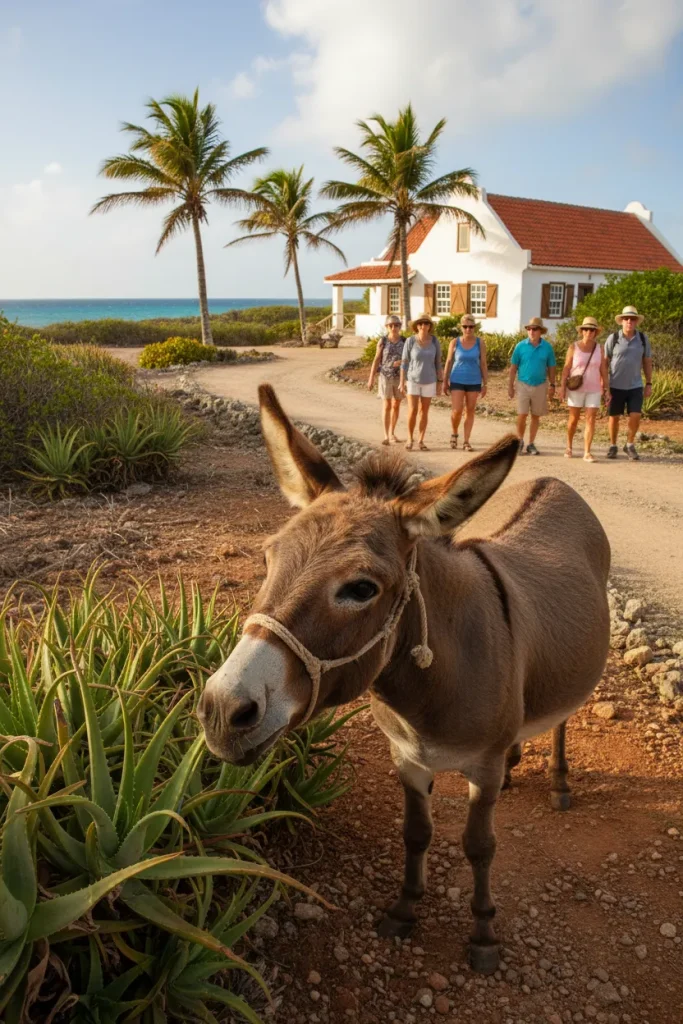
Is the Aruba Donkey Sanctuary, Aloe, and Half-Day Highlights tour worth it? Yes — for cruise passengers, families, animal lovers, and first-time visitors who want a relaxed guided snapshot without renting a car, this half-day combo can be a smart and easy choice.
The tour usually brings together three very different experiences: a compassionate visit with rescued donkeys, a fragrant stop at the aloe factory, and scenic island viewpoints like California Lighthouse and Bushiribana Gold Mill Ruins. It is not the deepest way to explore the island, but it is a tidy way to see several highlights when your schedule is limited.
The appeal is convenience. Instead of planning separate stops, checking routes, and worrying about parking or timing, you get pickup, transport, guide commentary, and a compact itinerary that still feels varied.
Guests say it best. “Lovely, efficient way to see the highlights when our cruise schedule was tight,” said Sarah from San Diego after a morning tour that included the aloe factory and a quick photo stop near California Lighthouse.
Ultimately, the decision comes down to your travel style. Choose the guided tour if you want local context, easy logistics, and a gentle half-day plan. Choose a self-drive route if you want to linger longer, add secret beaches, or explore at your own pace.
✅ Browse Aruba Tours On Viator
Planning what to do? Explore our Aruba Tours & Things to Do guide for tours, activities, and trip ideas.
Planning a trip to Aruba? Explore our Aruba Guides for hotels, tours, beaches, and travel tips.
Is The Aruba Donkey Sanctuary, Aloe, And Half-Day Highlights Tour Worth It?
This half-day combo is worth it if you want several island highlights in one easy outing. It works especially well for travelers who do not want to rent a car, navigate unfamiliar roads, or spend a full day away from the beach.
You typically get hotel or cruise-port pickup, guided transport in an air-conditioned vehicle, and short stops that mix animals, local products, history, and scenic views.
What this combo tour usually includes
Most versions include a stop at the Donkey Sanctuary, where you can meet rescued animals, take photos, and learn about the sanctuary’s work. The visit is usually gentle and family-friendly, with staff or guides explaining how the donkeys are cared for.
The aloe factory stop gives you a quick look at one of the island’s signature local products. Expect a short demo, samples, and a chance to browse skincare items made with aloe.
The route often includes scenic stops such as California Lighthouse, Bushiribana Gold Mill Ruins, and rugged coastal viewpoints. These are usually quick photo stops rather than long explorations.
How long the tour takes
Most half-day formats last around 3–5 hours. You may get roughly 20–45 minutes at the sanctuary and aloe factory, with shorter stops at viewpoints and ruins.
Morning departures are often the best choice because temperatures are cooler, crowds are lighter, and you still have the afternoon free for the beach, lunch, or another activity.
Value compared with visiting separately
The guided tour saves time and reduces planning. That makes it useful for families, cruise passengers, and travelers who want a simple itinerary.
Self-driving gives you more freedom. If you are traveling as a group of three or four, renting a car may be cheaper once you split the cost. You can also stay longer at the sanctuary, add a beach stop, or skip places that do not interest you.
For solo travelers, couples without a rental car, and visitors with a tight schedule, the combo often delivers better convenience than planning each stop separately.
Who This Tour Is Best For
This tour is best for travelers who want a calm, structured taste of the island without a long or intense day. It is not a luxury private experience or a deep cultural tour, but it does offer a pleasant mix of stops.
Families and animal lovers
Families often enjoy the sanctuary because it feels warm, simple, and memorable. Kids can see animals up close, and adults get a feel-good stop that supports rescue work.
Animal lovers will likely see this as the emotional center of the tour. The experience is usually brief, but it can still be meaningful if you care about welfare-focused attractions.
Cruise passengers and short-stay visitors
This tour fits neatly into a port day or short vacation schedule. You can see multiple highlights without worrying about timing, directions, or whether you will make it back to the ship or hotel on time.
For cruise passengers, this is one of the biggest advantages. A guided half-day route removes a lot of stress.
Budget-conscious travelers
The tour can be good value if you do not want to pay separately for taxis or a rental car. It bundles transport, route planning, and guide commentary into one price.
That said, groups should compare the per-person tour cost with car rental prices. A rental may be more economical if you want flexibility and are comfortable driving.
- Choose the tour if you want simple logistics, local commentary, and a structured route.
- Choose self-drive if you want longer stops, detours, and more control over your day.
- Consider a private tour if mobility, pacing, or extra photo time matters.
What To Know Before You Book
Before booking, check the details carefully. Half-day tours can vary by operator, route, group size, and what is actually included.
Language, culture, and local context
Most guides speak English, and commentary is usually easy to follow. The island’s official languages are Dutch and Papiamentu, and you may hear Spanish influences too.
A little background helps the route feel richer. Stops like Bushiribana connect to the 19th-century gold rush, while aloe production reflects a long-standing local industry. Guides may also touch on the island’s Indigenous history, Dutch ties, oil-refining past, and shift toward tourism.
Booking and cancellation details
Always confirm the cancellation window, pickup point, group size, vehicle type, and exact duration before paying.
UK travelers booking flight-inclusive packages should check whether ATOL protection applies and request an ATOL Certificate when relevant. U.S. travelers should review refund policies, supplier terms, and whether travel insurance is needed.
Ask whether entrance fees, aloe samples, refreshments, donations, and gratuities are included. Small extras can change the final value.
What to bring
Pack for sun, wind, and uneven ground. Even short stops can feel hot during the middle of the day.
- Hat, sunglasses, and sunscreen
- Refillable water bottle
- Closed-toe shoes or sturdy sandals
- Camera or phone with extra battery
- Small cash for tips, donations, or souvenirs
- Motion-sickness medication if you are sensitive in vans
Accessibility notes
Accessibility can vary. The sanctuary, ruins, and coastal viewpoints may have uneven surfaces. If someone in your group uses a wheelchair, walker, or stroller, contact the operator before booking.
Ask about vehicle access, restroom stops, walking distances, and whether staff can assist with boarding.
What You’ll See On The Tour
This route works because the stops feel different from one another. You get animals, local production, history, and scenery in one compact loop.
Donkey Sanctuary experience
The Donkey Sanctuary cares for rescued animals and gives visitors a chance to learn about their history and daily care. Staff may explain feeding routines, medical needs, and how donations support the sanctuary.
Expect a gentle, supervised visit. You may be able to pet or photograph the donkeys, depending on current rules and animal comfort.
This stop is usually the most emotional part of the tour, especially for families and animal lovers.
Aloe factory visit
The aloe factory stop shows how aloe is processed and used in local skincare. You may see a short demonstration, sample products, and learn why aloe became an important part of the island’s identity.
The shop can be tempting, but compare labels and ask which items are locally made if supporting island producers matters to you.
California Lighthouse and scenic viewpoints
California Lighthouse is a classic photo stop with sweeping coastal views. It is usually a quick visit, but the setting gives you a strong sense of the island’s open landscape.
Guides may also point out nearby beaches, resort areas, or rougher coastline depending on the route.
Bushiribana Gold Mill Ruins
Bushiribana is one of the most atmospheric stops. The weathered stone ruins sit near the coast and connect to the island’s gold-mining history.
This is a great place for photos, but the ground can be uneven. Wear shoes with grip and avoid climbing on fragile structures.
- Best for photos: donkeys, lighthouse views, aloe displays, and Bushiribana’s stone ruins.
- Best for families: the sanctuary and aloe factory are easy, short, and engaging.
- Best for context: guided commentary helps connect the stops into one story.
Real Guest Quotes And What Travelers Actually Say
Guest feedback tends to be fairly consistent. Travelers like the convenience, kind guides, sanctuary visit, and easy photo stops. The main complaints usually involve pacing, accessibility, or expectations.
Positive guest experiences
Many travelers describe the tour as efficient and pleasant. Cruise passengers often appreciate seeing several places without worrying about timing.
Animal lovers frequently mention the sanctuary as the highlight. The aloe factory also gets positive comments from visitors who enjoy local products and quick demonstrations.
“The donkey stop was sweeter than expected, and the guide made the island history easy to understand.”
“Great half-day option. We saw animals, ruins, the lighthouse, and still had time for the beach afterward.”
Common criticisms
Some guests feel rushed at scenic stops, especially if they expected more time to explore the ruins or take photos.
Others mention accessibility challenges, since some stops involve uneven ground. Families with very small children may also find the quick transitions a little tiring.
Extra costs can also create frustration when they are not clearly explained. Always check what is included before booking.
How to read reviews before booking
Look for recent reviews, not just the highest-rated ones. Pay attention to repeated comments about guide quality, timing, vehicle comfort, and whether the route matched the listing.
If several reviewers mention the same issue — rushed stops, unclear pickup, or poor accessibility — treat it as a real signal.
- Prioritize reviews from travelers with your same style: families, cruise passengers, animal lovers, or self-drive types.
- Look for comments about the exact operator, not just the general route.
- Check whether recent guests mention changed stops or updated timing.
Cost, Alternatives, And Budget Tips
Whether this tour is good value depends on your group size, transportation plans, and how much independence you want.
Typical cost and inclusions
Prices vary by operator and season. Most tours include transport, guide commentary, and the main stops. Some may include entry fees or samples, while others may not.
Before booking, ask if the following are included:
- Hotel or cruise-port pickup
- Entrance fees or donations
- Aloe samples
- Refreshments
- Gratuities
- Any optional add-ons
The more that is included, the easier it is to judge the real value.
Money-saving tips
- Book early if prices rise close to the travel date.
- Compare group tour pricing with car rental costs.
- Bring your own water and sun protection.
- Budget for small donations, souvenirs, and tips.
- Use free beach time later in the day to balance paid activities.
Self-drive alternative route
If you prefer flexibility, you can recreate a similar route by car. Start early and keep the stops close together.
- Donkey Sanctuary — go in the morning when it is cooler.
- Aloe Factory — take the short demo and browse products.
- California Lighthouse — stop for wide coastal photos.
- Bushiribana Gold Mill Ruins — walk carefully and take photos.
For groups of three or four, self-driving may be more cost-effective. Just remember to factor in rental insurance, fuel, navigation, parking, and local driving rules.
Safety, Animal Welfare, And Responsible Tourism
A tour involving animals and historic sites should be approached thoughtfully. The best operators respect the sanctuary, protect fragile places, and keep guests safe.
Animal welfare standards to look for
A responsible sanctuary should have visible shade, clean spaces, water access, clear visitor rules, and staff who can explain how the animals are cared for.
Ask whether donations support veterinary care, food, shelter, or rescue work. Avoid any experience that encourages rough handling, chasing, or feeding animals without permission.
- Do not feed donkeys unless staff says it is allowed.
- Let animals approach at their own pace.
- Follow all sanctuary rules for touching and photos.
- Consider making a small donation if the visit feels meaningful.
Respecting historic and natural sites
At ruins and coastal viewpoints, stay on marked paths and avoid climbing fragile stonework. Bushiribana is beautiful, but it should be treated as a historic site, not a playground.
Carry out trash, avoid removing rocks or shells, and listen to guide instructions near cliffs or rough coastline.
Health and comfort tips
The island can feel hot and windy, even on a short tour. Bring water, use sunscreen, and wear shoes that can handle rough ground.
Morning tours are usually more comfortable for people and animals. They also leave the rest of the day open for beach time or lunch.
Conclusion
So, is the Aruba Donkey Sanctuary, Aloe, and Half-Day Highlights tour worth it? For many travelers, yes. It is a convenient, feel-good, and easy way to see several different sides of the island in a short amount of time.
It is especially good for cruise passengers, families, animal lovers, and visitors who want a guided overview without renting a car. You get rescued donkeys, local aloe, scenic viewpoints, and a little island history in one compact route.
Choose a self-drive version if you want more flexibility, longer stops, or a lower cost for a larger group. Choose a private tour if you need slower pacing or accessibility support.
Before booking, confirm inclusions, pickup details, cancellation terms, accessibility, and any extra fees. Pack sun protection, water, comfortable shoes, a camera, and a few dollars for tips or donations.
For a relaxed half-day with memorable stops and minimal planning stress, this combo delivers solid value.