
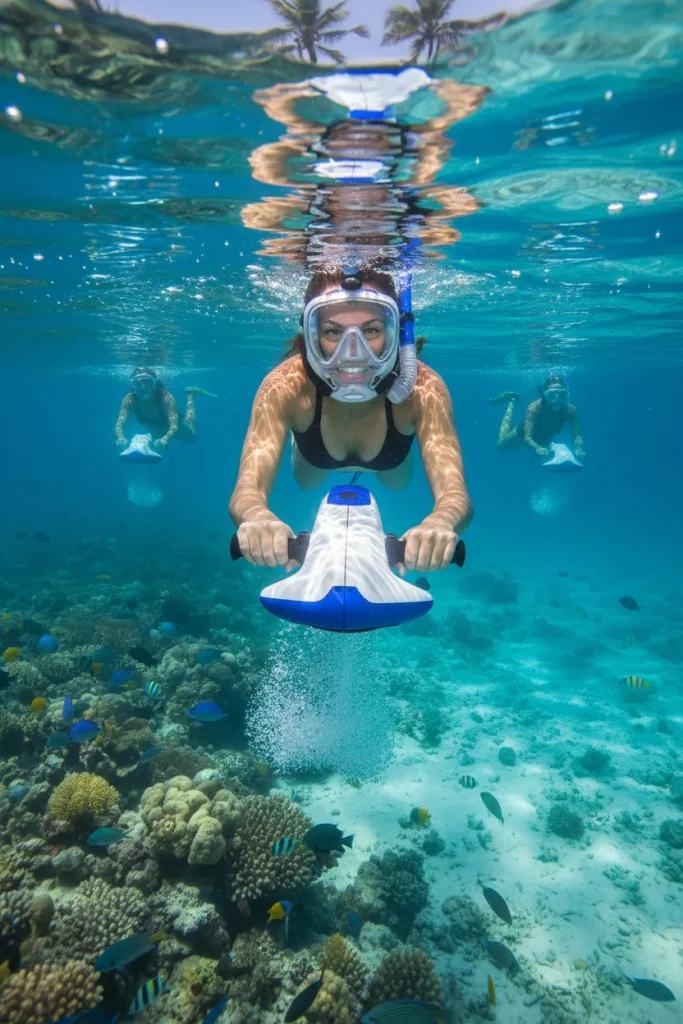
If you’ve been wondering whether sea scooter snorkeling in Aruba is worth it, the answer is yes for many travelers who want to cover more reef, use less energy, and improve their chances of seeing turtles, wrecks, and reef fish in one outing.
This option is a playful upgrade from regular snorkeling. Instead of kicking with fins the whole time, you hold a battery-powered scooter that gently pulls you across the water. That means more range, less effort, and better access to spots many casual snorkelers miss.
Guests often mention Mangel Halto and Tres Trapi as favorite launch areas because the water can be clear, calm, and easy for beginners. Sarah from Chicago told a local operator she loved the private-guide pace: “Our guide with Underdog Divers took us to a near-empty wreck and handed us a GoPro — best underwater footage of the trip.”
Other travelers compare a sea scooter tour to De Palm Island excursions and ATV days, saying it works well as a half-day add-on that still leaves room for beach time, dinner, or another activity later.
Before you book, consider cost and crowd timing. A sea scooter tour can feel pricier than free shore snorkeling, but many guests say the extra range, easier movement, and better sightings justify the price — especially with a smaller operator and an early launch. Keep reading for who benefits most, what to expect, and practical snorkeling tips before you go.
✅ Browse Aruba Tours On Viator
Planning what to do? Explore our Aruba Tours & Things to Do guide for tours, activities, and trip ideas.
Planning a trip to Aruba? Explore our Aruba Guides for hotels, tours, beaches, and travel tips.
Is The Aruba Sea Scooter Snorkeling Tour Worth It?
A sea scooter snorkeling tour is worth it if you want to explore more reef with less effort. You stay near the surface with a mask and snorkel while the scooter helps pull you across the water. That single change can turn a short shore swim into a wider reef-and-wreck experience.
It is not necessary for everyone. Strong swimmers who enjoy slow, quiet snorkeling may be happy without it. But for beginners, families, travelers with limited stamina, or anyone hoping to see more in less time, it can be a smart upgrade.
What A Sea Scooter Snorkeling Tour Is
A sea scooter is a small battery-powered propulsion device used by snorkelers and divers. You hold the handles, point it where you want to go, and let the motor help you glide across the surface.
Compared with regular snorkeling, the biggest difference is range. You can cover more water without tiring your legs, which makes it easier to visit reef patches, wrecks, and turtle-feeding areas that may be too far for a casual swim.
You do not need scuba certification because you are not doing a deep dive. Most tours keep you at or near the surface, with guides showing you how to steer, stop, and stay comfortable.
Typical Itinerary And What To Expect
Most tours begin with a meeting point or hotel pickup, followed by gear fitting and a safety briefing. The guide explains how to hold the scooter, how fast it moves, and how to stay aware of other snorkelers, boats, reefs, and currents.
Launches often happen from calm shore entries. Mangel Halto is frequently praised for clear water, mangrove scenery, reef access, and shade onshore. Tres Trapi is another popular choice, especially for early starts and turtle sightings. Some tours also use Palm Beach-area entries, though those can feel busier.
Tour length varies. A focused trip may last about 1.5 hours, while longer private outings can run 3 to 4 hours if they include extra stops, photos, or GoPro footage.
Highlights Travelers Often Report
Guests often say the biggest advantage is how much more they can see without getting tired. The scooter makes it easier to move between reef sections, explore a wider area, and follow a guide toward better visibility or marine life.
Common highlights include:
- Reaching wrecks or reef patches that are harder to access by swimming alone.
- More comfortable movement for people who tire quickly with fins.
- Better chances of seeing turtles, parrotfish, eels, hermit crabs, and larger schools of fish.
- GoPro footage or photos when guides include underwater media.
- A more adventurous feel than standard shore snorkeling.
For travelers who want a little thrill without committing to scuba diving, this tour can hit a nice middle ground.
Common Downsides To Know
The main drawback is price. Free shore snorkeling is easy on the island, so the value depends on whether you care about extra range, guided help, and possible photo or video add-ons.
Crowds can also affect the experience. Midday launches at popular sites may feel busy, and visibility can change with wind, tide, and weather.
Beginners may need a few minutes to adjust to the scooter’s speed and steering. A good guide-to-guest ratio matters here. Smaller groups usually feel more relaxed, especially for first-timers.
Who This Option Is Best For — Ideal Snorkeler Profiles And Accessibility
A sea scooter tour is not just for thrill-seekers. It can also be helpful for travelers who want easier movement, guided support, or more confidence in the water.
Beginners Who Want More Confidence
Beginners often like sea scooters because they reduce the pressure to swim hard. The device does much of the work, while the guide helps with pacing and direction.
Calmer launch spots make the learning curve easier. A short practice session near shore helps you get used to steering, speed, and stopping before heading farther out.
Private or small-group tours are especially useful for beginners because guides can slow down, repeat instructions, and choose easier routes.
Casual Snorkelers Who Want To Cover More Area
If you enjoy snorkeling but get tired quickly, this type of tour can make the day feel more rewarding. Instead of staying near one beach entry, you can move between reef patches and potential turtle areas with less effort.
This is helpful for couples, families, or independent travelers who want to make the most of a half-day. You get more discovery without needing an all-day boat tour.
Travelers With Limited Stamina Or Mild Mobility Concerns
Assisted propulsion can make snorkeling more accessible for people who have limited stamina, mild mobility limitations, or reduced leg strength. You still need basic water comfort, but you do not need to kick constantly.
A private guide can adjust the pace, route, and distance to fit your comfort level. If accessibility is a concern, contact the operator before booking and ask about entry points, wave conditions, current strength, and how much walking is required.
Experienced Snorkelers And Divers
Experienced snorkelers may enjoy the scooter as a fun way to cover more ground quickly. It can help you scout reefs, move between points, or reach less crowded sections with less effort.
That said, strong freedivers or slow snorkelers may prefer the quiet, unassisted experience. Scuba divers may also find scooters unnecessary unless they want help with surface transits or a novelty add-on.
What To Know Before You Book — Practical Tips, Costs, And Safety
Booking a sea scooter tour is fairly simple, but a few details can make a big difference. Operator quality, group size, timing, and launch location all affect whether the experience feels worth the price.
Pricing and inclusions
Sea scooter tours usually cost more than basic shore snorkeling because you are paying for the equipment, guide, route planning, and often media add-ons. Some private or small-group tours can approach the cost of premium excursions.
Typical inclusions may include:
- Sea scooter rental.
- Mask and fins.
- Guide or instructor.
- Safety briefing and practice time.
- GoPro photos or video on some tours.
- Hotel pickup on select bookings.
Always confirm what is included before paying. GoPro footage, private guide time, transportation, or extra stops may cost more.
How it compares to other options
De Palm Island and larger boat-based snorkel trips may include food, transport, beach access, and several activities in one package. Those can be better for groups wanting a full-day setup.
A sea scooter tour is more focused. It is best for travelers who care about moving farther through the water and having a guide help them reach better reef sections.
Scuba diving offers a deeper and more immersive experience, but it requires more gear, training, and comfort underwater. Sea scooters stay simpler and more beginner-friendly.
Best launch spots and timing
Mangel Halto is one of the most praised spots for scooter snorkeling because of its clear water, reef access, mangrove setting, and onshore shade. Tres Trapi is another strong morning choice, especially for travelers hoping to spot turtles.
Palm Beach has many convenient operators but can feel busier, especially later in the day.
Morning is usually the safest bet. Earlier departures often mean lighter wind, calmer water, fewer people, and better visibility.
Safety briefing and ability required
A reputable operator should provide a clear safety briefing, practice time, and guidance on how to use the scooter responsibly. You should know how to stop, turn, stay near the group, and avoid coral or marine life.
You do not need scuba skills, but you should be comfortable floating, wearing a mask, and being in open water. If you are nervous, choose a private or small-group tour and tell the guide before you start.
What to bring
Pack light but smart:
- Reef-safe sunscreen.
- Water shoes for rocky entries.
- Swimsuit or rash guard.
- Photo ID for check-in.
- Water and light snacks.
- Waterproof phone pouch or camera.
- Towel and dry clothes for afterward.
If the operator includes GoPro footage, ask how you will receive the files and whether there is an extra fee.
Guest Quotes And Real Experiences — Social Proof From Visitors
Traveler feedback tends to fall into two groups: those who loved the range, guide support, and underwater footage, and those who felt the cost was high compared with regular snorkeling.
Positive highlights
Guests often praise private-guide outings, calm launch spots, and memorable wildlife sightings. Many reviews mention turtles, eels, reef fish, clear water, and the excitement of reaching areas they would not have swum to alone.
Mangel Halto comes up often because the water can be calm and clear, with palapas nearby for shade before or after the tour.
Common praise includes:
- Guides timing departures to avoid crowds.
- Private or small-group pacing.
- Underwater GoPro clips included or offered as an add-on.
- Easy movement for beginners and casual snorkelers.
- More sightings than a short DIY shore snorkel.
“Private guide showed us eels and hermit crabs, taught us how to handle the scooter, and sent amazing footage.”
“Worth it for the range and turtles, but pricier than just snorkeling off the beach.”
Mixed and negative feedback
Some travelers feel the tour is expensive if they are comfortable snorkeling on their own. Others mention that visibility depends on weather, and turtle sightings are never guaranteed.
Group size also matters. Larger tours may cost less per person, but they can feel less personal. Beginners may get less individual attention, and routes may feel more standardized.
How experiences vary by operator
Small local shops and private dive outfits often get stronger feedback for personal attention, flexible routing, and included media. Larger commercial providers may offer easier booking, package deals, or lower prices, but they can feel busier.
Underdog Divers gets mentioned by some travelers for small-team attention and flexible routing. Whether you book them or another local operator, look for recent reviews that mention guide quality, safety briefings, group size, and actual sightings.
Conclusion
Is the Aruba sea scooter snorkeling tour worth it? For many travelers, yes — especially if you want to explore farther, use less energy, and increase your chances of seeing turtles, wrecks, and reef life in one guided outing.
It is a particularly good fit for families, beginners, casual snorkelers, and travelers with limited stamina. Launch spots like Mangel Halto and Tres Trapi can make the experience feel easy and rewarding, especially when booked early in the morning.
Still, it is not essential for everyone. If you are on a tight budget, enjoy slow shore snorkeling, or prefer quiet freediving without a motor, you may be perfectly happy with a regular snorkel session.
The practical takeaway: choose a morning slot, compare private versus group pricing, check what media and gear are included, and prioritize operators with strong safety briefings. When timed well and guided properly, the experience feels less like a gadget and more like a shortcut to better underwater discovery.