
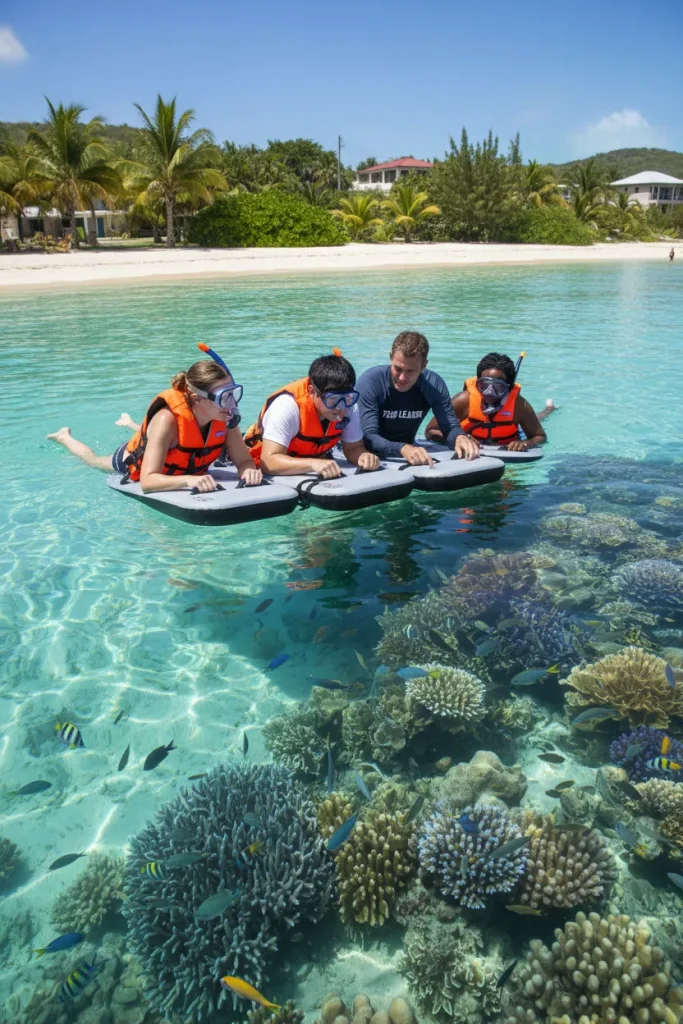
Thinking about snorkeling tours in Anguilla but worried you’re not a strong swimmer? For many travelers, snorkeling tours are worth booking if you choose a calm-water route with patient guides, flotation aids, and shallow reef stops.
These beginner-friendly trips usually run 1–4 hours, include masks, fins, and life vests, and often offer glass-bottom boat options for anyone who prefers to stay dry. Guides tailor the pace with safety briefings, buddy systems, and short swims near reef edges, which makes family snorkeling feel realistic for parents and kids.
Guests pass along real impressions. One visitor from New York praised the guides: “They made everything easy—floaties and steady hands the whole way.” A couple from Boston said, “We tried beginner snorkeling and loved it; the visibility was stunning and the stops were short.”
This guide walks through safety measures, who should book, and what to ask before you reserve, so you can decide whether a guided snorkel trip matches your comfort level and travel goals.
✅ Browse Anguilla Tours On Viator
Planning a trip to Anguilla? Explore our Anguilla Guides for hotels, beaches, travel tips, and more.
What Makes Anguilla Snorkeling Tours Worth Booking?
Anguilla draws people who want simple, honest water time. Tours focus on calm bays, short boat hops, and shallow reef flats that let you relax and watch the world below. Clear water and steady conditions help make the experience feel safe for many visitors.
Clear waters and visibility
The island’s turquoise seas are famous for excellent water visibility on most days. Sheltered coves and reef flats often offer long sightlines to the bottom, so you can see fish, coral, and sand without strain. That clarity makes it easier to stay calm if you’re nervous in the water.
Accessible reef sites and shallow snorkeling options
Many reefs sit close to shore or a short ride away, which creates easy entry points and shallow routes. Operators aim for calm launch zones and reef flats rather than exposed drop-offs. Think of the way some Caribbean beaches offer gentle, swimmer-friendly reefs; Anguilla reef snorkeling follows the same idea, with approachable spots that suit families and first-timers.
Typical marine life sightings
- Colorful parrotfish and sergeant majors near coral heads.
- Wrasse and butterflyfish patrolling shallow gardens.
- Occasional sea turtles and visible conch along sandy edges.
- Reef sponges and small schools that stay close to the surface.
These common encounters make marine life in Anguilla rewarding even on short, sheltered stops. Seeing activity near the surface boosts confidence and keeps snorkel sessions lively.
How local operators tailor tours for different skill levels
Reputable operators and resort dive shops advertise beginner-friendly snorkel sites and calm-water routes. Guides lead small groups, run quick skill checks, and swap options if someone needs a shallower stop. If you prefer to stay dry, many outfits offer glass-bottom boat rides or calm, supervised shallows so everyone has a good day.
Who Should Book Anguilla Snorkeling Tours — Best Fit And Limitations
Anguilla snorkeling tours suit travelers who want easy, guided water time without deep diving or strong swim skills. If you can float with a life vest, breathe through a snorkel after a short try-on, and prefer short guided swims to steady currents, these trips tend to be enjoyable. Families find many operators tailor routes to calm, shallow reefs that let kids and cautious adults stay close to the boat.
Good candidates: casual snorkelers, families, and nervous swimmers
If you are a casual snorkeler who likes spotting fish from knee-to-chest depth, you will fit right in. Operators commonly provide child-size masks, fins, and life vests, which makes family snorkeling in Anguilla easier to plan. Guides often set a relaxed pace, offer flotation aids, and keep groups small so nervous swimmers can take breaks and float near the guide.
When to reconsider: serious non-swimmers or those with medical concerns
Do not book if you cannot swim at all or if open water triggers severe panic. People with heart, respiratory, or seizure conditions should be cautious and review snorkeling medical restrictions before reserving a trip. Ask about on-board alternatives such as glass-bottom boat rides, shore-based viewing, or stay-dry photo stops when you want the experience without entering the water.
Age considerations and accessibility for older guests and children
Many operators welcome both children and older adults but impose minimum age limits for open-water snorkeling. Children are usually required to wear life vests and stay in shallow spots. Guests with limited mobility should check boat boarding options, swim-platform assistance, or shore-based alternatives in advance. Call ahead to confirm ramps, crew help, and whether a specific tour matches your physical needs.
Safety Measures And Equipment Provided On Tours
On most outings, you’ll notice safety is part of the routine before the engine even starts. Tour operators aim to make snorkeling feel beginner-friendly by matching gear and plans to your comfort level and the day’s sea state.
Life vests, flotation devices, and guided buddy systems
Expect U.S.-standard life vests on board and inflatable flotation belts for extra buoyancy. Guides commonly bring noodles, small buoys, and kid-sized vests so everyone finds a secure fit.
Teams enforce a buddy system. If you’re not a strong swimmer, you may be paired with a guide or a confident swimmer for close support throughout the stop. That pairing reduces stress and keeps you focused on the reef instead of struggling to stay afloat.
Briefings, skill checks, and trained guides or snorkel masters
Before you enter the water, staff run a short safety briefing that covers mask fit, snorkel clearing, and universal hand signals. These walk-throughs are simple, practical, and aimed at making beginners feel steady.
Resort dive shops and independent operators typically employ trained guides or snorkel masters who perform quick in-water skill checks near the boat. They watch for trouble signs and give immediate tips so you don’t push into deeper zones until you’re ready.
Typical boat setup: calm launch zones, shaded rest areas, and easy re-boarding
Beginner-friendly charters pick calm launch points and position themselves near shallow reef patches to keep entries easy. Boats often include shaded seating, a cooler with water, and space to dry off between stops.
Re-boarding is straightforward: swim platforms, sturdy ladders, and crew assistance make getting back on the boat low-effort. These features help conserve energy and keep the experience relaxed for families and nervous swimmers on guided snorkel tours in Anguilla.
- Tip: Ask before you book which flotation aids the operator carries and whether they run in-water skill checks.
- Tip: Confirm how many guests per guide to ensure the buddy system will feel secure for you.
What To Know Before You Book Anguilla Snorkeling Tours
Before you hit reserve, take a moment to match the tour to your comfort level. Operators often label routes as calm-water, family, or shallow-reef so you can choose an option that suits nervous swimmers and families. Resort dive shops and established charters usually list typical stops, travel time to the first reef, and whether they offer glass-bottom views or easy beach entries.
Choosing calm routes
Look for tours that advertise beginner-friendly passages and sheltered bays. These beginner snorkel tours keep time on the water short between the boat and snorkeling spots, which helps reduce anxiety for less confident swimmers.
Questions to ask operators
- Are life vests provided and mandatory for all guests?
- What is the guest-to-guide ratio and are guides certified?
- Do you have medical exclusion policies or requirements?
- What is your refund or cancellation policy if weather forces a change?
- How long is the boat ride to the first reef and is there shaded seating?
Gear and rentals
Many charters rent masks, fins, and snorkels, but bring your own mask if you care about fit. For what to pack for snorkeling in Anguilla, include a rashguard, reef-safe sunscreen, water shoes for rocky entries, a towel, and motion-sickness medicine if you get queasy. A waterproof camera or GoPro makes it easy to capture fish and coral without leaving the boat.
Reef protection
Choose reef-safe sunscreen and avoid lotions with oxybenzone or octinoxate. Local outfitters will appreciate guests who protect coral and sea life.
Timing and sea conditions
Winter and spring typically bring calmer seas in the Northern Hemisphere, making them prime times for booking Anguilla snorkeling tours. Trade winds and swell can push operators to skip exposed reef stops, so ask about sheltered alternatives on windy days. Tides affect visibility and access, so check with the guide about the best time of day to visit a specific reef.
Final checklist
- Confirm beginner snorkel tours or calm-water route availability.
- Verify safety protocols, guest-to-guide ratio, and certification.
- Decide on rentals versus bringing your own gear and plan what to pack.
- Ask about weather, tides, and the refund policy before booking.
Tips To Make Snorkeling Enjoyable If You Are Not A Strong Swimmer
Feeling nervous about getting in the water is normal. A few small steps before your tour can change worry into confidence and help you enjoy the reef without overexerting yourself.
Practice at shore or in a pool. Spend 10–15 minutes getting comfortable with your mask, snorkel, and fins in waist-deep water or a calm pool. Work on mask clearing, slow steady breaths through the snorkel, and gentle fin kicks. That short familiarization lowers panic and saves energy when you’re on the boat.
Use flotation aids and stay with the group. Wear a life vest if the operator offers one, or ask for inflatable belts or noodles as extra support. Staying close to your guide and buddy keeps you in shallower water where you can stand if needed. Guides often plan shallow reef stops for guests who prefer less depth.
Conserve energy and stay calm. Breathe slowly and evenly through your snorkel. Float on your back to rest, look down instead of tensing your shoulders, and keep hands relaxed at your sides. If your mask leaks, swim to calm water, remove and reseal it, then re-enter—don’t struggle while submerged.
Choose alternatives on tour day when needed. If long swims sound daunting, pick tours that include glass-bottom boat Anguilla options, very short timed swims at shallow reefs, or on-deck spotters who take photos for you. These allow you to see marine life up close without long swims.
- Try short, repeated swims rather than one long session to build comfort.
- Tell the guide you’re a non-swimmer so they can match you with an appropriate spot.
- Bring reef-safe sunscreen and a lightweight rash guard for sun and comfort.
Use these non-swimmer-friendly snorkeling tips to shape a day that feels safe and fun. With simple prep, reliable flotation aids for snorkeling, and smart tour selection like a glass-bottom boat in Anguilla, you can enjoy the island’s underwater life on your terms.
Real Guest Quotes And Typical Tour Reviews From Anguilla Visitors
Readers often search Anguilla snorkeling reviews to get a feel for what a trip really looks like. Below we collect the kinds of comments people leave after a day on the water. These snippets help you imagine the pace, safety, and small joys of a guided outing.
Positive experiences from nervous swimmers
- “Our guide stayed close and spoke calmly the whole time. The life vests fit well and the shallow stop was perfect for beginners.”
- “My partner is nervous in open water. The short boat ride and clear briefing made all the difference. We saw parrotfish right off the reef.”
- “Resort-run excursions tend to cater to families. The patient guides and easy re-boarding helped my kids and me relax and enjoy the corals.”
Constructive feedback visitors commonly give
- Guests ask for smaller guest-to-guide ratios so attention feels more personal. A lot of snorkeling tour reviews call this out as the top improvement request.
- People mention rental masks that leak or feel loose. Many say operators should stock a wider range of child-size gear and adjustable masks.
- Reviewers want clearer pre-trip briefings that cover signals, flotation use, and reef etiquette. Asking these questions before booking often avoids disappointment.
Common themes across reviews
- Visibility gets frequent praise; many Anguilla snorkeling reviews highlight water that makes fish and coral easy to see.
- Guide helpfulness ranks high. Visitors praise those who balance safety with friendly storytelling and local tips on marine life.
- Families find tours convenient when booked through resorts. Still, some notes mention cancellations or schedule shifts due to weather, so check refund and alternate options.
For quick context, guest quotes about snorkeling often read like short, honest stories. They nudge hesitant travelers to try a guided trip while noting simple fixes operators can make. If you have specific needs, ask about group size, gear fit, and cancellation terms up front to match expectations with reality.
Conclusion
In short, the decision comes down to picking the right operator and preparing wisely. For casual snorkelers, families, and nervous swimmers, beginner-friendly tours and resort dive shops often deliver calm water stops, life vests, and patient guides that make snorkeling for non-swimmers feel safe and enjoyable.
Before you commit, ask the safety questions we covered, choose calm-water routes, and practice with your mask and snorkel in shallow water. Bring reef-safe sunscreen, a rashguard, and consider flotation aids or a glass-bottom option if you’re still unsure. These steps answer the common should I snorkel in Anguilla question with practical actions you can take today.
When you book, favor local operators who respect reefs and follow sustainable practices. That way, your visit supports authentic experiences and protects marine life for others. If you’re curious, start with a short, guided calm-water trip — see the fish, breathe easy, and decide if you want a longer excursion next time.