
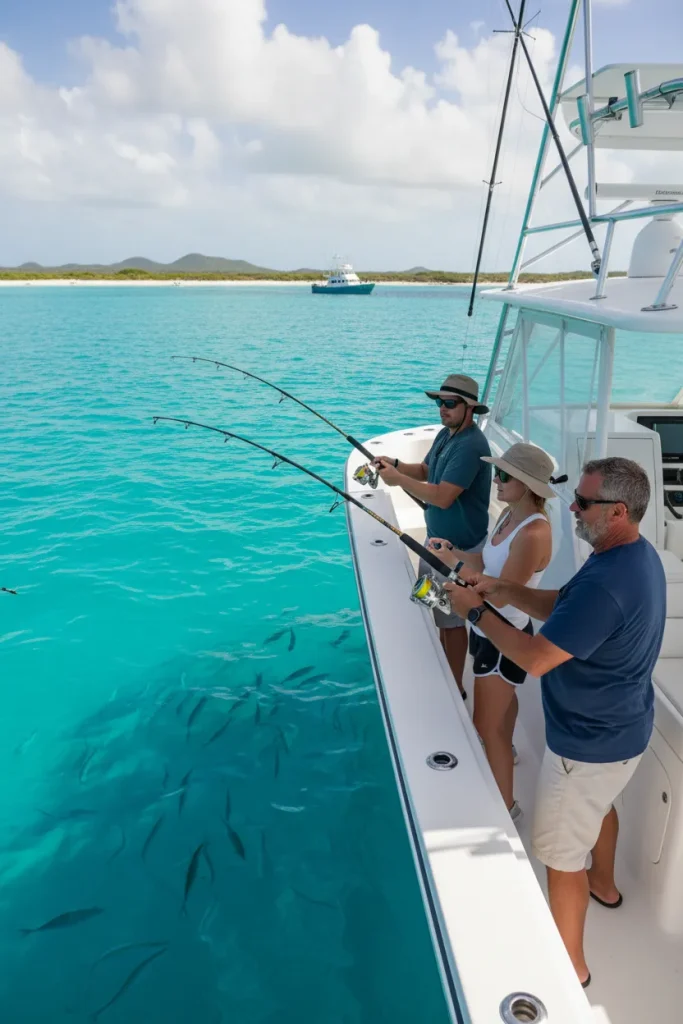
Wondering if a fishing charter in Anguilla is worth it if you’ve never handled a rod before? For many first-timers, yes — especially if you choose a beginner-friendly half-day trip with a patient crew, calm nearshore waters, and simple techniques like reef fishing or light trolling.
A fishing trip here often blends short bursts of excitement with plenty of downtime to enjoy the scenery. Expect clear water, shallow reefs near shore, and calmer blue water a little farther out, which helps beginners feel comfortable learning the basics without the pressure of big-game tactics.
“Our captain was endlessly patient and even showed my kids how to reel without tangling lines,” said a guest from New York after a half-day outing. Another traveler shared, “We caught a few snapper and had time for snorkeling—felt like a full day of island magic.”
Read on to match the right boat, crew, and trip length to your comfort level. Whether you want a relaxed half-day with instruction or a full-day quest, this guide will help you decide if a fishing charter fits your travel plans and budget.
✅ Browse Anguilla Tours On Viator
Planning a trip to Anguilla? Explore our Anguilla Guides for hotels, beaches, travel tips, and more.
Is A Fishing Charter In Anguilla Worth It For Beginners?
If you want a short answer: yes, a charter can be a great first fishing trip. This Anguilla fishing charter overview helps you see what to expect without the jargon. Read on for a clear snapshot of gear, species, and realistic outcomes so you can decide if a half-day or full-day trip fits your plans.
Overview of what a typical Anguilla fishing charter includes
Most operators handle the heavy lifting. Typical packages list the boat, a licensed captain and mate, rods and reels, basic tackle, live or cut bait, safety gear, and an ice-filled cooler for your catch. Higher-end charters may add snorkeling gear, gourmet snacks, and electronics like sonar and GPS.
Boat types vary by trip length. Center-console day boats work well for nearshore runs. Sportfisher yachts suit offshore big-game trips and offer more comfort and storage for longer days.
Why Anguilla’s waters are beginner-friendly
Shallow-water fishing around Anguilla keeps travel times short and seas calmer. Many productive spots sit close to reefs and drop-offs, so you spend more time fishing and less time riding.
Beginner-friendly species often include snapper, grouper, kingfish, and barracuda. Occasional mahi-mahi shows up in nearshore water, while marlin and tuna live farther out and need longer trips.
Light-tackle bottom fishing and nearshore trolling are forgiving methods. Captains tailor techniques to reduce frustration and teach basic handling as you go.
Typical success rates and what “a good day” looks like for novice anglers
Success depends on weather, season, and trip length. Nearshore half-days often yield reef fish for most groups. That makes them a reliable choice for first-timers.
A “good day” for beginners might mean landing several snapper or grouper, hooking a kingfish, or getting steady bites while the crew coaches you through each step. If fishing is slow, many charters switch to snorkeling or island cruising so the trip still feels valuable.
- Half-day nearshore: higher chance of consistent catches and quick returns to shore.
- Full-day offshore: bigger target species but lower guaranteed success for novices.
- Measure success by learning, steady action, and memorable moments, not just trophy fish.
Who This Tour Is Best For — Ideal Guest Profiles
Not every trip needs to target trophy fish. Many charters shine because they welcome different types of guests and match the day to your mood. Read on to see which travelers get the most from a boat outing.
Families and groups with mixed experience levels
A family fishing charter in Anguilla works when parents, kids, and grandparents want different things. While some cast lines, others can snorkel, sunbathe, or enjoy island views. Larger center-console boats and day vessels give shade, seating, and room for coolers and beach gear, so the trip feels like a shared outing rather than a rigid lesson.
First-time anglers who want a guided, low-pressure introduction
Beginner angler charters are ideal for people who want hands-on coaching without pressure to perform. Captains and mates teach casting, hooking, and safe handling in patient, step-by-step ways. Operator-supplied, beginner-friendly gear removes intimidation and lets you focus on the thrill of that first catch.
Active travelers who prefer a short half-day vs. full-day charter
If you want a taste of fishing without giving up your island schedule, weigh the half-day vs full-day choice. Half-day trips last three to four hours and suit people with limited time, mild sea tolerance, or tight budgets. Full-day charters run six to eight hours or more for guests chasing bigger fish or wanting offshore exploration and a sea-to-table meal.
Other good fits include couples seeking an experience-driven outing and small friend groups combining adventure with downtime. Travelers on a tight itinerary can book through resorts or local platforms for convenience and clear timing.
What To Expect Onboard — Boats, Crews, And Amenities
Step aboard and picture the scene: bright water, a salty breeze, and a crew ready to guide you. Anguilla charter boats range from nimble day boats to full-featured sportfisher yachts, so you can match comfort and ambition to your group’s needs.
Types of boats you’ll meet
Center-console fishing trips often use open, fast day boats. These are great for reef work and light-tackle casting close to shore. They give you room to move and quick access to spots when fish are shallow.
Sportfisher vessels serve offshore plans. Expect tuna towers, fighting chairs, live wells, and plenty of rod storage for full-day pelagic runs. These boats handle rougher water and carry gear for bigger fights.
Luxury yachts and chartered sportfishing yachts blend fishing systems with creature comforts. Cabins, gourmet options, and onboard lounges make them ideal for families or groups who want fishing plus relaxation.
Who does what onboard
Knowing charter crew roles helps you relax. The captain plots the course, reads sonar, and keeps everyone safe. Captains know seasonal hotspots and how fish behave near Anguilla.
The mate or deckhand moves between tasks. They bait hooks, land fish, and coach beginners through casting and fighting. For many first-timers, the mate’s hands-on guidance turns nervous anglers into confident ones.
Top crews walk you through rigging, landing, and handling fish. Some will fillet and store your catch so you leave with fillets ready for the grill.
Comfort and safety to expect
Good fishing charter amenities matter on a long day. Look for shade from a T-top or canopy, stable seating, and life jackets in varied sizes.
Larger boats often include restroom access, fresh-water showers, and enclosed heads. Electronics like GPS and fishfinders speed up locating productive spots so you spend less time waiting and more time fishing.
Many operators add extras to keep the trip varied: snorkeling gear, paddleboards, tenders for island stops, and provisions for food and drinks. Those touches help when the bite slows or kids need a break from rods.
What To Know Before You Book — Costs, Licensing, And Logistics
Booking a fishing trip should feel simple and clear. Prices vary by boat size, crew level, and season, so check the advertised rates and ask what’s included before you pay. Knowing the typical Anguilla fishing charter cost helps you compare options and avoid last-minute surprises.
Typical price ranges and included items
Day trips often list a base rate that covers captain and mate, basic rods and reels, bait, tackle, ice, and safety gear. Some operators bundle snacks or soft drinks into the price while others add fuel surcharges for longer runs. Expect luxury boats to charge more for space, premium tackle, and extra crew attention.
- Ask about charter inclusions: rods, reels, live bait, life jackets, and whether filleting or packaging fish is offered.
- Confirm extras: snorkeling gear, food, drinks, transportation, and crew gratuity.
- Keep a modest tip in mind; local customs often recommend 10–20% for day charters.
Permits and rules you should check
Local regulations set what species you can keep, minimum sizes, and seasonal protections. Reputable operators know the law and handle Anguilla fishing permits when required. Ask your captain how they manage legal limits and whether the trip favors catch-and-release for certain species.
Choosing length and timing
Half-day fishing trips are popular with beginners and families. A 3–4 hour morning run cuts cost and lowers seasickness risk while still offering a good chance to learn basic techniques. Full-day outings make sense if you want offshore species or more time to practice fighting fish.
- Morning departures usually mean calmer water and cooler temperatures, a smart choice if you want the best time to fish.
- Afternoon or sunset trips suit travelers who prefer a later start or scenic views, but sea conditions can change.
- Book through trusted local operators, marinas, or resort concierges and confirm cancellation and weather policies.
Final booking checklist
Before you confirm, verify the quoted charter cost against the list of inclusions. Make sure the crew will handle any permits needed. Pick a half-day trip if you want low commitment, or choose a full day when you aim for bigger catches. Clear answers from the operator make the trip feel effortless and fun.
Beginner-Friendly Fishing Techniques & Gear Provided
Out on the water with a charter, you’ll get a short walk-through before lines go in. That quick intro sets expectations and shows the basic gear, so you feel ready rather than lost. If you want hands-on learning, the crew tailors the day to your pace and comfort.
Common methods used on Anguilla charters
Bottom fishing is a top pick for beginners. Charters anchor or drift over reefs, drop bait, and you get steady action with species like snapper and grouper. Those steady bites help new anglers learn without long dry spells.
Trolling offers a relaxed option where the boat does most of the work. Lures trail behind the vessel for kingfish and mahi-mahi, while the crew manages lure changes and line setup so you can enjoy the ride.
Light-tackle casting works well around structure and inshore reefs. Short fights and lighter gear let you practice casting and reeling without being overpowered by a large fish.
Starter gear and why operator-supplied rods/reels matter
Charter-provided gear is matched to the trip type. You’ll get light spinning setups for reef work and sturdier conventional rods if you head offshore. Properly chosen rods and reels cut down on tangles and broken lines.
Quality bait, sharp hooks, and live-bait wells on sportfisher-style boats raise your chances of a hookup. That means less frustration and more learning time for you.
How the crew teaches casting, fighting fish, and safe handling
Fishing instruction onboard is practical and hands-on. Crew members demonstrate how to hold a rod, set the hook, and manage drag, then guide you through your first hook-up step by step.
When a fish runs, the crew steps in to assist with landing and gaffing if needed. You’ll watch a demo on safe handling and release techniques so both you and the fish stay safe.
For nervous beginners, the crew often lets you try one action at a time: casting first, then reeling, then the fight. That steady rhythm builds confidence while keeping the trip fun and relaxed.
Real Guest Quotes And Mini Case Studies From Anguilla Charters
Readers often point to patient instruction and on-the-water adaptability when they leave Anguilla fishing charter reviews. You’ll see guests praise captains and mates who walk newcomers through knot-tying, bait handling, and how to fight a fish without panic. Those simple lessons shape most beginner fishing experiences visitors remember for years.
“The captain stayed calm and showed me every step; by the third cast I had a snapper on the line,”
“Our mate coached my daughter through the fight and landed her first grouper; we still talk about it,”
Below are compact mini case studies that reflect typical outcomes from recent guest quotes charters include in their feedback.
- Half-day family trip: Morning departure to nearshore reefs, multiple reef fish landed, quick snorkel stop at a shallow coral patch, and the crew filleted the catch for the ride home. Key factors: calm seas, live bait, hands-on mate.
- Full-day offshore attempt: Longer transit to blue water produced one mahi-mahi and several near-misses. Crew prepared the caught fish for lunch and switched to island anchoring for snorkeling when the bite slowed. Guests appreciated the flexible plan and comfort aboard.
- Luxury sportfisher day: Advanced electronics located schools and three anglers landed multiple kingfish and a wahoo. High-end gear and roomy cockpit kept energy up during long runs between productive spots.
Guests who write positive fishing charter reviews tend to highlight crew skill over boat size. For many novice anglers, what matters most is clear teaching, a willingness to adapt to slow fishing, and options for snorkeling and fishing when lines go quiet.
When you read guest quotes charters share, look for mentions of short transit times, live bait use, and patient instruction. Those elements show up repeatedly in beginner fishing experiences travelers call memorable.
Pros And Cons For Non-Experienced Anglers — Is It Worth Your Time And Money?
Thinking about a trip that teaches you to fish while you soak up Anguilla’s turquoise views? A charter can be a low-stress way to learn, or an expensive missed chance if you pick the wrong trip. Read the quick takes below to weigh the pros and cons of an Anguilla fishing charter for your group and budget.
Pros that make a charter appealing:
- Guided learning from seasoned captains and mates who handle lines, bait, and navigation while showing you technique. That hands-on coaching shortens the learning curve for new anglers.
- Access to productive spots like reef edges, wrecks, and nearby offshore grounds that casual boaters seldom find. Those locations raise your odds of action and better photos.
- Many operators add snorkeling, island views, and beach stops. These extras turn slow fishing into a full-day memory, helping with value for money.
- Larger boats and premium charters offer shade, seating, restrooms, and snacks. Comfort matters when families or mixed-experience groups want to relax between casts.
Cons to keep in mind:
- Cost can outpace expectations if you book an expensive offshore big-game trip when a nearshore half-day would fit your goals better. Ask about rates so you can match price to experience.
- Open water moves. If you are prone to motion sickness, plan to avoid rough days and learn how to avoid seasickness by choosing morning nearshore departures and bringing remedies like wristbands or medication.
- Fishing success varies with season and weather. Even great captains cannot promise a trophy catch every time, so temper expectations when booking.
Practical tips to tilt the trip toward value:
- Choose a half-day nearshore or reef trip for an affordable introduction that often yields steady action and shorter time on the water.
- Ask operators up front about their teaching focus. Tell them you want hands-on instruction and the crew will tailor the outing to beginners.
- Combine fishing with snorkeling or a beach stop to ensure the day feels complete even if bites slow. This boosts perceived value for money.
- Book morning departures for calmer seas and better bite windows. Confirm what fees are included so you avoid surprise charges.
- When deciding who to book with, use a quick checklist to figure out how to choose a fishing charter based on teaching emphasis, boat size, and family-friendly amenities.
Weighing these points helps when you compare the pros and cons. Pick a plan that matches your appetite for adventure, your tolerance for motion, and your idea of good value. That way your first fishing day becomes a clear, enjoyable step into island life.
Conclusion
Bottom line: a fishing charter is worth it for many non-experienced anglers when you match the trip to your goals. If you want a low-stress introduction, pick a half-day nearshore charter with a hands-on crew who teach casting and fish handling. If your aim is big-game offshore fishing, be prepared to invest more in time, gear, and sea conditions.
Before you book, run through a short checklist so the answer to “should I book an Anguilla fishing charter” is clear. Decide half-day vs. full-day based on seasickness risk, budget, and the species you hope to target. Confirm what’s included—gear, bait, ice, filleting, and any food or drinks—and ask about the crew’s teaching style and patience level.
Favor morning departures and operators with strong local knowledge and solid reviews that highlight instruction and safety. These beginner fishing takeaways will help you leave with a story, a meal-ready catch, and more confidence for your next trip. If you value discovery and learning, book a charter that prioritizes hands-on guidance and nearshore structure for the best experience.