
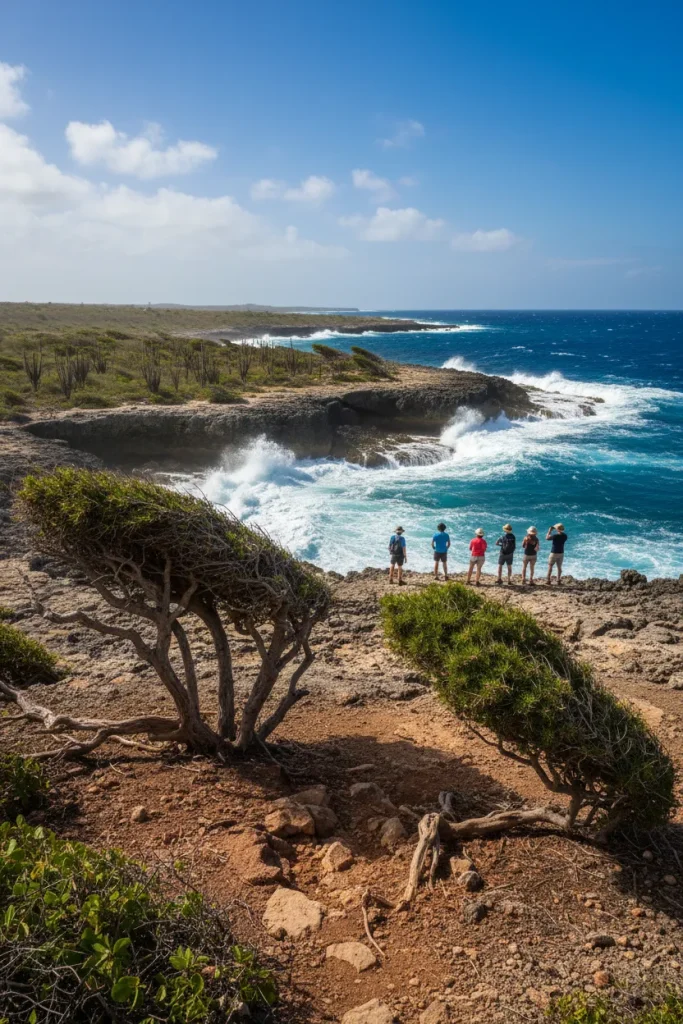
What are the best nature tours in Aruba? The best nature tours in Aruba take you beyond the resort strip into cactus-studded trails, wind-whipped cliffs, hidden beaches, coral reefs, and historic ruins that show the island’s wilder side.
These tours range from rugged UTV routes past Bushiribana Gold Mill Ruins to guided hikes in Arikok National Park and easy snorkel-and-sail trips over reefs and shallow wrecks. The island’s dry climate and steady sunshine make outdoor adventures reliable almost year-round, whether you want a family-friendly boat day or a more active off-road route.
Guests say it best. One visitor wrote, “The UTV route to Boca Prins felt like a movie set — empty beaches and dramatic cliffs.” Another shared, “Our snorkeling tour spotted a sea turtle right by the wreck — unforgettable.” Those quick moments capture why nature-focused outings are such a strong choice if you want more than a beach day.
Before you book, know the mix: rugged 4WD stops like Andicuri and Boca Cave Pool, cultural highlights such as the Aruba Aloe Factory Museum, and calm reef trips that work well for beginners. In short, these tours balance raw landscape, wildlife sightings, and island history — all within easy reach from the hotel district or a rental car.
✅ Browse Aruba Tours On Viator
Planning what to do? Explore our Aruba Tours & Things to Do guide for tours, activities, and trip ideas.
Planning a trip to Aruba? Explore our Aruba Guides for hotels, tours, beaches, and travel tips.
Why Choose Nature Tours In Aruba: The Island’s Wild Appeal
The island’s appeal goes far beyond white-sand resorts. With steady sunshine, low rainfall, and a compact layout, it is easy to swap pool time for coastal cliffs, desert trails, caves, and reef stops without spending the whole day in transit.
Aruba’s Unique Dry Landscape And Year-Round Sunshine
The dry climate means warm days, steady trade winds, and ocean temperatures that usually feel comfortable for swimming and snorkeling. Rain is limited compared with many tropical destinations, so hikes, UTV routes, and boat trips are less likely to be interrupted by long storms.
That predictability is a big reason families, couples, and independent travelers like booking outdoor adventures here. You can plan a morning trail ride, a half-day snorkel cruise, or a late-afternoon photo stop with a good chance of clear skies.
What The Wilder Side Looks Like
The wilder side looks nothing like the resort postcard. Think cactus-covered hills, rocky coves, blowholes, limestone caves, and wind-shaped cliffs where the sea crashes hard against the coast.
Places like Boca Prins and Andicuri feel especially different from the hotel beaches. Some areas are easier to reach with a guide or 4WD, which is why nature tours are useful if you want dramatic scenery without worrying about route planning.
How Tours Combine Nature, Culture, And History
The best guides do more than drive you from stop to stop. They explain how the landscape connects to the island’s past, from Caiquetio petroglyphs at Fontein Cave and Ayo Rock Formation to the 19th-century gold rush at Bushiribana Gold Mill Ruins.
Stops near the Natural Bridge area, California Lighthouse, and Aruba Aloe Factory Museum add even more context. You leave with rugged photos, but also a better understanding of how the island’s dry ecology, trade routes, mining history, and local traditions fit together.
Top Guided Nature Tours To Book: UTVs, Hikes, And Boat Excursions
Start by matching the tour to your group’s energy level. Some travelers want a dusty, high-energy off-road route, while others prefer a gentle boat day or a guided walk with cultural context.
Popular UTV And ATV Tours
UTV and ATV tours are some of the most popular ways to see the island’s rugged side. Typical routes include stops at Bushiribana Gold Mill Ruins, California Lighthouse, Boca Cave Pool, Andicuri Beach, and cliffside viewpoints that are hard to reach on a casual self-drive day.
Most guided tours include a safety briefing, helmets, and a lead guide who handles the route. Some operators also include photo stops at dramatic coastal formations, natural pools, and hidden coves.
If you rent independently through companies such as Jeans Rentals Aruba or Ruff Riders, bring a valid driver’s license and make sure you are comfortable with mixed road and off-road conditions. For first-time visitors, a guided route is often easier and safer.
- Bring closed-toe shoes, sunscreen, sunglasses, and a bandana for dust.
- Pack a swimsuit and towel if the route includes a swim stop.
- Ask whether fuel, helmets, insurance, and park access are included.
Guided Hikes In Arikok National Park
Arikok National Park tours are a strong choice if you want geology, wildlife, and history in one outing. Guided hikes introduce you to cacti, salt-tolerant shrubs, lizards, birds, cave paintings, and coastal formations that are easy to miss on your own.
Trails range from easier walks to more rugged routes, so check the difficulty before booking. A guide can also explain the meaning of petroglyphs, point out native plants, and help you understand how the dry landscape supports life.
Morning hikes are usually best. Temperatures feel more manageable, wildlife may be more active, and the light is better for photos.
Snorkel-And-Sail Nature Tours
Snorkel-and-sail trips are a softer way to experience the natural side of the island. These boat tours usually visit reefs, shallow wrecks, and calm swim spots where you can see reef fish, corals, and sometimes sea turtles.
Many catamaran tours include basic snorkel gear, guidance from the crew, drinks, and sometimes lunch. They work well for mixed groups because stronger swimmers can spend more time in the water while others enjoy the deck, views, and breeze.
- Best for families: half-day catamaran trips with calm swim stops.
- Best for wildlife: reef and wreck routes with experienced guides.
- Best for comfort: boats with shade, ladders, restrooms, and included gear.
Wildlife Spotting On Tours: What You’ll See And Where
Nature tours make it easier to notice the animals and plants that shape the island’s character. Some sightings are quick and subtle, while others — like turtles, butterflies, and flamingos — become the moment everyone remembers.
Land Wildlife: Iguanas, Birds, And Desert Plants
Iguanas and small lizards are common near rocks, trails, hotel gardens, and sunny lookout points. Move slowly if you want photos, since sudden motion can scare them off.
Birdwatching is especially rewarding around Arikok National Park, coastal lookouts, and quieter inland areas. You may see doves, kestrels, herons, and other birds adapted to dry, windy conditions.
The plant life is just as interesting. Cacti, aloe, divi-divi trees, and low shrubs show how life adjusts to limited rainfall and strong sun.
Marine Life On Snorkeling And Boat Tours
Clear water makes reef viewing easy on many snorkel tours. Common sightings include parrotfish, angelfish, sergeant majors, trumpetfish, and other reef species around coral heads and wreck structures.
Sea turtles are a highlight when they appear, especially near seagrass beds and calmer reef areas. A good guide can improve your chances by choosing the right site and timing, but sightings are never guaranteed.
Butterflies, Flamingos, And Easy Wildlife Stops
The Butterfly Farm is a calm, educational stop for families and anyone who wants close-up wildlife without a rugged outing. Guided visits explain life cycles, feeding behavior, and the best time to see butterflies active.
De Palm Island and Renaissance Island are often associated with flamingo experiences, though access rules and settings differ. These are more controlled wildlife encounters than wild sightings, so follow staff guidance and keep a respectful distance.
The Aruba Aloe Factory Museum adds a plant-focused layer to your trip, showing how aloe became part of the island’s identity and economy.
- Best land spots: Arikok National Park, Ayo Rock Formation, and coastal lookouts.
- Best water stops: reefs, wrecks, and calm snorkel sites.
- Easy family options: Butterfly Farm, aloe tours, and gentle snorkel cruises.
Practical Know-Before-You-Go Tips For Nature Tours
A little preparation makes outdoor tours much more comfortable. The sun, wind, rocks, and saltwater can catch you off guard if you pack like you are only going to the beach.
Best Timing To Avoid Heat And Crowds
Early morning is usually the best time for hikes, UTV rides, wildlife spotting, and snorkeling. Temperatures are cooler, the light is softer, and popular spots often feel less crowded.
Late afternoon can also work well, especially for scenic drives, sunset viewpoints, and photography-focused routes. Midday is best reserved for shorter stops, shaded activities, or boat tours with plenty of cover.
What To Pack
- Water: bring more than you think you need, especially for UTVs and hikes.
- Sun protection: high-SPF sunscreen, sunglasses, hat, and lightweight long sleeves.
- Footwear: water shoes or sturdy sneakers for rocky trails, caves, and shorelines.
- Swim gear: swimsuit, towel, and dry bag if your route includes snorkeling or a natural pool.
- Tech: waterproof phone case, camera, extra battery, and lens cloth for dust or salt spray.
- Documents: driver’s license if renting a UTV or ATV.
- Cash or card: useful for snacks, entrance fees, tips, and small purchases.
Accessibility And Vehicle Considerations
Accessibility varies a lot by tour. Some viewpoints and boat trips are easier for travelers with limited mobility, while remote beaches, caves, and natural pools may involve uneven surfaces, steps, or rocky approaches.
Guided tours are usually the safer choice if you are unsure about terrain. Guides can help with route selection, timing, and safe access. Self-drive rentals are better for confident drivers who want a flexible schedule and understand the limits of off-road vehicles.
Safety, Regulations, And Responsible Tourism
Outdoor adventures are more enjoyable when you respect local safety rules and fragile environments. The dry landscape may look tough, but many habitats and historic sites are delicate.
Trail And Coastal Safety
- Stay on marked trails in Arikok National Park and follow posted warnings.
- Keep a safe distance from cliffs, blowholes, and wave-swept rocks.
- Wear sturdy shoes on rocky paths and wet surfaces.
- Carry enough water to avoid heat exhaustion on dry inland routes.
- Do not cross damaged fencing or ignore warning signs for a photo.
Rules For UTVs, ATVs, And Protected Areas
Most rental operators require a valid driver’s license and a safety briefing. Some protected areas restrict motorized access, especially near archaeological zones, nesting sites, and fragile park terrain.
Respect Arikok National Park rules and stick to approved routes. Licensed guides can help you avoid restricted areas while still reaching the most scenic stops.
Leave-No-Trace Habits
- Carry out all trash.
- Do not collect shells, coral, rocks, or artifacts.
- Never feed wildlife.
- Use reef-safe sunscreen before marine activities.
- Support local guides, museums, and conservation-focused attractions.
These small choices protect the places that make nature tours worth booking in the first place.
Where To Combine Nature Tours With Culture And History
Some of the best outings combine rugged scenery with cultural context. That way, your day feels less like a checklist and more like a layered story of the island.
Historic Stops Commonly Included On Nature Tours
Bushiribana Gold Mill Ruins are a common stop on UTV and island routes. The ruins sit against a dramatic coastal backdrop and help explain the island’s 19th-century gold rush.
California Lighthouse is another frequent stop, especially on scenic drives. It gives you wide coastal views, a dose of maritime history, and a simple photo stop that works well for families.
Aloe Tours, Cave Paintings, And Rock Formations
Aruba aloe factory tours show how aloe cultivation became part of the island’s economy and identity. You can see production methods, sample products, and learn why the plant thrives in the dry climate.
Inside Arikok National Park, Fontein Cave and Ayo Rock Formation reveal Caiquetio petroglyphs and ancient stone features. A guide helps explain what you are seeing and why these places matter.
Why Multi-Stop Tours Work Well
- They combine nature, history, and culture in one efficient route.
- They help families and short-stay travelers see more without overplanning.
- They add context to scenic stops like caves, ruins, rocks, and coastlines.
Choosing a route that includes both wild landscapes and cultural stops gives you a fuller picture of the island beyond the beach.
Guest Quotes And Real Experiences From Nature Tours
Traveler comments often reveal the details that tour descriptions skip: how dusty a UTV ride feels, how calm a snorkeling stop was, or whether a guide made the history come alive.
Guests say it best.
“The UTV took us to a cliff I never would have found on my own. Heart-pounding, safe, and addictive.”
UTV tours tend to spark the most excited reactions. Guests mention rough trails, sudden coastal views, and stops at Bushiribana or California Lighthouse that feel much more dramatic in person.
“Our half-day catamaran was perfect for kids — easy snorkeling, great lunch, and a lazy sail home.”
Snorkeling memories are often bright and family-focused. Parents praise calm coves, clear water, and crew members who help nervous swimmers feel comfortable.
“Seeing butterflies hatch in the enclosure was simple, moving, and great for our eight-year-old.”
Gentler stops like the Butterfly Farm and Aruba Aloe Factory Museum add quieter moments to an active itinerary. They are especially useful when you want an easy half-day or a break from heat and dust.
- Common guest tip: start early for cooler weather and better photos.
- Family tip: choose half-day tours if kids need rest time.
- Adventure tip: guided trips are worth it for remote stops and local stories.
Conclusion
The best nature tours in Aruba take you past the resort view and into the island’s rugged, surprising side. UTV and ATV routes reveal cliffs, ruins, and desert trails; Arikok National Park hikes add caves, petroglyphs, and native plants; snorkel-and-sail trips bring reefs, wrecks, and sea turtles into the mix.
To plan your nature-focused trip well, pack sun protection, water, sturdy shoes, a swimsuit, and a waterproof phone case. Bring a driver’s license if you plan to rent an off-road vehicle, but consider a guided tour if you want safer access and better local context.
A simple outdoor itinerary could include a morning UTV ride, a late-afternoon Arikok hike, and a half-day snorkel cruise for reef fish and turtle sightings. Add a cultural stop like the Aruba Aloe Factory Museum, Ayo Rock Formation, or Bushiribana Gold Mill Ruins, and your trip feels much richer than a standard beach escape.
If you want to see a wilder, more memorable side of the island, nature tours are one of the easiest ways to do it.