
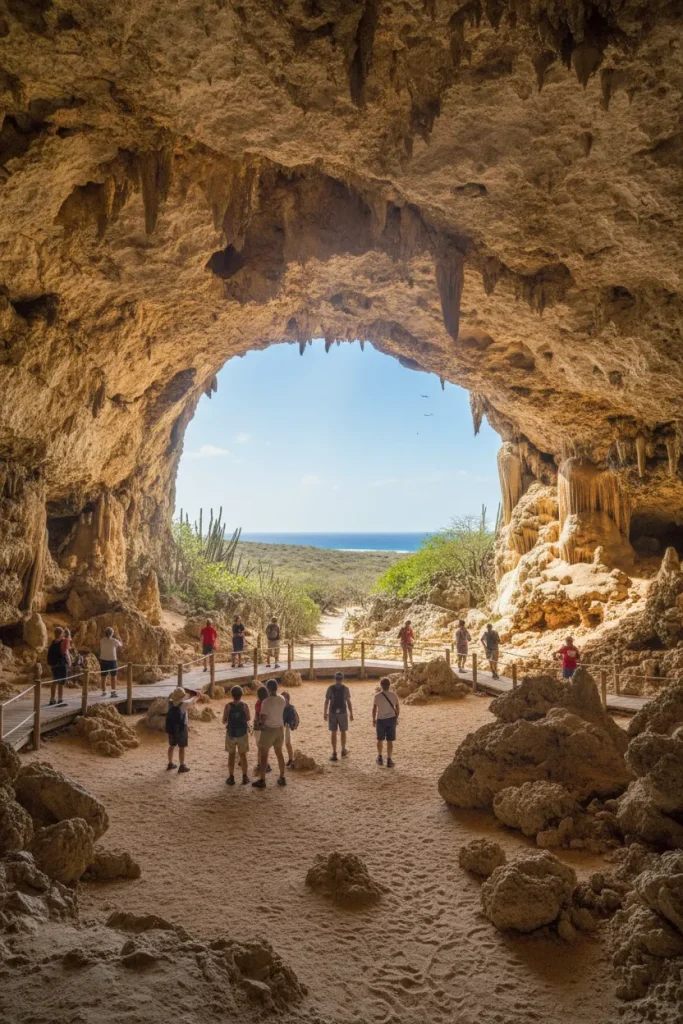
What are the best cave tours in Aruba? The best options are Arikok National Park cave tours, jeep safaris to Fontein Cave, UTV or ATV routes with cave stops, full-island safaris, and cave-plus-Natural Pool tours that combine rock art, rugged scenery, off-road adventure, and a little Aruba history.
Aruba’s caves are worth visiting if you want something different from the usual beach day. You can see Caquetio rock art in Fontein Cave, explore wind-shaped passages inside Arikok National Park, pair the caves with Conchi Natural Pool, or join a longer island safari that also includes Baby Beach, California Lighthouse, and Bushiribana Ruins.
Guests say it best. “The jeep ride was a blast and the cave paintings felt like stepping back in time,” shared Maria from Boston after an Arikok cave trip. “Conchi was the highlight — raw, salty, and unforgettable,” added Kevin, who joined a Natural Pool tour.
This guide walks through the best Aruba cave excursions, what to expect inside the caves, common tour prices and inclusions, nearby stops to combine, and how to choose the right jeep safari, UTV trip, or cave-focused tour for your group.
✅ Browse Aruba Tours On Viator
Planning what to do? Explore our Aruba Tours & Things to Do guide for tours, activities, and trip ideas.
Planning a trip to Aruba? Explore our Aruba Guides for hotels, tours, beaches, and travel tips.
Cave Tours In Aruba: Overview and Why They’re a Must-Do
Step off the sun-soaked beaches and into a different side of Aruba where desert scrub meets shadowed rock. Cave tours reveal a blend of natural wonder and human history that many visitors miss when they stick to the shore. You’ll find easy short stops and full-day adventures that pair caves with natural pools, lighthouses, and historic sites for a varied, authentic island experience.
What makes Aruba caves unique
Aruba’s cave geology is shaped by limestone uplift and wind-sculpted formations. The island’s dry climate preserves both stone and the ancient art left behind by the Caquetio people.
Fontein Cave’s history is visible on the walls in the form of petroglyphs and pictographs, giving each visit cultural context as well as visual drama.
Many of these sites sit inside Arikok caves, set within Arikok National Park’s rugged interior. Trails, cacti, and aloe frame narrow entrances that open into cool, shaded chambers.
Types of cave-focused excursions available
Choose short jeep safaris or UTV trips that add caves to a handful of scenic stops. These half-day options are great for families or travelers on a tight schedule.
Full-day island safaris mix cave visits with snorkeling, historic ruins like Bushiribana, and scenic viewpoints. Guides provide natural and cultural background as you move from site to site.
Off-road adventures give access to more remote formations and hidden pools that standard vehicles cannot reach. You get hands-on exploration without long hikes.
Best time to visit and weather considerations
The best time to visit Aruba caves is year-round thanks to steady trade winds and frequent sunshine. Weather tends to be warm with low rainfall, which keeps trails dry and accessible most days.
Plan around your cruise or hotel pickup times to avoid rushed visits. Bring reef-safe sunscreen, sturdy shoes, and a light layer for cooler cave interiors and breezy overlooks.
Top Cave Tours and Excursions That Include Cave Stops
Aruba’s rugged interior and coastline host a range of guided experiences that put caves and coastal rock formations front and center. Choose a short, focused outing or a full-day expedition to see Fontein Cave, Conchi Natural Pool, and other hidden spots. Below are practical options to match different energy levels and travel styles.
Arikok National Park jeep and safari tours
Arikok National Park tours often use open-sided Land Rovers that handle rough tracks while letting you soak in views. Guides or park rangers explain native history, Taino rock paintings, and local ecology as you walk through Fontein Cave and nearby draws. Typical jeep runs last about four hours, include hotel pickup, and stop at Conchi and Baby Beach on many itineraries.
Small groups keep the vibe personal. Most packages include bottled water, snacks, snorkel gear, and park fees. Expect bumpy roads and limited seat comfort on some vehicles, but guides earn high marks for local knowledge and storytelling.
UTV and ATV adventures with cave stops
UTV and ATV routes let you steer your own path or ride with a guide on rugged trails. Companies such as Jeans Rentals Aruba and Ruff Riders lead routes that blend paved stretches with off-road sections to reach Bushiribana Ruins, Boca Cave Pool, Breathing Rocks, and other stops.
These excursions suit travelers who want hands-on adventure and flexible pacing. Safety briefings and basic gear are standard. Rentals give freedom to linger at viewpoints, though some sites need careful driving and a sense of adventure to access.
Full-island jeep safari itineraries
Full-day options, like the Island Ultimate Jeep Safari, pack nearly every major attraction into one long itinerary. Expect about nine to ten hours on the road with stops at the Natural Pool, California Lighthouse, Alto Vista Chapel, and several cave sites.
These safaris appeal to travelers who prefer a single, comprehensive day to see Aruba’s highlights. Vehicles are geared for off-road sections that reach locations requiring 4WD. Bring sun protection, sturdy shoes, and a readiness for a full day of exploration.
What to Expect Inside Aruba’s Caves: Safety, Terrain, and Wildlife
Aruba’s caves reward curious travelers with hidden art, cool rock chambers, and close-up encounters with the island’s natural world. Before you step inside, know that reaching many entrances involves short hikes over rocky or sandy ground. Guides point out indigenous petroglyphs at Fontein and other sites while keeping groups steady on narrow paths.
Typical cave terrain and physical requirements
Cave terrain in Aruba often includes uneven floors, low ceilings, and tight passages. You may climb stairs, scramble over boulders, or duck through narrow openings to see stalactites and stalagmites.
Expect rocky surfaces that can get slippery near tidal or shaded areas. Some tours involve roughly one hundred steps or steep trails to viewpoints, so a moderate level of fitness helps. Wear water shoes or sturdy sneakers for traction and comfort.
Safety tips and guided tour protocols
Safety is the top priority on most guided trips. Guides and park rangers brief groups on rules, control group size, and set route limits to protect both visitors and fragile cave art.
- Follow guide instructions and stay with the group to reduce risk on uneven terrain.
- Bring reef-safe sunscreen and a small water bottle for hot walks to trailheads.
- Expect bumpy transfers to some trailheads; motion-sickness precautions help sensitive travelers.
When you visit Arikok National Park sites, park fees and rules apply. For Fontein Cave access, plan to follow marked paths and respect restricted areas to preserve drawings.
Flora and fauna you might see
Near many cave entrances you will spot desert-adapted plants like cacti and aloe. Guides often explain local uses at places such as the Aruba Aloe Museum and Pharmacy, which adds cultural context to a nature walk.
Cave wildlife tends to be calm and easy to observe. Iguanas, lizards, and a range of exotic birds frequent trail edges and sunlit rocks. Families enjoy watching these animals from safe distances.
In darker chambers, you may encounter bats. These bats are generally harmless when left undisturbed. Guides teach respectful viewing practices to protect both visitors and roosting animals while preserving cave habitats.
Planning Your Trip: Practical Tips, Prices, and What’s Included
Aruba’s compact size makes planning simple: many operators offer hotel pickup and return you the same day, so you can fit a cave visit into a half-day or a full island outing. Read the tour page for exact start times, cancellation policies, and any park fees that may be added at checkout.
Typical pricing and value considerations
Expect a range in tour prices. Short jeep or guided cave excursions often run around $90–$110 per person for roughly four hours. Full-day island safaris can be more, often including extra stops and meals. Small groups—usually up to eight—deliver a more personalized experience and tend to include park fees, bottled water, snacks, and snorkel gear as part of the cave tour inclusions.
Pickup, timing, and tour length
Pickup logistics matter. Most operators list precise pickup windows; confirm your hotel or cruise terminal so tours can stick to the schedule. Short tours last about four hours. Full-day island trips run near nine to ten hours and may include lunch or a stop at a seaside restaurant by California Lighthouse. Arrive ready for some bumpy, dusty roads on off-road legs since delays will extend your day.
What to pack and clothing recommendations
Pack smart for cave terrain and sun. Bring water shoes or sneakers that can get wet, reef-safe sunscreen, a hat, sunglasses, and a swimsuit with a towel. Add a lightweight cover-up and an extra layer for cooler mornings. Carry a camera or phone, extra cash for souvenirs and snacks, and any motion-sickness medicine if you feel queasy on rough rides.
For those renting UTVs or ATVs, bring a valid driver’s license and secure footwear. Keep items in a small dry bag during wet stops. These simple choices improve comfort and let you focus on exploring the caves, the aloe factory museum, or Fort Zoutman if you have time to spare.
Top Cave Stops and Nearby Attractions to Combine on a Day Trip
Aruba packs cultural sites, coastal pools, and gentle beaches into easy day trips. Pairing a cave visit with a seaside stop gives variety in terrain and pace, so you can explore rock art, scramble on boulders, snorkel calm water, and finish with a relaxed swim.
Fontein Cave and Ayo Rock Formation
Start with Fontein Cave to see Caquetio rock paintings tucked inside Arikok National Park. The guided walk is short but rich with history, and the cave’s low ceilings and charcoal sketches reward careful attention.
The nearby Ayo Rock Formation serves as the geological counterpoint. Large granite boulders create clear hiking loops and offer extra petroglyphs. Combine these two for a cultural and geological half-day that stays family friendly.
Conchi Natural Pool and Boca Cave Pool
Conchi Natural Pool, known locally as “the Natural Pool,” is a tidal, rock-protected basin ideal for snorkeling when conditions allow. Reaching it typically involves off-road driving and some rock steps, so wear water shoes and expect textured entries.
Boca Cave Pool and other sea caves nearby show similar coastal formations but can be more exposed to surf. Guides check conditions before swimming, making safety the deciding factor for which pools you visit that day.
Baby Beach, California Lighthouse, and Bushiribana Ruins
After rugged exploration, Baby Beach offers a shallow, sheltered lagoon perfect for families and easy snorkeling. The calm water makes it a soothing finish to a day of hiking and climbing.
For wider island views and a meal stop, add California Lighthouse. Photo-worthy historic sites like the Bushiribana Gold Mill Ruins and the Natural Bridge remnants fit naturally into full-island safaris, giving a mix of archaeology, geology, and leisurely beach time.
- Half-day cultural loop: Fontein Cave + Ayo Rock Formation.
- Adventure swim loop: Conchi Natural Pool + Boca Cave Pool (guide-dependent).
- Family-friendly unwind: Baby Beach + California Lighthouse + Bushiribana Ruins.
Plan routes by checking tide and road conditions the morning of your trip. That keeps each stop safe and enjoyable while squeezing the most variety into one active, memorable day on Aruba.
Real Guest Quotes and What They Reveal About Cave Tours
Guests regularly leave vivid accounts that bring Aruba’s caves to life. Reading tour reviews gives a quick sense of what to expect, from sunlit beaches to rugged rock formations. Many travelers mention friendly islanders, steady weather, and family-friendly routes that mix nature and culture.
What guests praise most
Tour guide praise appears often in feedback. Visitors single out guides for local knowledge, storytelling, and safety. Names like Leroy and Skylar come up in multiple posts as guides who point out cave paintings, birdlife, and aloe demonstrations while keeping groups engaged.
Jeep tour quotes highlight moments that matter: a sudden iguana sighting, the first glimpse of the Natural Pool, or an expert explanation in Fontein Cave. These moments shape overall satisfaction and help travelers pick tours tailored to their interests.
Common guest concerns and caveats
Guest feedback does not ignore the downsides. Reports mention very bumpy rides in open vehicles and occasional seatbelt problems. Some tours include steep stairs or slippery rock surfaces that challenge mobility-limited travelers.
Late pickups and long full-day itineraries show up in reviews, so many recommend checking pickup times and vehicle condition before you book. Notes about included gear, like snorkel sets and water, often determine whether a trip feels good value.
How reviews help you choose the right tour
Use tour reviews to compare operator reliability, punctuality, and whether safety practices match your comfort level. Look for consistent guide praise to find storytellers who enrich each stop.
- Scan jeep tour quotes for mentions of vehicle comfort and itinerary pace.
- Read guest feedback to learn about accessibility and terrain challenges.
- Check multiple reviews to confirm whether snacks, water, and snorkel gear are truly provided.
“A mix of action and calm, with guides who make the island feel personal.”
Balanced reading of reviews saves time and helps set expectations. When you choose a tour, aim for operators with steady punctuality, good equipment, and guides praised by many past guests.
How to Choose the Best Cave Tour for Your Group
Picking the right excursion starts with what you want beyond caves. Do you want snorkeling, beaches, wildlife, or a taste of local culture at the Aloe Factory or Bushiribana? If you want gentle stops and short drives, pick a tour that lists family-friendly beaches like Baby Beach. If you crave rough tracks and high-adventure views, an ATV or full-day jeep safari will suit you better. Match the route to the mix of stops you’ll enjoy most.
Match tour style to traveler preferences
List the activities your group cares about. Families who want calm water and easy walking should look for tours with short on-foot segments and restful stops. Adventure-seekers who like cliff views and off-road thrills should aim for UTV or open-top jeep itineraries. Think about pace and photo opportunities when you compare itineraries.
Consider fitness, age, and mobility needs
Check the physical demands before you book. Some caves require bending, climbing small ledges, or uneven steps. If anyone has limited mobility or motion sensitivity, avoid bumpy jeep legs and choose smoother transfers. Tours often list fitness levels; use that guidance and be honest about what the group can handle.
Tips for booking and verifying operator credentials
Confirm what’s included: park fees, snorkel gear, water, and pickup. Ask about cancellation rules and group size. Before you pay, verify operator details across multiple review sites like Viator and GetYourGuide and on the operator’s own page. For private UTV or ATV rentals, check that vendors such as Jeans Rentals Aruba or Ruff Riders require a valid driver’s license and give a clear safety briefing.
Keep safety in front of mind. Ask about helmets, life jackets, and insurance. Read recent guest feedback for safety notes and check whether guides are licensed or park rangers lead stops. Small-group operators often provide more personal attention and faster responses to special needs.
Final practical checks: confirm vehicle type, exact pickup location, and a rough itinerary for the day. Doing those few steps will help you choose a trip that fits your group and lets you enjoy Aruba’s caves with confidence.
Conclusion
Aruba’s reliable sunshine, warm seas, and mix of beaches and desert-like parkland make cave tours an easy choice for curious travelers. From the Caquetio rock art in Fontein Cave to the wide protected landscapes of Arikok National Park, these sites pair natural beauty with local history in ways a beach day alone can’t match.
Jeep and safari-style tours, along with UTV and ATV options, rank among the best excursions for value and access. Expect bumpy roads, moderate physical activity, and knowledgeable local guides who bring stories and safety gear. Typical mid-range prices often include pickup and essentials, so you can focus on the experience rather than logistics.
Whether you’re traveling with family or going solo, choose a tour that matches your energy level, pack reef-safe sunscreen and water shoes, and read recent guest reviews to confirm safety records. With thoughtful planning and the right operator, cave excursions become one of Aruba’s most memorable experiences—full of discovery, great photos, and authentic local color.