
What are the best Natural Pool tours in Aruba? The best options are guided jeep, ATV/UTV, horseback, or hiking tours that safely take you into Arikok National Park — and this guide to Natural Pool tours in Aruba will help you choose the right fit.
The Aruba Natural Pool, also called Conchi, feels like a hidden splash carved by the sea and time. Tucked into Arikok National Park, it gives you that rugged, wild-side-of-the-island moment you do not get from the resort strip.
You can reach it by jeep safari, ATV/UTV tour, horseback ride, or guided hike. Many routes also include stops like Bushiribana Gold Mill Ruins, the California Lighthouse, Fontein Cave, or Baby Beach, so the day feels like a full island sampler rather than a single stop.
Guests often sum it up best. “The water in the Natural Pool felt like our own little ocean bathtub,” said traveler Sarah Miller after an ATV tour. Michael Torres, who chose a jeep safari itinerary, added, “The route across the island made the pool stop even more magical — we saw cacti, beaches, and rugged cliffs in one day.”
✅ Browse Aruba Tours On Viator
Planning what to do? Explore our Aruba Tours & Things to Do guide for tours, activities, and trip ideas.
Planning a trip to Aruba? Explore our Aruba Guides for hotels, tours, beaches, and travel tips.
Why the Natural Pool Is a Must-Visit
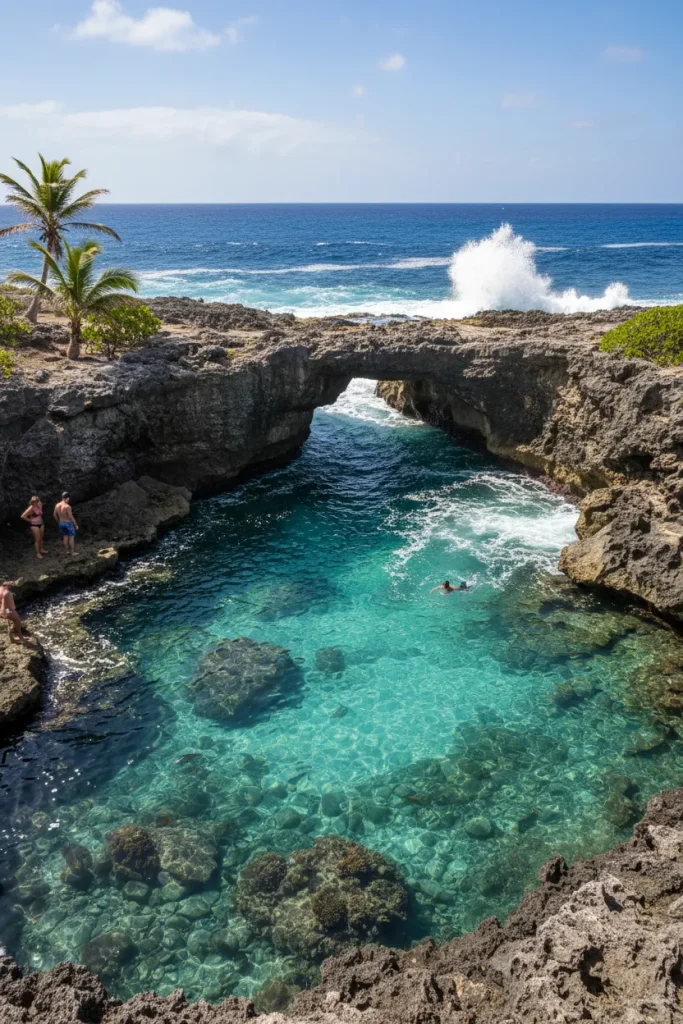
The Natural Pool sits among volcanic rocks on the island’s rugged east coast. Visitors often call it a true Aruba hidden gem because the rock-ringed basin feels protected while powerful waves crash just beyond it.
What the Natural Pool Is and Where It’s Located
The pool, locally called Conchi, formed where lava rock and ocean movement created a natural bowl along the coastline. It sits inside Arikok National Park, away from the main resort beaches.
Getting there is part of the adventure. You can arrive by 4×4, ATV, UTV, horseback route, or guided hiking trail. The roads are rough, so most visitors choose a tour instead of trying to navigate the area alone.
Why Visitors Rank It Among Aruba’s Top Attractions
The Natural Pool feels completely different from Palm Beach or Eagle Beach. Instead of soft sand and calm resort water, you get jagged rock, dramatic surf, desert scenery, and a swim spot that feels carved into the coastline.
It is especially popular with travelers who want something more adventurous than a regular beach day. When conditions are safe, the pool is a memorable place to swim, take photos, and experience the island’s wilder side.
How It Fits Into a Typical Aruba Itinerary
Most travelers visit the Natural Pool as part of a half-day or full-day adventure through Arikok National Park. Common companion stops include Fontein Cave, Bushiribana Gold Mill Ruins, the California Lighthouse, and sometimes Baby Beach.
- Choose a morning tour for cooler temperatures and fewer crowds.
- Pair an adventurous east-coast tour with a relaxed afternoon at Palm Beach or Eagle Beach.
- Book with a guide if you want easier access, local context, and safer navigation.
Natural Pool Tours In Aruba
Natural Pool tours come in several styles, from comfortable jeep safaris to dusty ATV rides and slower horseback routes. The best choice depends on your energy level, comfort with rough terrain, and how much adventure you want in the day.
Types of Tours That Include the Natural Pool
- Jeep safari tours — classic 4×4 routes with hotel pickup, commentary, and multiple scenic stops.
- ATV and UTV tours — more adventurous rides over rough tracks, rocks, and dusty trails.
- Horseback excursions — slower, scenic routes for travelers who prefer a quieter approach.
- Guided hikes — best for active visitors who want more nature, geology, and park context.
- Combination tours — full-day outings that may include snorkeling, caves, ruins, beaches, and the pool.
What to Expect on Each Tour Style
A jeep safari is usually the most comfortable and family-friendly option. Expect hotel pickup, an experienced guide, photo stops, and a clear route through the park. Full-day versions may include lunch, water, and extra stops around the island.
ATV and UTV tours feel more rugged. You will usually wear a helmet, follow a guide, and drive or ride across uneven ground. These are fun if you want a more physical day and do not mind dust, wind, and bumpy terrain.
Horseback tours move at a gentler pace. They are a good fit for travelers who want scenery without the rush of a motorized tour. Some routes include coastal views and time near the pool, depending on conditions and the operator.
Guided hikes give you the most connection to the park itself. A local guide can explain the plants, rocks, wildlife, and cultural history along the way. The terrain can be rocky, so sturdy shoes are important.
Difficulty, Accessibility, and Who Each Tour Is Best For
Jeep safaris are usually best for families, first-time visitors, and mixed-age groups. They reduce the stress of driving and make it easier to see several highlights in one day.
ATV and UTV options are best for adventure travelers. They require more comfort with rough terrain and may have driver’s license, age, or safety requirements.
Horseback rides suit couples, older children, and travelers who want a scenic, slower experience. Guided hikes are best for active visitors who are comfortable walking on uneven ground.
If anyone in your group has mobility concerns, ask the operator about walking distance, steps, rocks, and whether the pool itself is reachable for them. The area is rugged, and access can be challenging.
What To Know Before You Go
A little planning makes the Natural Pool experience much smoother. Because the site is inside Arikok National Park, conditions, rules, and access can vary.
Park Rules, Entry Fees, and Hours
Arikok National Park has posted rules to protect fragile landscapes, wildlife, and cultural sites. Stay on marked routes, follow ranger or guide instructions, and respect any closures.
Many guided tours include park admission in the tour price, but independent visitors should confirm current hours and fees before heading out. Bring ID, payment, and proof of booking if needed.
What to Wear and Bring
Pack for sun, rock, dust, and water. The area can be hot and exposed, and the ground around the pool can be uneven.
- Reef-safe sunscreen
- Water shoes or sturdy sneakers
- Swimsuit and towel
- Hat and sunglasses
- Reusable water bottle
- Small dry bag for phone and valuables
- Closed-toe shoes for ATV or UTV tours
Avoid aerosol sunscreen if possible, especially on windy days. Use reef-safe products and follow local environmental guidance around water and rocky shorelines.
Transportation, Timing, and Weather
The east coast can be rough even when the resort side is calm. Before you swim or climb near the pool, check local conditions and listen to your guide.
Mornings are often better for cooler temperatures, lighter winds, and smaller crowds. If swimming conditions are unsafe, guides may still bring you to see the site but restrict water access.
A 4WD vehicle is strongly recommended if you plan to go independently, but for most travelers, a guided tour is easier and safer.
Safety Tips for Swimming and Rocks
Natural Pool safety matters. The water inside the pool can look calm, but waves outside the rocks can be powerful.
- Swim only when your guide or park staff says conditions are safe.
- Avoid slippery rocks and cliff edges.
- Do not jump unless a guide confirms the depth and conditions.
- Keep children close at all times.
- Know your limits and skip swimming if the surf looks rough.
Real Guest Quotes and What Travelers Say
Natural Pool reviews often focus on the same themes: the dramatic setting, the bumpy but exciting journey, and the sense of reward once the coastline comes into view.
Many travelers praise jeep safaris for making the day easy. These tours often combine the pool with other highlights, which helps visitors see more without worrying about directions, parking, or park logistics.
ATV and UTV riders usually love the thrill of the route, but they also mention dust, rough terrain, and physical effort. If you want adventure, that may be part of the appeal. If you prefer comfort, a jeep tour is usually a better match.
Guests also warn that weather can change the experience. On rough-water days, swimming or cliff jumping may not be allowed. That can feel disappointing, but it is a safety decision worth respecting.
The most helpful reviews are recent ones that mention the operator, guide quality, what was included, and whether the tour adjusted safely to weather conditions. Use those details to choose the right style for your trip.
Conclusion
The Natural Pool is one of the most memorable places to see Aruba’s wild side. It is rugged, scenic, and very different from the island’s polished resort beaches.
Choose a jeep safari if you want comfort, hotel pickup, and a full island route. Pick an ATV or UTV tour if you want a high-energy adventure. Go with horseback riding or a guided hike if you prefer a slower, more nature-focused approach.
Before you go, check park hours, confirm what your tour includes, and pack reef-safe sunscreen, water, and sturdy shoes. Most importantly, listen to your guide about swimming conditions. With the right tour and a little preparation, Natural Pool tours in Aruba can become one of the most unforgettable parts of your trip.