
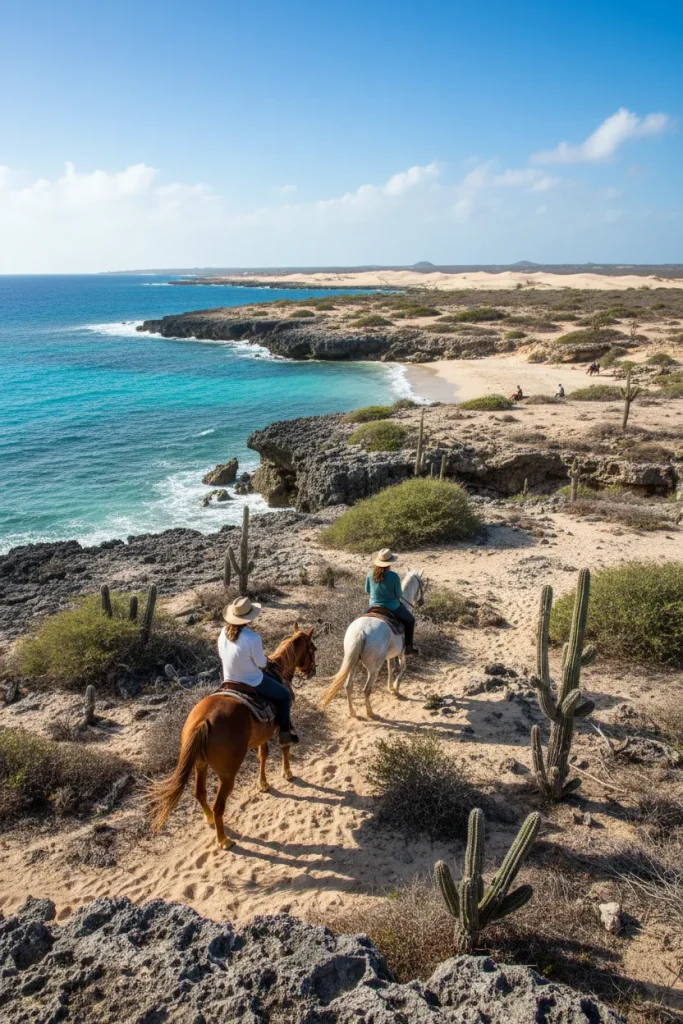
Horseback riding tours in Aruba bring together turquoise beaches and rugged desert trails in one unforgettable ride, whether you’re chasing calm waves, quiet coves, or dramatic rock formations.
Imagine trotting along Eagle Beach on horseback at sunrise, then later clopping through cactus-studded terrain in Arikok National Park sections that feel wild and remote. The island’s famous Palm Beach horseback rides offer easy access and lively views, while lesser-known coves give a quieter alternative for beach horse rides.
Guests say it best. “The guide knew the quiet stretches we never would have found,” writes travel blogger Sarah Lee after a combined beach-and-desert trip. Photographer Mark Rivera told us, “Riding near Palm Beach brought the best light for photos — and the horses were steady for kids and beginners.”
✅ Browse Aruba Tours On Viator
Planning what to do? Explore our Aruba Tours & Things to Do guide for tours, activities, and trip ideas.
Planning a trip to Aruba? Explore our Aruba Guides for hotels, tours, beaches, and travel tips.
Horseback Riding Tours In Aruba
Aruba offers riding options for first-timers and seasoned equestrians. You can pick from short shoreline jaunts to full-day treks into rugged landscapes. Guided groups help match pace to experience so you spend more time enjoying the views and less time worrying about navigation.
Overview of Tour Types
Beach-focused operators run popular beach rides in Aruba along Palm Beach, Eagle Beach, and quieter coastal stretches. Park-based companies lead horseback tours through Arikok that wind through cactus-studded valleys and rocky overlooks. Some outfits combine both scenes in a single itinerary when you want surf and scrub in one outing.
Typical Duration and Pacing
Short sunrise or sunset horseback rides usually last one to two hours. These rides aim for calm ocean light and gentler crowds. Half-day and full-day options explore deeper into Arikok, offering longer walking sections and occasional trotting. Canters may be available for experienced riders, though most guides limit speed for safety.
What to Expect on Arrival
Check-in begins with a safety briefing and tack fitting. Guides explain hand signals, pace expectations, and terrain warnings before you mount. For remote Arikok trails, guides are especially helpful because park signage can be sparse and conditions can change quickly.
- Family-friendly tours: smaller groups and slower pacing.
- Experienced rider options: longer routes and faster sections when allowed.
- Helmet policies: vary by operator, but briefings are standard.
Choosing guided horse rides in Aruba reduces the stress of route-finding and improves your chances of spotting wildlife and hidden vistas. A skilled guide pairs you with the right horse and points out local features you might miss on your own.
Best Beach Routes and Scenic Desert Trails for Riders
Aruba rewards riders with two distinct moods: sun-drenched beaches and raw, cactus-studded desert. You can start a morning with waves lapping near your horse’s hooves, then switch to high, rocky overlooks that feel a world away. Picking the right route shapes your ride into either a gentle coastal cruise or an adventurous trek across volcanic terrain.
Top Beach Locations to Ride
A Palm Beach horseback ride offers wide sand, calm water, and easy access from the hotel zone, making it a strong choice for families and first-time riders. It is also one of the most convenient areas if you want a simple, scenic ride without a long transfer.
An Eagle Beach horse ride brings iconic white sand and sweeping views with fewer crowds near sunrise. Photographers love the low-angle light here. Baby Beach and smaller coves can feel quieter on select routes, especially if you want a more private coastal setting.
Arikok National Park and Desert Highlights
Arikok horseback trails lead through arid plains, volcanic rock, and thorny cactus fields. You’ll notice native wildlife and sweeping island views rather than continuous ocean scenes. Footing changes on these paths, so expect varied terrain, slower pacing, and a few steady climbs to reach panoramic overlooks.
Guides in Arikok know hidden routes, safe crossings, and the best spots to pause for a photo. Park signage can be limited, so a local guide adds value beyond navigation by pointing out geology, wildlife, and cultural details you might otherwise miss.
Combining Beach and Desert Scenery in One Tour
Coastal and desert horse tours in Aruba often stitch both worlds into a single itinerary. A typical combined tour starts along the shoreline for ocean shots, then moves inland to catch cactus clusters and rock formations at higher elevation.
- Short beach-only rides focus on golden-hour photos along Palm Beach and Eagle Beach.
- Desert treks concentrate on Arikok routes with rugged vistas and wildlife viewing.
- Combined routes give a strong contrast: turquoise water, white sand, red rock, and wide island panoramas.
Ask guides about suggested photo stops and safe dismount areas so you get great images without disrupting the flow of the ride. This makes the most of Aruba’s varied scenery in a single, memorable outing.
Practical Tips Before You Go — Safety, Gear, and Local Advice
Ready to ride? A few practical tips make the experience smoother. These notes cover gear, safety rules, booking timing, and local customs so you can relax and enjoy the view.
What to wear and bring:
- Wear lightweight, breathable clothing for warm weather and a hat for shade.
- Choose closed-toe shoes or riding boots for stability and safety.
- Bring sunscreen, sunglasses, and a small water bottle to stay hydrated on longer rides.
- Confirm whether helmets and bottled water are included when booking horseback tours in Aruba.
Safety and rider requirements:
- Operators often set age, weight, and experience limits. Check those rules before you book.
- Helmet policies vary; many companies provide helmets or require them for younger or novice riders.
- Expect guided control and a mostly walking pace with some controlled trotting for beginners.
- Instructors give a safety briefing at check-in. Arrive early so you do not miss it.
Booking and logistical advice:
- Reserve popular sunrise or sunset slots early, especially in high season.
- For fewer crowds, aim for shoulder seasons or midweek rides.
- Many operators offer hotel pick-up and drop-off; that option reduces parking and navigation stress.
- Confirm what’s included in your reservation — helmets, water, transfers, and cancellation policies.
Local navigation and park notes:
- Aruba’s roads use roundabouts and few stoplights. Practice roundabout navigation if you plan to drive.
- Arikok navigation tips: the park has limited signage and tricky trails. A guided tour helps you see highlights safely.
- Using a guided route lets you focus on scenery rather than maps or route-finding.
Tipping and local costs:
- Follow a practical Aruba tipping guide: tips for guides and stable staff are customary and appreciated.
- Bring small bills in local currency or check if card tips are accepted by the operator.
These horseback riding tips for Aruba help you pack smart and plan ahead. With the right gear and a clear booking plan, you’ll spend less time worrying and more time enjoying beach and desert views.
Guest Quotes and Real Rider Experiences
We gathered short, vivid reflections from travelers who rode Aruba’s shores and trails. These voices show what makes a beach ride or a trek through Arikok memorable. Read them to get practical tips and a sense of what to expect.
Beach ride highlights
“Trotting along Palm Beach at sunset felt timeless — the horse moved steady, the water lapped quietly, and the light made every photo pop.” — Maria from Boston
“Eagle Beach was less crowded than I feared. The guide slowed at scenic spots so we could take pictures of the white sand and turquoise water.” — Daniel, Seattle
Desert and park impressions
“Arikok’s rocky tracks were tougher than a beach trail, but our guide’s knowledge unlocked hidden caves and lookout points we never would have found alone.” — Priya, New York
“I loved spotting iguanas and native birds. The route felt authentic and the guide explained local history while keeping safety top priority.” — Carlos, Miami
Tips gathered from guest feedback
- Arrive early to avoid wait times and catch calmer light for photos.
- Confirm rider limits and pace with the operator before booking to match expectations.
- Choose combined beach-and-desert tours for variety if you want both turquoise shorelines and rugged views.
- Ask about transportation and clear directions for the Arikok entry, since some guests found self-drive tricky.
Across rider reviews and horseback riding testimonials, common praise centers on friendly guides and well-cared-for horses. Guest quotes about Aruba horse tours often point out how local knowledge turns confusing trails into smooth, educational rides. Rider experiences in Arikok frequently mention wildlife sightings and dramatic viewpoints as highlights worth the effort.
Conclusion
If you want a true taste of Aruba, match your tour to the scenery you crave. Choose beach rides for turquoise views at Palm Beach or Eagle Beach, pick desert treks for the raw beauty of Arikok National Park, or book combined excursions to get both in one outing. This Aruba horse riding guide helps you decide which route fits your pace and photo goals.
Always confirm safety rules, rider limits, and what’s included — helmets, bottled water, and transfers vary by operator. Guided tours are especially helpful in Arikok, where trails and signage are sparse; a knowledgeable guide keeps the focus on scenery instead of navigation. These practical checks make the best horseback tours in Aruba more relaxing and safer for families and solo explorers alike.
Horseback riding here pairs quiet shoreline moments with dramatic desert panoramas, giving you a memorable, authentic way to explore the island. Before you book horseback riding in Aruba, read guest reviews, opt for hotel pick-up if available, and pack sun protection plus closed-toe shoes. Then saddle up and enjoy beach and desert riding in Aruba with confidence.
FAQ
What types of horseback riding tours are available in Aruba?
Guided options include short sunrise or sunset beach rides along Palm Beach and Eagle Beach, quieter coastal routes near smaller coves and Baby Beach, desert treks into Arikok National Park across rocky outcrops and cacti, and combined beach-and-desert excursions that showcase both turquoise shorelines and rugged interior views.
How long do typical rides last and what pace should I expect?
Rides commonly run 1–2 hours for beach sessions, with half-day and full-day options for deeper Arikok exploration. Most tours keep a controlled walk and occasional trot; canters are rare and usually reserved for experienced riders. Family tours limit pace and distance for safety.
What happens when I arrive for a ride?
Expect a check-in, a safety briefing, tack fitting, and a short horse introduction. Guides cover hand signals, pace expectations, and terrain hazards. In Arikok and remote areas, the briefing also explains navigation and safety measures because signage can be limited.
Which beaches are best for photogenic rides?
Palm Beach and Eagle Beach offer iconic white sand and turquoise water ideal for photos and calm surf views. Baby Beach and quieter coves are good alternatives when you want fewer people. Guides usually pick the best stops for safe dismounts and picture opportunities.
What makes Arikok National Park rides different?
Arikok shows rugged desert scenery — cacti, volcanic rock formations, and panoramic overlooks — rather than continuous ocean views. Trails have varied footing across rocky and arid terrain, with strong opportunities to spot local wildlife and unique geology guided by someone who knows the park.
Can I do a combined beach-and-desert tour in one trip?
Yes. Many operators run combined itineraries that start on a coastal stretch and transition into inland Arikok trails. These tours give contrasting scenery — ocean photos, cactus clusters, and panoramic viewpoints — and usually include timed photo stops.
What should I wear and bring for a ride?
Wear lightweight, breathable clothing, closed-toe shoes or riding boots, and a hat. Bring sunscreen, sunglasses, and a small water bottle. Some operators supply helmets; confirm helmet policy when booking.
Are there age, weight, or experience limits?
Yes. Operators commonly enforce age and weight limits and set experience requirements. Family-friendly rides often accept younger or novice riders with limited pace. Always check limits before booking to ensure safety and correct horse matching.
How do helmet and safety policies work?
Policies vary — many provide helmets or require them for younger or inexperienced riders. All tours include a mandatory safety briefing and clear rider instructions. Guides maintain controlled paces and limit speed for safety, especially on beaches and rocky trails.
Is it better to book a guided tour or try self-guided riding?
Guided tours are recommended. They reduce navigation stress, match riders to appropriate horses, highlight wildlife and photo spots, and are essential in Arikok where signage is sparse. Guided rides also improve safety and the overall experience compared with trying to self-navigate.
Do operators offer hotel pick-up and drop-off?
Many do. Hotel transfers simplify logistics, avoid parking hassles, and help riders who aren’t comfortable driving Aruba’s roundabout-heavy roads. Confirm transfer availability and pickup times when you book.
How should I plan around crowds and timing?
For fewer people and better light, book sunrise or sunset rides and consider shoulder seasons or off-peak times. Reserve popular slots early because short beach rides can fill quickly during high season.
What about tipping guides and stable staff?
Tipping is customary in Aruba. Prepare local currency or an accepted payment method and follow the operator’s guidance on typical amounts to show appreciation for guides and support staff.
What practical checks should I make before booking?
Confirm what’s included — helmets, bottled water, transfers — plus age, weight, and experience limits, cancellation policy, and meeting instructions. Read recent guest reviews for notes on horse care, guide quality, and transport reliability.
Are there safety concerns when riding in Arikok National Park?
Arikok has limited signage and variable trails, so navigation can be confusing. Guided tours reduce that risk, provide local knowledge of terrain and wildlife, and ensure safer routing. Always follow the guide’s instructions and stay within documented rider limits.
What guest feedback should I watch for when choosing an operator?
Positive signs include friendly, knowledgeable guides, well-cared-for horses, and smooth transportation. Red flags are unclear directions for self-drive arrivals, crowded beaches during peak times, and mismatches between advertised and actual pace or difficulty. Verify details before you book.
Why is horseback riding in Aruba worth it?
It pairs pristine beaches — including Eagle Beach and Palm Beach’s turquoise water and white sand — with the island’s rugged desert beauty in Arikok. Guided rides offer memorable views, local insights, and easier logistics, giving you a fuller picture of Aruba’s contrasting landscapes.