
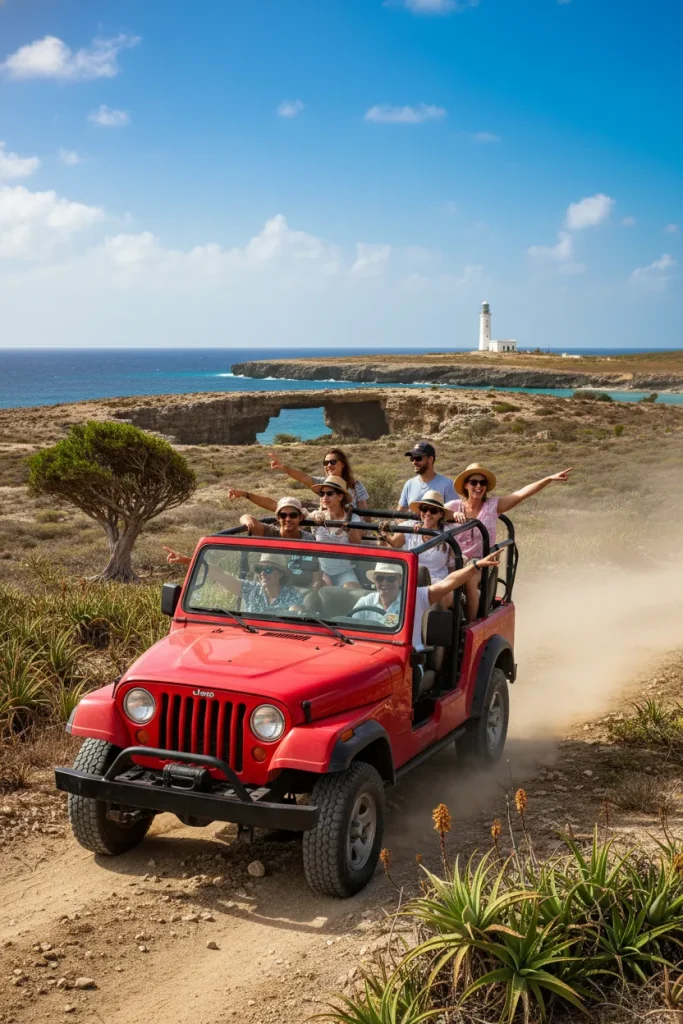
Which island tours in Aruba give you the best first look at One Happy Island? The best options are the ones that match your travel style — whether you want rugged UTV trails, calm snorkeling, wildlife stops, cultural landmarks, or a relaxed full-day sampler.
Aruba makes outdoor touring easy. Think warm breezes, daytime temperatures in the 80s, and ocean water hovering around 79–84°F. Those details matter because they explain why Aruba tours run year-round and why outdoor plans rarely get rained out. The island averages about 15 inches of rain a year, so sunny days are the norm.
Whether you’re an Aruba first-time visitor hunting for beaches, a family planning Aruba family activities, or friends chasing the best Aruba excursions, this guide helps you match a tour to your vibe. We’ll walk through UTV and ATV adventures, snorkel-and-sail options, wildlife and cultural stops, plus practical tips on booking and packing.
Guests say it best. “The UTV tour took us to quiet coves and a windswept viewpoint I’d never have found on my own,” said a guest after a Ruff Riders outing. Another traveler raved, “Snorkeling off De Palm Island was unreal — the water was clear and calm, and the crew made everything easy for families.”
✅ Browse Aruba Tours On Viator
Planning what to do? Explore our Aruba Tours & Things to Do guide for tours, activities, and trip ideas.
Planning a trip to Aruba? Explore our Aruba Guides for hotels, tours, beaches, and travel tips.
Why Aruba Is Perfect for Island Tours: Climate, Beaches, and Variety
Aruba invites easy planning and spontaneous exploration. With reliably warm temperatures and low rainfall, the island makes day trips simple to schedule. Tours blend shorelines, natural sights, and cultural stops so you get a quick, true feel for the place without long waits or bad-weather surprises.
Aruba’s Year-Round Weather and Low Rainfall
The island’s weather stays steady, with daytime highs typically in the 80s and only about 15 inches of rain per year. That Aruba climate means fewer canceled tours and more predictable days for both land and sea outings. Ocean temperatures sit near 79–84°F, so snorkeling and swimming are comfortable most of the year without heavy gear.
Beaches and Coastal Diversity That Tours Showcase
Tours stack contrasting beach experiences into one day. Palm Beach offers lively hotel-side conveniences and easy access for quick stops. Savaneta Beach feels quieter, with modest amenities and a local pace that invites slower swims. Boca Prins sits on the rugged side, reachable by 4WD and loved for its raw coastline.
Expect guides to mix familiar sands with off-the-beaten-path coves so you can compare the island’s different moods. Sampling Aruba beaches this way helps you decide where to return for a full day.
Island Personalities Seen on Tours: Nature, History, and Culture
You’ll notice three distinct island personalities during most routes. The resort corridor shows the social, service-oriented side many visitors expect. The north and east coasts reveal a wilder side, with rocky formations, blowholes, and old ruins that hint at Aruba’s natural history. Cultural pockets bring markets, small museums, and snippets of Papiamento that reveal the island’s blended heritage.
Good island tours balance those elements so you leave with a rounded impression: relaxing beaches, striking landscapes, and enough local color to plan what to explore next.
Island Tours In Aruba: Types of Tours and What Each Gives You
Pick a pace that fits you. Aruba offers hands-on experiences from dusty tracks to coral gardens, each tour type designed to reveal a different layer of the island. Read on to match the activity with what you want to see and feel while visiting.
UTV and ATV tours open doors to rugged coastlines and quiet coves. You can reach Bushiribana Gold Mill Ruins and the California Lighthouse, then bump through sandy trails to Andicuri Beach or Boca Cave Pool. Operators such as Jeans Rentals Aruba and Ruff Riders rent vehicles for guided or self-guided runs. Bring closed-toe shoes, a camera, water, and your driver’s license for a smooth day on the trail. These Aruba UTV tours are best when you want adrenaline and off-the-beaten-path views.
Boat, catamaran, and snorkel tours highlight reefs, wrecks, and calm swim breaks close to shore. Most half-day trips supply snorkel gear, lunch, and shade on deck. Clear, warm water makes these outings ideal for families and first-time snorkelers. Hotel concierges often recommend trusted operators, while official visitor sites list popular sail-and-snorkel options. For hands-on time in the water, Aruba snorkel tours deliver bright coral, fish life, and easy access from a beach or a boat.
Wildlife and eco tours focus on native plants, birds, and Aruba’s distinct dry-land habitats. Tours visit the Butterfly Farm, salt pans where flamingos gather, and the Aruba Aloe Factory Museum & Store for a look at the island’s signature export. Guides point out iguanas, desert cacti, and endemic bird species while explaining conservation efforts. If you want natural history and quiet observation, these wildlife tours and eco tours are the right pick.
Historical and cultural tours trace pre-Columbian sites and colonial-era landmarks. Stops can include Fontein Cave and the Ayo Rock Formation with their ancient petroglyphs, plus the National Archaeological Museum and gold mill ruins. Tours may weave scenic viewpoints with local museums to explain the mix of influences behind Papiamento and the island’s identity. Choose Aruba cultural tours when you want context, stories, and a deeper sense of place.
Each tour type can be mixed into a full-day plan or kept short for half-day discovery. Think about the terrain, how active you want to be, and whether you prefer guided interpretation or independent exploring. Planning this way helps you pick the right combination of land, water, wildlife, and cultural experiences for your trip.
What To Know Before You Go: Practical Tips for Booking and Packing
Ready to explore Aruba with confidence? A few practical tips will make a big difference. Think about timing, group size, and what to pack so your day on land or sea feels easy and rewarding.
Booking Considerations: Timing, Group Size, and Local Operators
Book ahead for peak travel windows such as winter holidays and spring break. Popular half-day snorkeling and catamaran cruises fill fast because great reef sites sit close to shore.
Look for operators with clear safety practices and local knowledge. Hotel concierges, Aruba.com, and VisitAruba are useful sources for vetted options. Rental firms like Jeans Rentals Aruba and Ruff Riders offer UTV and ATV choices if you want to drive.
Decide on private, small-group, or larger tours. Private or small-group tours give flexibility and personalized stops. Larger groups can be fun and often cost less per person. These are core Aruba tour tips that help match your style and budget.
What to Pack for an Island Tour
Start with the essentials from a practical Aruba packing list: reef-safe sunscreen, a wide-brim hat, sunglasses, and a refillable water bottle. Lightweight, breathable clothing keeps you comfortable under the sun.
For water activities, bring a swimsuit under quick-dry layers, a towel, and a rash guard if you want extra sun protection. Pack water shoes or sturdy sneakers for UTV/ATV trails and rocky shorelines.
Protect gear with a waterproof phone case or dry bag. Carry a camera, driver’s license for rentals, and a mix of cash and card for snacks or souvenirs. If you prefer your own mask and snorkel, bring them along for comfort and fit.
Accessibility, Age Limits, and Fitness Levels
Check age and weight rules before you commit. Many UTV and ATV companies require drivers to be 18 or older and set passenger age minimums.
Snorkel tours welcome beginners but usually expect basic swimming comfort. If seasickness is a concern, choose calmer catamaran trips or shore-based snorkeling options.
Ask operators about Aruba accessibility options. Wheelchair access varies by site and tour type, so confirm ramp access, transfer assistance, or mobility-friendly routes before booking. Clear answers keep everyone part of the adventure.
Sample Island Tour Itineraries for First-Time Visitors
Want a quick plan that shows Aruba’s highlights without overthinking it? Below are three easy itineraries you can adapt. Each fits different energy levels and gives reliable options whether you book Aruba half-day tours or dive into Aruba full-day tours.
Half-day UTV highlights loop
- Duration: 3–4 hours. Follow an Aruba UTV itinerary that takes you past Bushiribana Gold Mill Ruins for a short photo stop.
- Next stops: Natural Bridge viewpoint and California Lighthouse for classic island views and beachside snaps.
- Finish at a remote strand like Andicuri or Boca Prins for a brief walk or a quick swim.
- Packing: closed-toe shoes or water shoes, sunscreen, water, and a camera. This is a good choice for travelers who want rugged scenery without a full-day commitment.
Half-day snorkel and sail experience
- Duration: 3–4 hours. This Aruba snorkel itinerary usually runs as a morning or afternoon cruise to nearby reefs and a shipwreck site.
- What’s included: snorkeling gear, light lunch or snacks, and drinks on many operators’ boats.
- Best for: families and first-time snorkelers because the waters are calm and warm. Confirm pick-up points at beaches or marinas before you go.
Full-day combined land-and-sea tour
- Duration: full day. Start with a morning UTV or land tour through Arikok National Park to see Fontein Cave and Ayo Rock Formation.
- Afternoon: relax on a beach with snorkeling or join a late-day catamaran sail to explore reefs.
- Why choose it: this land-and-sea plan blends desert interior, cultural sites, and snorkeling into one balanced day.
- Who should book: travelers with a full day and moderate fitness who want both action and downtime. This is a top pick among Aruba full-day tours.
Guest Quotes and Real Experiences from Island Tours
Visitors often sum up Aruba tour experiences with short, vivid memories that tell you what to expect. Read these snippets and you’ll see travel moments that range from heart-pounding rides over rugged trails to calm afternoons snorkeling near wrecks. The quotes below reflect varied tastes: thrill-seekers, families, and travelers after culture and nature.
Guest praise for UTV and off-road tours
- “Riding a UTV to Bushiribana Gold Mill Ruins felt like finding a secret spot,” said a recent traveler who booked via Jeans Rentals Aruba. These Aruba guest quotes often highlight photo-ready views and guided stops at lighthouses and Natural Bridge sites.
- Groups report that companies such as Ruff Riders make logistics easy, leaving more time to explore remote beaches and ruins. Those Aruba tour reviews emphasize convenience and the thrill of off-road discovery.
Feedback on snorkeling and boat tours
- Families frequently praise clear, calm water and accessible shipwreck sites, calling Aruba snorkeling among the most memorable activities in the Caribbean. Crew friendliness and included gear earn repeated Aruba testimonials.
- Half-day catamaran trips get high marks for being gentle on guests prone to seasickness while still full of color below the surface. Aruba tour experiences often mention lunch and drinks provided on board.
Visitor impressions of wildlife, aloe, and cultural stops
- Guests love up-close encounters with iguanas and tropical birds at places like The Butterfly Farm and De Palm Island. These Aruba guest quotes highlight safe, family-friendly wildlife viewing.
- Aruba Aloe Factory Museum & Store gets strong praise for informative tours and product sampling. Many Aruba tour reviews say the aloe history adds a sensory layer to the trip.
- Stops at Fontein Cave, Ayo Rock Formation, and the National Archaeological Museum often surprise visitors with depth and context, turning beach days into richer island stories. Travelers note that these Aruba testimonials made their trip feel complete.
Conclusion
Aruba’s dry climate, warm seas, and varied coastline make it one of the best Island Tours In Aruba destinations for travelers who want variety without the guesswork. From UTV runs over rugged north-coast terrain to calm catamaran snorkel trips at the Antilla Shipwreck, the island delivers clear contrasts in a compact area that suit families, solo explorers, and active groups alike.
Match the tour to your interests and ability level: pick a half-day UTV or snorkel outing if you want a quick taste, or book a combined land-and-sea option to see beaches, caves, and wildlife in one day. For Aruba vacation planning, remember to reserve popular snorkel cruises and guided off-road tours early, especially during peak season.
Practical Aruba travel tips: pack reef-safe sunscreen, water shoes, a light windbreaker, and plenty of water. Check trusted local sources such as Aruba.com and VisitAruba for current operator listings and conditions. Let a guided tour introduce you to the island’s stories — visit the aloe factory, greet the iguanas, and take a sunset sail to close the day.
Explore with curiosity and respect. When you choose tours that fit your pace and interests, you’ll come away with real memories of Aruba’s nature, culture, and hidden personalities that make it a standout spot for island adventures.
FAQ
What kinds of island tours are best for first-time visitors to Aruba?
Aruba offers a mix of tours suited to different tastes. Choose UTV/ATV off-road tours to reach rugged north- and east-coast highlights like Bushiribana Gold Mill Ruins, California Lighthouse, and Boca Prins. Pick half-day catamaran or snorkel cruises for calm water reef and shipwreck snorkeling. Wildlife and eco tours, such as the Butterfly Farm, De Palm Island, and Aruba Aloe Factory Museum & Store, are great for families. For a full picture, combine a land-based Arikok National Park loop in the morning with an afternoon snorkel or sail.
Is Aruba a good place for year-round outdoor tours?
Yes. Aruba’s climate is very reliable: daytime highs generally sit in the 80s, annual rainfall averages about 15 inches, and ocean temperatures run roughly 79–84°F. Those conditions keep land and sea tours operating year-round and make snorkeling and beach stops comfortable without heavy wetsuits.
What should I pack for UTV/ATV and snorkeling tours?
For UTV/ATV tours, pack closed-toe shoes or water shoes, lightweight breathable clothing, a swimsuit, towel, reef-safe sunscreen, hat, sunglasses, a camera or phone, water, your driver’s license if you’ll drive, and cash for snacks or souvenirs. For snorkeling, bring a swimsuit under quick-dry clothes, a rash guard if desired, and any personal mask or snorkel you prefer. A waterproof phone case or dry bag is handy for both tour types.
Can families with kids or people with limited mobility enjoy island tours?
Many tours are family-friendly. Half-day snorkeling cruises and sheltered catamaran sails usually suit kids and guests prone to seasickness. UTV/ATV tours often have age and weight limits, so check with operators like Jeans Rentals Aruba and Ruff Riders. Accessibility varies by site; contact tour companies or consult Aruba.com and VisitAruba about wheelchair access and mobility-friendly options before you book.
How do I choose between a half-day tour and a full-day combined option?
Pick a half-day if you want a focused taste — 3–4 hours for a UTV highlights loop or a morning/afternoon snorkel cruise. Choose a full-day combined land-and-sea tour if you want a fuller sample of Aruba’s desert interior, caves, historical sites, and an afternoon swim or reef stop. Consider your fitness level and how much downtime you want back at your hotel.
Are snorkel tours suitable for beginners and children?
Yes. Aruba’s clear, calm, warm waters make snorkeling accessible to beginners and many children. Most catamaran and snorkel tours supply gear, basic instruction, and a friendly crew. If someone is a weak swimmer or prone to seasickness, choose shore-based snorkel spots or sheltered catamaran options and tell the crew in advance.
Should I book tours in advance or wait until I arrive?
Book popular half-day snorkel cruises and guided UTV tours in advance during peak travel seasons to secure spots. For off-peak travel, you can often book closer to your arrival. Use trusted sources like Aruba.com, VisitAruba, hotel concierges, or reputable operators such as Jeans Rentals Aruba and Ruff Riders for current schedules and safety information.
Where can I find reputable local tour operators and rentals?
Trusted local resources include Aruba.com and VisitAruba for tour listings. For UTV/ATV rentals and self-drive options, Jeans Rentals Aruba and Ruff Riders are well-known. For cultural and factory visits, the Aruba Aloe Factory Museum & Store and Butterfly Farm have visitor services. Your hotel concierge can also recommend vetted operators for catamarans, snorkeling, and eco tours.
Are there safety or license requirements for UTV/ATV rentals?
Yes. Many rental companies require drivers to be at least 18 and hold a valid driver’s license. Passenger age minimums and weight limits can apply. Operators also brief guests on safety gear and driving rules. Confirm specific requirements with the rental company before booking and bring your license and any required ID.
What wildlife and natural sites can I expect to see on eco tours?
Eco tours highlight Aruba’s desert flora and fauna: iguanas, lizards, colorful birds, cacti, and sometimes flamingos near specific saltpan areas or on De Palm Island. The Butterfly Farm offers close butterfly encounters, and the Aruba Aloe Factory Museum explains the island’s aloe history. Arikok National Park showcases geological features like Fontein Cave and Ayo Rock Formation with archaeological significance.
Which beaches will tours typically include, and how do they differ?
Tours aim to show Aruba’s beach variety. Palm Beach is lively and convenient in the hotel district. Savaneta Beach is less crowded with moderate amenities and sits about 30 minutes from the strip. Boca Prins and other north/east coast spots such as Andicuri and Tres Trapi are rugged, remote, and often require 4WD or UTV access. Good tours mix easy-access beaches with off-the-beaten-path coastal stops so you sample each vibe.
What cultural or historical attractions are worth adding to a tour?
Key cultural and historical stops include Fontein Cave and Ayo Rock Formation, the National Archaeological Museum, Bushiribana Gold Mill Ruins, Natural Bridge remnants, and the California Lighthouse. These locations help explain Aruba’s multicultural roots and Papiamento language influences. Combine them with scenic stops for the best context.
How important is reef-safe sunscreen, and why?
Reef-safe sunscreen is important to protect Aruba’s coral reefs and marine life. Many snorkeling and beach operators recommend or require reef-safe formulas to reduce damage to coral and underwater ecosystems. Bring reef-safe sunscreen, and if you plan extended snorkeling, consider a rash guard for extra sun protection.
Can I do self-guided UTV/ATV trips, or should I go with a guide?
Both options exist. Rental companies like Jeans Rentals Aruba and Ruff Riders let experienced drivers rent UTVs/ATVs for self-guided exploration. Guided UTV tours are recommended if you prefer local knowledge, historical context, and safer access to remote locations. Guided trips also usually include mapped routes, safety briefings, and stops at highlights you might miss on your own.
What are common guest impressions of Aruba tours?
Guests often praise Aruba’s clear snorkeling waters, friendly crews, and the thrill of off-road UTV access to remote beaches and ruins. Visitors value the Aruba Aloe Factory Museum’s informative tours, family-friendly wildlife stops like the Butterfly Farm, and the unexpected depth of cultural sites such as Fontein Cave. Reviews highlight warm seas, reliable weather, and operators who balance safety with local storytelling.