
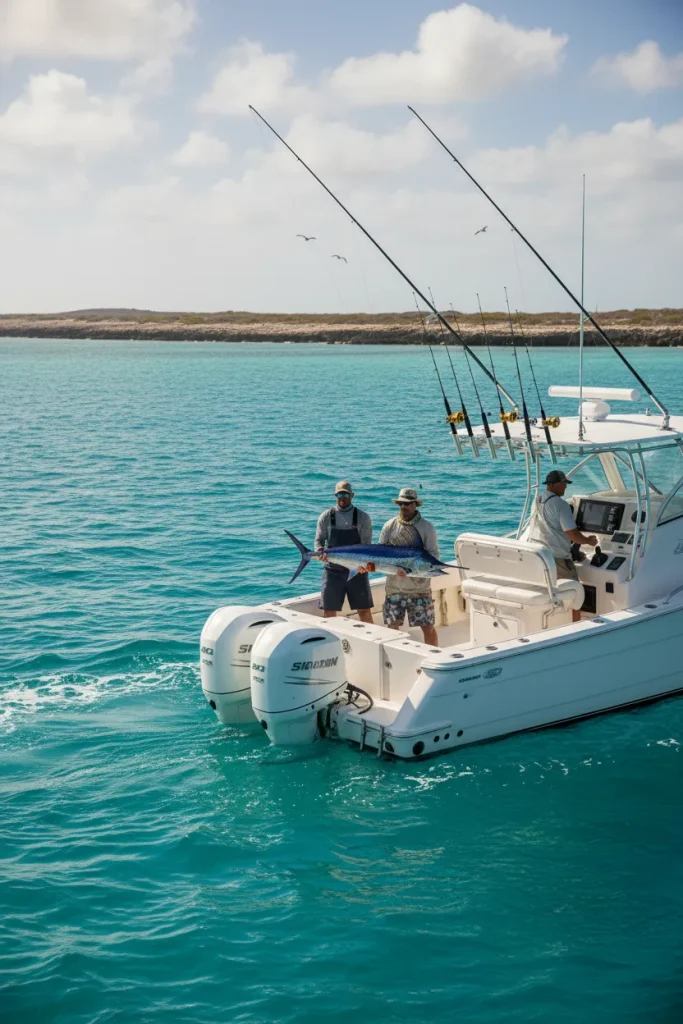
What are the best fishing charters in Aruba? The best options depend on whether you want a relaxed family outing, an Aruba fishing charter for big-game action, or a light-tackle trip near the reefs and flats.
Fishing charters in Aruba turn a day on the water into a real island adventure. You can chase tuna, mahi-mahi, and wahoo on an Aruba deep sea fishing run, or keep things more relaxed with an Aruba sport fishing trip closer to shore.
Popular options include Mahi Mahi Fishing Charters, Natasha Sport Fishing, Lady Sarah Fishing Charters, Hatts Off Deep Sea Fishing, Charters Aruba, and Fly and Spin Fishing Aruba. Trip lengths usually range from half-day outings to 3/4-day trips, full-day charters, and extended bill-fishing days.
Most morning departures start between 6:15 am and 8:00 am, with some mahi-mahi trips leaving around 7:00 am. Later in the guide, you’ll see what’s typically included, what to bring, how pickup works from Palm Beach and Oranjestad marinas, and how to choose the right charter for your group.
Guests say it best. “The crew on Natasha had us on mahi within the first hour,” said Mark from Denver.
✅ Browse Aruba Tours On Viator
Planning what to do? Explore our Aruba Tours & Things to Do guide for tours, activities, and trip ideas.
Planning a trip to Aruba? Explore our Aruba Guides for hotels, tours, beaches, and travel tips.
Why Aruba Is a Top Deep-Sea And Sport Fishing Destination
Aruba draws anglers with clear water, steady trade winds, and quick access to both nearshore flats and deep blue water. You can plan a casual half-day trip in calmer areas or head offshore for a longer hunt for pelagic fish.
Local captains tailor trips to families, serious anglers, beginners, and mixed groups, so the experience can feel as relaxed or as intense as you want.
Overview of the Island’s Offshore and Inshore Waters
Aruba’s offshore waters reach 30 meters and deeper, making them ideal for deep-sea fishing and big-game trips. These areas are where many charters target mahi-mahi, wahoo, tuna, sailfish, and marlin.
Inshore waters are usually shallower and include flats, reef edges, and calmer areas closer to land. These trips are better for light tackle fishing, fly fishing, and shorter outings with less time in open water.
Your captain can explain the difference between offshore and inshore trips and help you choose the right boat, gear, and route for your goals.
Common Target Species and Seasonal Highlights
Common Aruba game fish include mahi-mahi, wahoo, blackfin tuna, yellowfin tuna, barracuda, kingfish, bonito, and amberjack. Sailfish and blue marlin can also appear seasonally, especially on longer offshore runs.
On flats and inshore trips, anglers may target bonefish, snook, baby tarpon, jacks, snapper, and other reef species. Seasonal fishing in Aruba matters, so it is worth asking your captain what has been active recently before you book.
If you have one dream catch in mind, tell the operator early. A family-friendly reef trip and a serious bill-fishing charter may look very different.
Fishing Techniques and What to Expect on a Charter
Captains use a mix of Aruba fishing techniques depending on the season, target species, and sea conditions. Offshore trips often involve trolling with lures, teasers, and rigged bait for mahi-mahi, wahoo, tuna, and billfish.
Around structure, crews may use live bait, speed jigging, or bottom-fishing techniques. Flats-focused guides use fly and spin setups for bonefish, tarpon, and snook.
Most private charters provide rods, reels, bait, tackle, safety gear, and required permits. Crews usually rig the lines, explain the setup, help beginners, and fillet the catch at the end of the trip when allowed.
Fishing Charters In Aruba
Aruba offers a solid mix of family-friendly fishing trips and serious offshore charters. The right choice depends on your group size, target species, budget, and how long you want to be on the water.
Top-Rated Charters and What Makes Each Stand Out
Mahi Mahi Fishing Charters operates Sea-iesta, a 54’ Bertram that works well for larger groups and longer outings. It is a strong option if you want a roomy boat and a classic Aruba deep sea fishing experience.
Natasha Sport Fishing sails the 42’ Avenger Natasha and is often praised for family-friendly flexibility. Some trips combine fishing with beach or snorkeling stops, making it a useful choice for groups where not everyone is a hardcore angler.
Lady Sarah Fishing Charters runs a smaller boat with a six-person limit. That setup is better for travelers who want a more personal, focused day with plenty of crew attention.
Hatts Off Deep Sea Fishing is geared toward big-game fishing, with heavy tackle, outriggers, and a fighting chair for anglers who want a more serious offshore setup.
Charters Aruba promotes Carla, a 31’ Bertram captained by Juan Carlos. This can be a good fit for visitors who want a local captain and a traditional deep-sea experience.
Fly and Spin Fishing Aruba focuses on inshore flats, light tackle, and catch-and-release trips. These outings are best for anglers who prefer a quieter, more technical style over a big offshore boat.
Boat Sizes, Capacities, and Trip Length Options
- Large offshore boats: Sea-iesta is a 54’ Bertram that can suit larger groups and longer trips.
- Mid-size vessels: Natasha and Carla work well for families, friends, and smaller private groups.
- Smaller specialty boats: Flats boats and light-tackle setups are best for one or two anglers.
- Trip lengths: Common options include half-day, 3/4-day, full-day, and extended 10-hour fishing trips.
- Start times: Most departures begin early, usually between 6:15 am and 8:00 am.
Half-day trips are usually best for families, beginners, and casual anglers. Full-day and extended trips make more sense if you are serious about offshore species or want more time to search for active fish.
What Reviewers Praise: Crew Expertise and Customer Service
Guests often praise Aruba captains for their local knowledge, patience, and ability to adjust when conditions change. A good crew can make a slow bite feel worthwhile by teaching techniques, sharing island stories, and keeping the day comfortable.
Many reviewers also mention clean boats, well-maintained gear, help with filleting, and practical advice about where to cook the catch afterward. Even when the fishing is unpredictable, friendly service and strong safety habits make a big difference.
Pickup and marina guidance are also helpful. Many operators can advise on access from Palm Beach, Oranjestad, and nearby resorts, which makes the early start much easier.
How To Prepare For Your Aruba Fishing Charter
A little preparation helps the trip run smoothly. Before you book, think about your group’s comfort level, ideal trip length, and whether you care more about catching fish, relaxing at sea, or combining fishing with other activities.
Booking Tips and Timing
Book early if you are visiting during high season or traveling with a larger group. The most popular captains and morning slots can fill up fast.
When booking an Aruba fishing charter, ask about departure time, pickup options, cancellation rules, and what species have been active recently. If you are targeting mahi-mahi, wahoo, tuna, or marlin, ask which trip length gives you the best chance.
Half-day trips are easier for kids and casual anglers. Full-day and extended trips are better for serious anglers who want more time offshore.
What to Bring and What to Wear
For what to bring fishing in Aruba, keep it simple and practical. The sun is strong, the mornings start early, and you may be exposed to wind and spray.
- High-SPF sunscreen
- Wide-brim hat or cap
- Polarized sunglasses
- Quick-dry clothing
- Non-slip shoes
- Motion-sickness remedies if needed
- Waterproof phone case or dry bag
- Camera or phone wrist strap
- Light jacket or rain shell
- Cooler if you plan to keep fish
Most boats provide water, but many guests bring extra drinks, snacks, or preferred food. Ask the captain what is allowed before packing a cooler.
Money, Gratuities, and What’s Typically Included
Most private charters include the boat, captain, crew, rods, reels, tackle, bait, required permits, and filleting service. Still, always confirm charter inclusions in Aruba before paying.
Private trips can range from several hundred dollars to $1,000+ depending on boat size, trip length, season, and whether it is private or shared. Shared trips lower the per-person cost but offer less control over the itinerary.
Gratuities are customary for attentive crews. Many travelers tip based on service, effort, and overall experience, not just the number of fish caught.
Safety, Licenses, and Fishing Regulations
Safety should always come first. Ask about life jackets, communication equipment, emergency procedures, seasickness advice, and whether the boat has shade or a cabin.
Most reputable operators include permits and follow local Aruba fishing regulations. Captains can explain size limits, seasonal rules, and catch-and-release practices. This is especially important for inshore and flats fishing, where conservation-minded handling matters.
If keeping fish is part of your plan, ask what species can be kept and how the catch will be stored, cleaned, and transferred after the trip.
Real Guest Quotes And Trip Examples From Aruba Anglers
Real angler experiences help set expectations. Some days bring fast action, while others are slower and depend on weather, currents, and bait movement.
Memorable Guest Experiences and Testimonials
Guests often mention crews who stay patient, teach beginners, and keep the day fun even when the bite is slow. Families appreciate captains who explain what is happening without overwhelming younger anglers.
Many reviews also praise quick communication before the trip, easy marina instructions, clean gear, and help at the dock after the charter.
“Capt. Skreech guided our group with calm confidence,” wrote one angler after a half-day trolling trip.
“The crew kept everyone involved, even the kids. We caught fish, learned a lot, and never felt rushed.”
Sample Trip Logs: What Anglers Caught and When
- Early May trolling trip: multiple mahi-mahi and one wahoo before lunch, using outriggers and rigged bait.
- Late June offshore run: blackfin tuna landed after the captain switched between live bait and jigging.
- October big-game day: sailfish hookups reported offshore, with marlin activity nearby.
- Sunrise flats trip: bonefish, baby tarpon, and snook caught on fly and spin gear in calmer water.
These examples show why local advice matters. Fishing changes by season, wind, bait, and water temperature, so the best captain is often the one who knows how to adjust.
Tips Guests Wish They’d Known Before Going
- Book early if you want a specific captain or boat.
- Expect early starts and get a good night of sleep before the trip.
- Bring extra sun protection, even if the boat has shade.
- Pack motion-sickness remedies before you need them.
- Tell the captain whether you want a trophy hunt, family day, or casual fishing trip.
- Bring a cooler if you plan to keep fillets after the charter.
- Ask about restaurants that may cook your catch after the trip.
These Aruba fishing testimonials and trip examples make one thing clear: the crew matters as much as the boat. A good captain sets realistic expectations, chooses the right technique, and helps you enjoy the day whether the fish cooperate or not.
Conclusion
Aruba’s clear waters, steady trade winds, and mix of offshore and inshore options make it a strong destination for fishing charters in Aruba. You can chase mahi-mahi, wahoo, and tuna offshore, or keep things lighter with flats, reef, and family-friendly trips closer to land.
For the best experience, book early, choose a trip length that fits your group, and ask the captain what species are active during your travel dates. Confirm what is included, bring sun protection, and pack a cooler if you want to keep fish.
If you are ready to book an Aruba fishing charter, start with your travel style. Families may prefer a half-day with a flexible crew. Serious anglers should look at full-day or extended offshore trips. Fly anglers and conservation-minded travelers may prefer inshore catch-and-release outings.
In short, the right Aruba fishing trip can be more than a day of casting lines. It can be a sunrise start, a salty breeze, a skilled local captain, and the kind of story you keep telling long after the trip ends.