
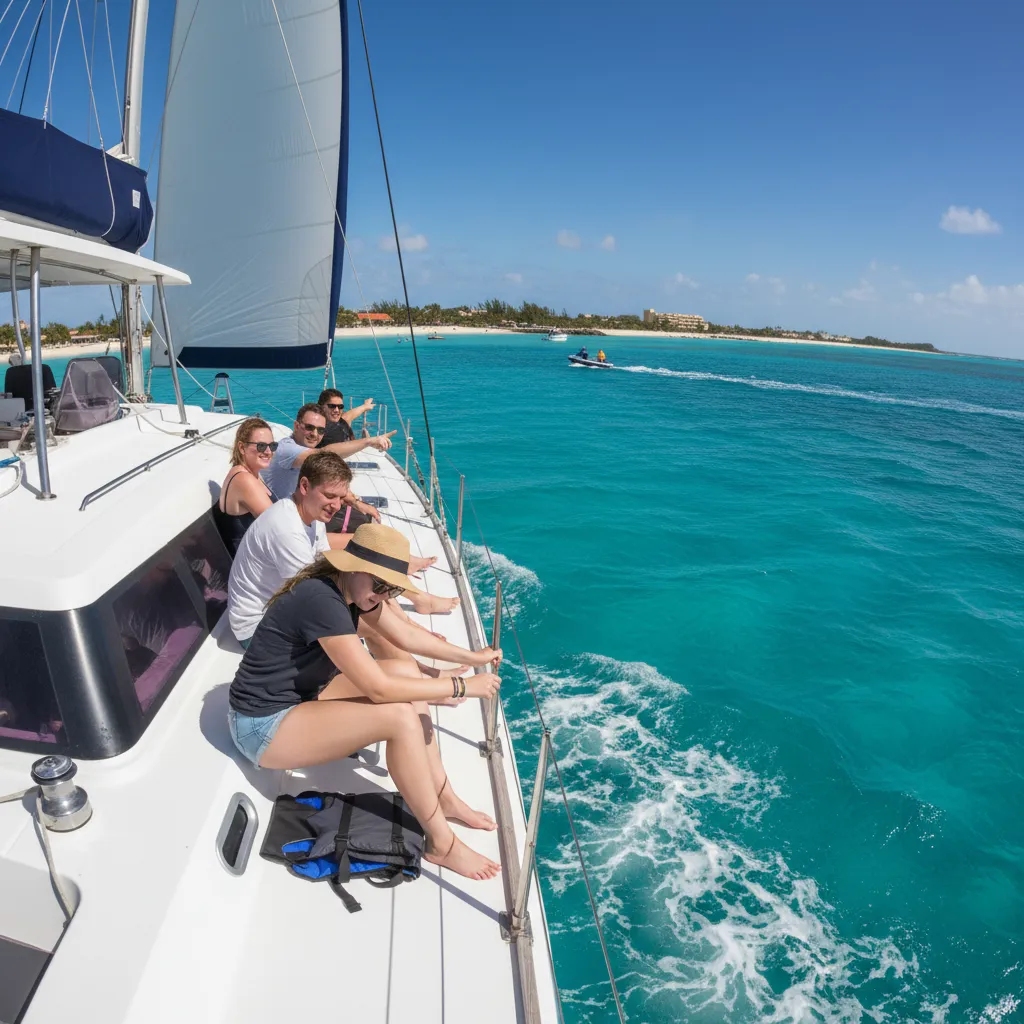
Worried about Aruba water tours if you get seasick easily? You are definitely not alone. The good news is that many travelers can still enjoy the water by choosing calmer trips, better seating, and the right time of day. With a few smart seasickness tips, boat tours and other water tours can feel much more manageable.
Morning departures are often the better choice, and calmer seating in the middle of the boat can make a real difference. That is why picking the right tour matters so much if motion sickness is part of the equation.
This guide helps you figure out who should book, when to choose a calmer trip, and which practical seasickness tips can make the experience easier. A more stable catamaran or a private charter can also be a better fit if comfort is your top priority.
Guests say it best. “I tried a morning catamaran and the midship bench made all the difference,” says Sarah from Boston after a recent trip. Mark added, “We pre-booked a private charter and split the cost—best move for comfort.” Those reactions show why timing, boat type, and seating can matter just as much as the tour itself.
✅ Browse Aruba Tours On Viator
Planning what to do? Explore our Aruba Tours & Things to Do guide for tours, activities, and trip ideas.
Planning a trip to Aruba? Explore our Aruba Guides for hotels, tours, beaches, and travel tips.
What to expect from Aruba water tours: types, boats, and typical itineraries
Aruba’s water tours range from laid-back sail trips to fast offshore runs. Picking the right experience matters when you or someone in your group is prone to motion sickness. Below you’ll find clear descriptions of common tour styles, vessel stability, and typical timing so you can choose with confidence.
Common tour types and why they matter for motion sickness
Shared catamaran snorkeling tours are among the gentlest choices for sensitive travelers. These outings use wide-beamed platforms that reduce rocking and usually provide shaded seating, basic snorkel gear, and light refreshments. Private boat charters give you control over departure, pace, stops, music, and food. That privacy and customization often lowers stress for guests who worry about feeling ill. Speed-focused trips, like adrenaline rides or quick hop-to-hops, can be jarring and increase the chance of nausea if you’re sensitive to motion.
Vessel types offered in Aruba and stability differences
- Catamarans: wide beam and minimal roll; ideal for those prone to motion sickness and common on catamaran snorkeling Aruba excursions.
- Schooners and traditional sailboats: moderate motion that depends on length and wind; they can be smooth on calm days, less so when the trade winds pick up.
- Yachts and larger motor vessels: heavier displacement and onboard stabilizers often provide a steadier ride, a good match for older guests or families with young children.
- Motorboats and speedboats: fast and agile but prone to pitch and roll over chop; Aruba speedboat seasickness reports are higher on these craft, so take precautions if you ride one.
Typical itineraries and when seas feel calmest
Morning snorkeling runs, roughly 8–11 AM, usually offer the calmest water and the best underwater visibility, making them the best time to snorkel Aruba for guests who want minimal motion. Afternoon tours can feel windier as trade winds build and may be choppier near exposed reefs. Sunset cruises attract travelers for atmosphere and photos, yet they can become bumpier close to shore or as winds rise.
Private charters often include a captain, crew, fuel, and safety gear. That setup lets you ask the crew to visit reef-protected sites and sheltered bays that reduce chop. Check Aruba tour itineraries before booking so you can aim for sheltered stops and calm windows of the day.
Aruba Water Tours If Seasick
Many travelers type conversational queries like Aruba water tours if seasick when planning. You want practical answers: which boats, what time of day, and alternatives that still let you see coral and fish. This short guide matches that intent with clear phrasing you can use when searching or calling operators.
Why exact phrasing matters for searchers and readers
Use search phrases that reflect your main concern and preferred conditions. Try terms such as “morning catamaran calm snorkel,” “protected-bay snorkel Aruba,” or “private charter stable vessel for seasick traveler.” These strings signal operators and search engines that you need low-wind, reef-protected routes.
When emailing or booking, be explicit. Ask for a tour that mentions sheltered bays, reef protection, or calm departures. Operators at Eagle, De Palm, and local charter companies know which routes avoid open-ocean chop.
How Aruba’s local conditions affect seasickness risk
Aruba trade winds blow steadily from the east. That steady breeze often creates short chop near exposed coastline and reef edges. Expect calmer seas in the mornings, with visibility and surface smoothness better for snorkeling.
Peak season from December to April tends to have stronger, consistent winds. If you are sensitive, plan around that rhythm and favor early departures. Choosing calm Aruba snorkeling spots like protected bays and reef-protected sites lowers the chance of motion-induced nausea.
- Morning departures usually mean less wind and gentler swell.
- Reef-protected routes reduce surface chop and sudden rolls.
- Smaller groups or private charters let captains tailor routes to calmer waters.
Motion sickness stems from a sensory mismatch between your inner ear and what your eyes see. Simple actions help: face the horizon, stay on deck in fresh air, avoid reading or screens, and keep your gaze steady on a fixed point. These habits address the core causes of discomfort described by medical sources on motion sickness.
Search and booking language matters. Phrase requests so operators know you need sheltered options. That clarity helps you find tours suited to Aruba seasickness conditions and increases the odds of a calm, enjoyable outing.
Who should consider booking a water tour in Aruba despite easy seasickness
Some travelers can enjoy Aruba water tours even if they get queasy. Preparation, the right vessel, and honest communication with operators make a big difference. Read the short checklist below to see if you fit the profile for a safe and pleasant trip.
People who can manage motion sickness with preparation
If you regularly use over-the-counter remedies like dimenhydrinate (Dramamine), prescription meclizine, or scopolamine patches and accept their side effects, you may handle a calm cruise. Take medications about an hour before departure as directions recommend. Pair meds with simple behaviors: focus on the horizon, sit midship, get fresh air, and avoid heavy meals before boarding.
Families, elderly, and travelers with mobility concerns
Private charters and larger catamarans often work well for multigenerational groups. Private boats let you set a slower pace, choose sheltered routes, and limit crowding. Crew members from operators such as Red Sail or De Palm can provide shaded seating and help with boarding, which is useful for Aruba tours for seniors and those with limited mobility.
- Aruba family boat tours: choose private or small-group options to control stops and timing.
- Confirm amenities: restroom access, shaded areas, stable seating, and snorkel gear included.
- Book early in high season; expect 25–50% deposits and confirm cancellation terms.
When to skip and choose alternatives
If you regularly vomit or can’t tolerate motion even after medication or wristbands, skip open-water trips. Opt for Aruba shore snorkeling at reef-protected beaches such as Boca Catalina or Hadicurari. Land options like Arikok National Park hikes, island jeep tours, or cultural walks in Oranjestad keep you on solid ground while still exploring.
Before you reserve, tell the operator about mobility limits or sensitivity to motion. They can recommend the most stable vessel and plan protected-route itineraries tailored to who can do Aruba water tours if seasick, making the experience safer for everyone.
How to reduce your risk of seasickness on Aruba water tours
If you love turquoise water but worry about getting uneasy on a boat, a few simple choices make a big difference. Pick timing, seating, and remedies that match your tolerance. Test medications or natural options before your trip so you know how your body reacts.
Seat selection and timing strategies
On catamarans sit near the center where the motion feels gentler. On larger motorboats choose midship on a lower deck for the most stable ride. Avoid the bow and stern on small vessels; those spots pitch and roll the most.
Book morning tours, roughly 8–11 AM, when winds tend to be lighter and snorkeling visibility is best. If you can, request your preferred spot when you reserve so you get the best seat on boat for comfort.
Medication, patches, and natural remedies
Over-the-counter dimenhydrinate, sold as Dramamine, works if taken about an hour before departure but may cause drowsiness. Meclizine is a prescription option some travelers prefer for less sedation; talk with your doctor first.
Scopolamine patches are a potent choice. Apply one behind the ear as directed and test it at home to note side effects. Discuss scopolamine Aruba use with a physician if you have glaucoma, heart issues, or are pregnant.
Natural options can help. Many travelers use ginger for seasickness in candies, ginger ale, or raw slices to soothe nausea. Small plain snacks like crackers or green apple also settle the stomach.
On-boat behavior and practical tips
Focus on the horizon and get fresh air to reduce sensory mismatch. Avoid reading or screens when you feel off. Acupressure wristbands, placed three finger-widths from the wrist crease, help some people.
Limit heavy meals and alcohol before boarding. Sip water slowly rather than gulping. If symptoms begin, lie back with eyes closed and take small sips of ginger ale or water. Ask crew for shaded, stable spots and confirm restroom access before you leave dock.
Bring reef-safe sunscreen, a hat, sunglasses, and a waterproof phone case. Pack motion sickness remedies Aruba you prefer and test them ahead of time. Always consult a healthcare provider about medications and patches so you travel safely and with confidence.
Booking strategy and what to confirm with operators before reserving
Planning your boat day well reduces stress and cuts the odds of a rough experience. Start early if you need calm seas or a specific vessel. Keep confirmations and operator contacts on your phone so you can check details last minute.
Choosing private vs shared tours and timing for reservations
Private charters give you control over timing, route, and guest count. For busy months like December through April, book private trips two to six weeks ahead. Holidays and group events need even earlier reservations.
Shared tours cost less per person and work well when you just want a simple snorkel or sunset. Morning departures sell out fast. If you prefer a relaxed pace, reserve the earliest available slot.
Off-season travel (May through November) offers more flexibility and lower demand. Still, watch local weather forecasts and confirm the operator’s availability before you arrive.
Questions to ask the operator to reduce seasickness risk
Ask clear Aruba tour questions before you book so you know what to expect. Useful queries include vessel type, typical passenger counts, and recommended departure times for calmer water.
Confirm on-board amenities that ease motion sickness: shaded seating, restrooms, non-slip boarding, and shaded cabins. Also ask if they can alter the route to stay in protected bays when seas get choppy.
Be sure to check the cancel policy Aruba boat operators use for rough weather and illness. Ask how they handle refunds or rescheduling if conditions change.
Cost considerations and value factors tied to comfort
Private charter Aruba cost varies widely, from roughly $800 to $4,000 depending on boat size, duration, and extras. Think in per-person terms: a $2,400 private trip for 20 guests is about $120 each, which may buy much more comfort than a crowded $80 shared tour.
Compare inclusions rather than sticker price. Premium snorkel gear, an open bar, shaded seating, and water toys can reduce discomfort and make motion sickness less likely.
Before final payment, get all details in writing: departure time, meeting spot, maximum capacity, what’s included, and emergency contacts. That clarity protects your booking and makes it easier to plan meds or seating to reduce nausea risk.
Guest quotes and real experiences: voices from travelers who get seasick
Travelers who worry about motion often share honest, detailed stories. These voices show what worked, what failed, and what they would try next. Guest experiences Aruba provide practical context for the tips and booking strategies described earlier.
Positive experiences after taking precautions
“We booked a morning catamaran and I took meclizine—calm seas and great snorkeling; I never felt queasy.” Many guests echo that timing and pre-medication make a big difference. An Aruba catamaran review often mentions steady decks, shaded lounges, and room to sit forward where motion feels less intense.
When tours didn’t work out and lessons learned
“I went out on an afternoon speedboat without meds and got sick—next time I chose a morning catamaran.” This pattern appears in Aruba tour reviews seasick reports where fast boats and late departures raise risk. Other travelers recall taking a refund after an operator rescheduled due to wind, praising the company’s flexibility and clear communication.
Tips guests share for others who are nervous
- Test medication before travel and bring extras; many repeat the same advice in guest experiences Aruba.
- Check vessel type in descriptions; a good Aruba catamaran review will note stability and family comfort.
- Bring ginger snacks, wristbands, and reef-safe sunscreen; stow electronics and look at the horizon when feeling off.
- Read recent reviews for phrases like “calm,” “gentle ride,” or “great for families” to filter choices.
- Ask the operator about weather policies and on-board remedies; strong communication prevents surprises.
Guests who share seasick traveler tips often point back to three simple moves: choose morning departures, favor catamarans or larger yachts, and confirm refund or reschedule policies. These real voices reinforce seat selection, medication choices, and booking questions travelers should ask before they go.
Conclusion
If you’re asking should I book Aruba water tours if seasick, the short answer is: often yes, with the right choices. Many travelers who tend to get motion sick still enjoy Aruba by picking stable vessels such as catamarans or larger yachts, booking morning departures when seas are calmer, and using proven remedies like meclizine, scopolamine patches after consulting a doctor, ginger, or acupressure bands.
Before you reserve, use a simple checklist: decide the best Aruba tour for seasickness by researching operators and recent reviews, confirm vessel stability, restroom access, and shaded seating, and check weather and cancellation policies. Prepare medications or natural remedies ahead of time and test them if possible. Pack these items in a small carry-on for embarkation along with travel documents and sunscreen. For peak season, consider private charters for more control and comfort and expect to book 2–6 weeks out with a deposit.
If the risk still feels too high, Aruba alternatives shore snorkeling at reef-protected beaches, jeep or ATV excursions, hikes in Arikok National Park, and cultural or culinary experiences in Oranjestad offer rich ways to enjoy the island without risking seasickness. Weigh your appetite for adventure against comfort; with planning you can either get out on calm, family-friendly water tours or choose a slower, land-based path that leaves you relaxed and ready for the next discovery.