
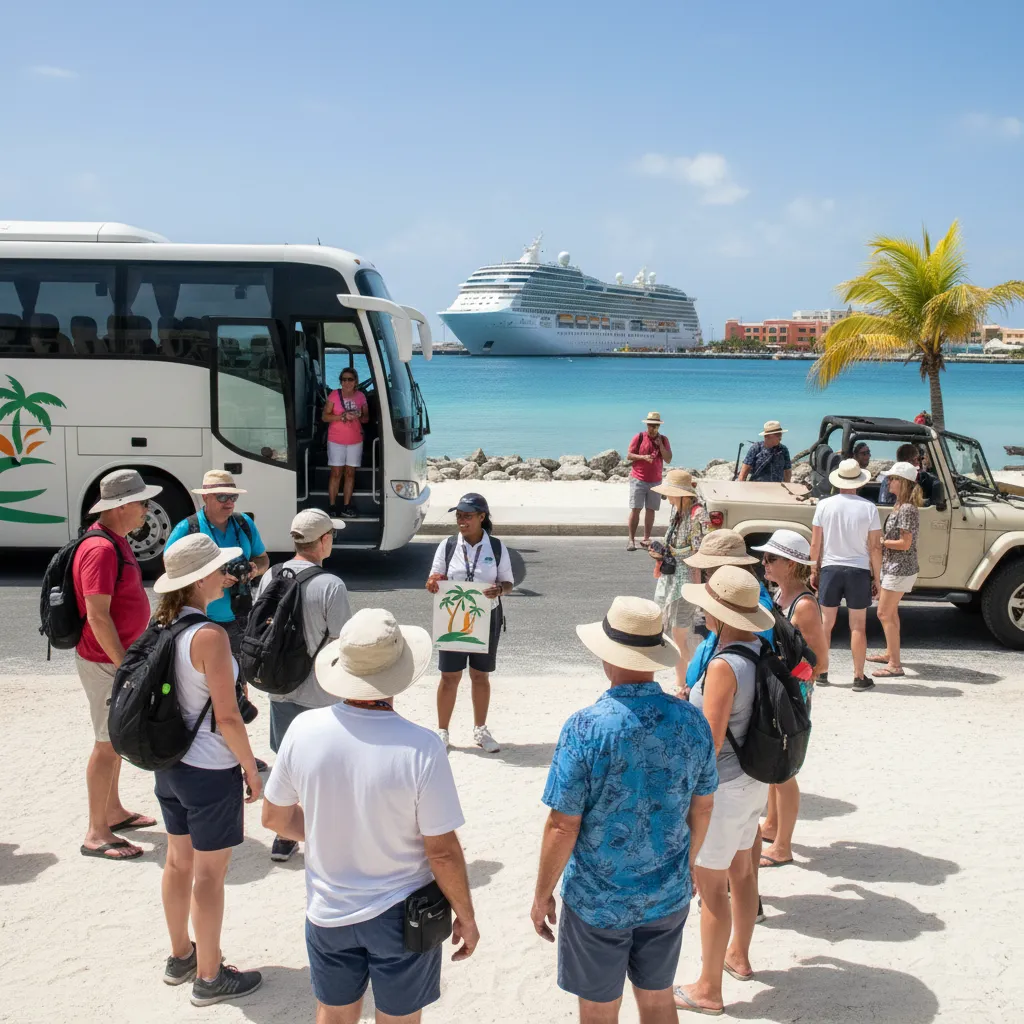
Wondering if Aruba shore excursions booked through the cruise line are worth it? For many travelers, they are — especially if convenience, simple planning, and getting back to the ship without stress matter most. But local Aruba cruise excursions can be a better fit if you want lower prices, smaller groups, or a more personal experience.
Shore excursions are extra-cost activities during your port stop, from short Aruba port activities like walking tours to longer outings such as snorkeling, ATV rides, and cultural visits. They are not usually included in your cruise fare, so it helps to choose carefully.
We love authentic local experiences, but we also understand the appeal of convenience and safety. Booking through cruise-line providers can mean vetted vendors and an easier return-to-ship process. Independent tours and third-party options often offer better prices and smaller groups, but they do ask a little more from you in planning and timing.
Guests say it best. “Our guide from GuruWalk made Aruba feel like home in two hours,” says traveler Sarah Williams. “But when we took a local snorkeling charter, we cut the price in half compared to the ship’s tour.” Those reactions show exactly why this choice comes down to what you value more: convenience or flexibility.
✅ Browse Aruba Tours On Viator
Planning what to do? Explore our Aruba Tours & Things to Do guide for tours, activities, and trip ideas.
Planning a trip to Aruba? Explore our Aruba Guides for hotels, tours, beaches, and travel tips.
Quick answer: Are Aruba Shore Excursions Cruise Line Worth It
If you want a short verdict: sometimes yes, sometimes no. For travelers who prize a guaranteed return to ship, minimal planning, and vetted vendors, booking through the cruise line often makes sense. For budget-minded visitors, repeat visitors, or those chasing authentic, off-the-beaten-track experiences, local options can be better.
Key cruise-line benefits include the ship waiting if an excursion runs late, organized logistics, clear activity-level labels, and a single point of booking that often includes a 24–48 hour cancellation window. These perks reduce stress when time in port is limited or when you’re traveling with kids or older family members.
Drawbacks show up in price and pace. Cruise fares for activities can run higher than local vendors. Groups tend to be larger, which can mean less free time to wander. Some excursions carry markups or require extra fees for equipment, tipping, or optional experiences. These are core points in any discussion of Aruba shore excursions pros cons.
Here’s an easy decision rule: if zero-risk logistics and convenience top your list—think first-time cruisers, short port calls, or travelers who want one-stop booking—lean cruise-line. If saving money, smaller groups, or very local experiences matter more, compare reputable third-party companies and local guides before you book. Weigh cruise line vs local Aruba tours based on your priorities, timing, and comfort with independent planning.
What cruise-line excursions include and why some travelers choose them
Choosing a cruise-line tour in Aruba feels like hiring a local planner who also promises reliability. You get a clear set of services and a safety net that many travelers find worth the extra cost. Read on to see how vetted offerings and standard inclusions shape the experience and what to expect from Aruba excursion prices.
Vetted vendors and safety guarantees
Cruise lines screen vendors for insurance, licensing, and operational standards, so your operator has already met basic safety checks. That vetting often shows up in detailed activity descriptions and difficulty ratings, which help you match a tour to your mobility and comfort level.
One major benefit is the guaranteed return-to-ship policy. If a delay strikes—traffic, weather, mechanical trouble—the cruise company usually gets you back before departure. Cancellation rules are typically spelled out, with many lines offering full refunds up to 24–48 hours prior, giving you leeway if plans change.
Typical inclusions in Aruba shore excursions
Standard offerings aim to remove planning friction: coach or van transport, a professional guide, and any admissions listed in the itinerary. Look for explicit notes about gear; many snorkel trips include masks and life vests, while ATV tours often supply helmets and basic equipment.
A few excursions add bottled water and a light snack. Full-day options sometimes include lunch, though some meals remain at your expense. Gratuities for guides and drivers are frequently not included, so bring cash for the common recommendations of $5–$10 per person for half-day tours and $10–$20 for full-day outings.
Understanding what’s included in shore excursions prevents surprises and keeps the focus on exploring rather than logistics.
Price ranges and regional cost context
Aruba excursion prices vary by activity. Short city or beach tours often land between $30 and $100. Guided snorkeling, ATV rides, and private-boat experiences tend to run higher, commonly in the $180–$300 range when they involve specialized gear or private guides.
The Caribbean generally offers lower baseline costs than Alaska or Mediterranean ports, but the activity type drives the final ticket price. Cruise-line pricing bundles convenience and guarantees, which creates a noticeable markup compared with some local vendors.
To decide if that markup is worth it, compare cruise-line itinerary pages with listings on review platforms such as TripAdvisor and Cruise Critic. That shows whether the premium buys value you need or if a vetted vendors cruise excursions search will find better deals without sacrificing safety.
Independent and local options for Aruba: savings, experiences, and trade-offs
If you want freedom to wander and a closer look at island life, Aruba local tours and independent Aruba shore excursions open doors that cruise-line packages sometimes keep closed. These options range from tip-driven walks to private snorkel trips. You pay less for flexibility, and you get a more personal pace.
Local guides, third-party vendors, and free walking tours
Small operators and third-party platforms often match or beat cruise prices. Local guides can craft stops at family-run eateries, quiet beaches, or neighborhood markets that larger tours skip. Tip-based options like GuruWalk Aruba offer short, friendly introductions to Oranjestad or San Nicolas that help orient you before you strike out on your own.
How much you can save and what you might give up
Savings vary by activity. Routine walking tours and city strolls are where you see the biggest third-party shore excursions savings. Mid-range activities such as snorkeling or stingray swims can also be cheaper when booked locally. Trade-offs include inconsistent guide quality, fewer standard protections, and sometimes unclear cancellation terms.
Logistics: meeting points, transport, and guaranteed return risks
Independent operators typically list a clear meeting point near the pier, yet you may need to arrange your own taxi or walk. The main risk is the lack of a guaranteed ship-wait policy. Some companies now offer missed-ship assurances or refunds, but policies vary, so confirm any guarantees in writing before you book.
Practical tips: give yourself extra time between your tour and ship departure, save meeting-point directions offline, and consider an eSIM or local SIM for navigation. With sensible buffers and a bit of planning, independent Aruba shore excursions can be a smart balance of savings and authentic experiences.
Who should book Aruba shore excursions through the cruise line — traveler profiles and scenarios
Picking the right booking path comes down to comfort, time, and the kind of day you want in Aruba. Below are clear scenarios to help decide whether to pick cruise-line options or independent local choices.
First-time cruisers and travelers who want zero risk
- New cruisers often choose cruise-line tours for a stress-free experience. Tours are vetted, descriptions are clear, and the ship guarantees you’ll be back if a tour runs late.
- If you prefer one-stop planning and a charge on your ship folio, this ease is a major plus. That convenience answers a common question about who should book cruise line excursions.
Families, older travelers, and limited-time port calls
- Parents with young children and older adults tend toward cruise-line best for families options because of predictable logistics, group boarding practices, and standard accessibility notes.
- Short calls make guaranteed returns valuable. When the itinerary is tight, booking through the cruise line lowers the chance of missing departure.
- For travelers with mobility concerns or medical needs, cruise-line descriptions and staff support reduce uncertainty.
When independent booking is better for budget and flexibility
- Return visitors and budget-minded travelers can save money by choosing local operators or third-party vendors. Independent options often cost less and let you customize the day.
- Adventurers who want authentic local interaction, private guides, or off-the-beaten-path dining will find independent choices more flexible and rewarding.
- Do your homework on TripAdvisor or Cruise Critic and confirm return policies. That research helps you weigh Aruba shore excursion recommendations against cruise-line guarantees.
What to know before you book Aruba excursions — tips, timing, and money-saving strategies
Booking smart starts with clear priorities. Decide which experiences are must-dos and which you can skip if time or weather changes. Use that list to guide whether you lock in a cruise-line tour or try a vetted local operator.
Research, read reviews, and compare exact itineraries
- Scan TripAdvisor and Cruise Critic for recent comments on punctuality, guide quality, and real photos.
- Compare exact itineraries, not just activity titles. Look for pickup/drop-off points, total duration, included meals, and gear.
- Read traveler trip reports to set realistic expectations; a tip-based walking tour can match a paid cruise walk if the guide is experienced.
Booking timing and cancellation policies
- Reserve high-demand excursions early. Many popular Aruba tours sell out weeks before sailing.
- Check cancellation windows. Cruise lines often refund up to 24–48 hours before the port call. Local vendors may require full payment or stricter policies.
- Consider a mixed approach: prebook one or two must-dos and keep other days flexible to explore independently.
Packing, tipping, and on-the-ground practicalities
- Use an excursion packing list: ship card, photo ID, small local cash, smartphone, sunscreen, comfy shoes, and a lightweight daypack.
- For water trips, confirm whether snorkel gear or wetsuits are provided. Bring a dry bag for valuables.
- Carry small bills for tips. A common guideline is $5–$10 per person for half-days and $10–$20 for full-day tours.
- Confirm meeting-point directions ahead of time. Many vendors email Google Maps links and step-by-step pickup details.
Safety, accessibility, and tour length considerations
- Check activity-level labels and ask about accessibility for mobility devices. Many hikes involve uneven terrain and limited shade.
- For families and older travelers, pick tours with comfortable transport, frequent stops, and restroom access.
- Monitor weather and sea conditions. Water-based activities can be canceled; review refund rules and consider travel insurance for pricier bookings.
- Avoid over-scheduling on long cruises. Many cruisers suggest no more than three full excursions on a seven-day trip to reduce travel fatigue.
Use these Aruba excursion booking tips to weigh cost, convenience, and the kind of day you want ashore. Pay attention to shore excursion timing, confirm logistics, and follow an excursion packing list to stay ready. Keep Aruba tour safety front of mind when choosing activities and vendors.
Conclusion
Deciding whether to book Aruba shore excursions through the cruise line comes down to priorities. If you value guaranteed return-to-ship policies, vetted vendors, and a simple booking path, the cruise-line option is worth it. For first-time cruisers, travelers with limited mobility, or anyone who prefers a hands-off plan, that peace of mind often justifies the cost in the Aruba excursion decision.
If you want smaller groups, lower prices, or a more local feel, independent guides and third-party vendors deliver. They shine when you want to linger at a quiet beach, customize an island tour, or connect with Aruban culture away from the main ports. Weighing cruise line vs local conclusion means accepting trade-offs: savings and authenticity versus convenience and coverage.
Practical next steps: list your must-do activities, compare exact itineraries and reviews, and either book Aruba shore excursions early through the cruise line or reserve trusted local tours ahead of your port call. Pack essentials—cash for tips, ID, sunscreen, and a phone with maps—to stay flexible on the ground.
As you plan, think like an explorer: support local guides when you can, seek authentic moments, and leave time for unplanned discoveries. Some of the best memories in Aruba come after a short guided orientation, when you follow a tip from a local or stumble on a quiet cove off the beaten path.