
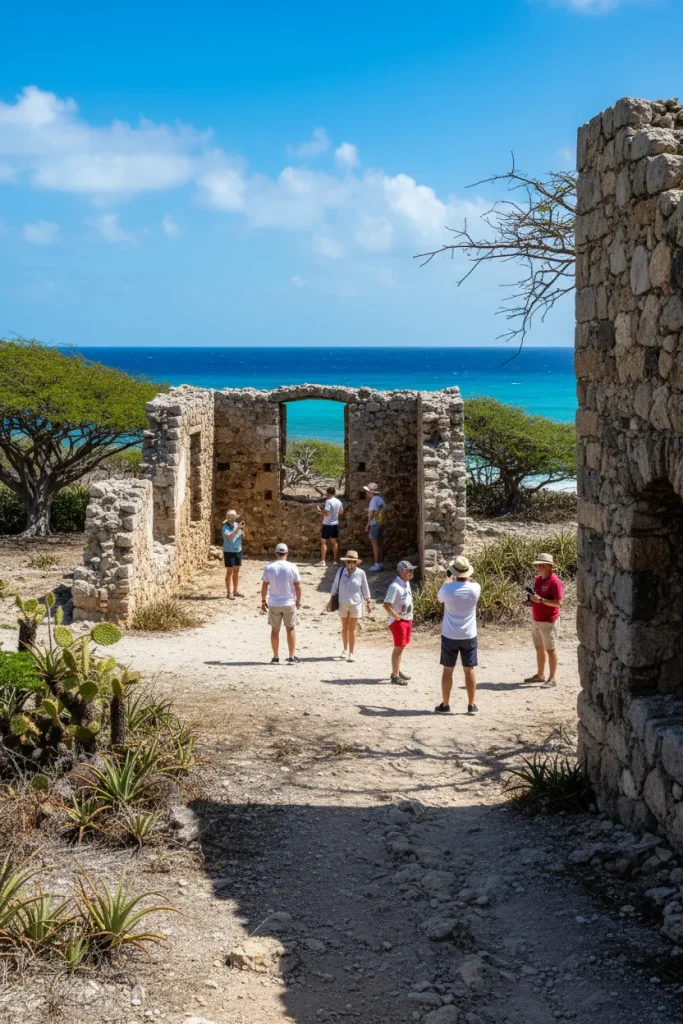
Trying to choose between a cultural tour or history tour in Aruba? The best option depends on what you want more from the day: Aruba cultural tours are usually better for travelers who want local flavor, food, murals, and everyday island life, while Aruba history tours are a stronger fit if you care more about landmarks, ruins, and the stories behind them.
Aruba is compact — about 70 square miles — and easy to cross, so a well-chosen cultural vs history tour can pack a surprising amount into a day. Temperatures stay warm year-round with a steady trade wind, which makes exploring forts, murals, and island landmarks comfortable for most travelers.
If you want flavors, music, and street art, cultural tours focus more on local life, including San Nicolas murals, food stops, and live performances. If colonial sites, gold mill ruins, and chapel history interest you more, history tours usually center on places like Fort Zoutman and Bushiribana.
Guests often help make the choice easier. “The jeep safari from ABC Tours showed us Arikok’s wild side and the island story in one day”,
said Sarah from Boston. Marco, visiting from Miami, shared, “The San Nicolas mural walk made Aruba feel alive — great local guides and stops for tasting.”
By the end of this guide, you’ll know whether an Aruba cultural vs history tour fits your travel style better.
✅ Browse Aruba Tours On Viator
Planning what to do? Explore our Aruba Tours & Things to Do guide for tours, activities, and trip ideas.
Planning a trip to Aruba? Explore our Aruba Guides for hotels, tours, beaches, and travel tips.
Why Choose an Aruba Cultural Vs History Tour: What to Expect
Deciding between a cultural or history tour in Aruba comes down to what you want to feel and learn. Cultural outings focus on living traditions, street art, music, and food. History tours dig into colonial sites, ruins, and the island’s past industries. Both styles create a strong sense of place and work well for travelers who want more than beach time.
Overview of cultural vs. history tour experiences
Cultural tours bring neighborhoods and people to the foreground. You’ll stroll murals, hear local musicians, and stop at market stalls. History tours steer toward preserved sites, museums, and monuments that explain Aruba’s story from indigenous times through colonial eras.
Typical tour length, pace, and formats (walking, jeep safari, guided bus)
Expect variety in Aruba tour formats. Walking tours often run about 60–120 minutes and move at an easy pace. Guided bus tours cover the coast and interior in half-day increments. Open-air jeep safaris can be full-day adventures with rugged drives and short hikes. Pace ranges from relaxed city walks with food stops to active jeep safaris with multiple photo stops.
Common stops you’ll see: Fort Zoutman, Bushiribana Gold Mill Ruins, Alto Vista Chapel, Aruba Aloe Museum
Combined itineraries include historic highlights like Fort Zoutman, which hosts live performances and small exhibits, and Bushiribana Gold Mill Ruins for dramatic coastal photos. Alto Vista Chapel is a quiet, historic worship site with ocean views. The Aruba Aloe Museum offers factory tours and product demos that connect natural remedies to island history.
How tours integrate local culture: murals in San Nicolas, Bonbini Aruba Festival, local food stops
Tours weave culture into the route by adding art walks, festival visits, and tasting stops. A San Nicolas murals tour introduces large-scale street art created by local and international artists. Fort Zoutman often features the Bonbini Aruba Festival with music, dance, and crafts in the evening. Food stops range from beach shacks like Zeerovers to family-run eateries that showcase seafood and local flavors.
- Aruba tour expectations: varied pace, clear local storytelling, and chances to taste island life.
- Aruba tour formats: choose walking for close-up art, bus for broad coverage, jeep safaris for adventure.
- Fort Zoutman tours: short museum visits paired with cultural performances on many itineraries.
- San Nicolas murals tour: often a standalone 90–120 minute stop or part of a full-day route.
Who Benefits Most From Booking a Cultural or History Tour in Aruba
Booking a cultural or history tour helps you see Aruba beyond its beaches. A single well-planned tour can place Alto Vista Chapel, Bushiribana Gold Mill Ruins, and Fort Zoutman into clear context. That makes it easier to choose what to revisit on your own.
First-time visitors who want context beyond beaches
If this is your first trip, a guided itinerary saves time and answers the big questions: why sites matter, how the island developed, and where to taste local food. For many travelers deciding who should book Aruba tour, the guided option is a fast way to learn the island’s story and spot hidden gems you might miss alone.
History buffs interested in gold mill ruins, colonial sites, and church history
Enthusiasts of colonial history find rich material at Bushiribana and Fort Zoutman. Small museums and chapel sites offer tangible links to Aruba’s past. When you study plaques, artifacts, and restored buildings, the island’s industrial and religious threads become clearer.
Cultural travelers seeking art, music, and local traditions
Art lovers and culture seekers will enjoy San Nicolas mural walks and live events like Bonbini Aruba Festival. Tours that include local performances and food stops let you meet artists and hear stories about community revival. This Aruba cultural tour audience values authentic interactions and soundtrack moments that stay with them.
Families and multi-generation groups — accessible stops and highlights
Family groups benefit from curated stops that match energy levels and ages. Options such as Renaissance Island visits, easy snorkeling at Baby Beach, and short Arikok park drives offer variety without strain. Parents planning family tours Aruba should check child restrictions at Flamingo Beach and choose operators who tailor pace and safety for kids and grandparents.
Travelers focused solely on beach time or nightlife may prefer free-form beach hopping instead of structured tours. Use the tour to orient yourself, then decide which places deserve a longer visit on your own.
Top Cultural and Historical Sites Included on Aruba Tours
Aruba blends white-sand beaches with rugged desert landscapes and a layered history. Tour routes tend to mix hands-on nature with compact cultural stops so you leave with stories, not just photos.
Renaissance Island highlights including Flamingo Beach
Renaissance Island is a short boat ride from Oranjestad and a true draw for many visitors. If you aim to see the famous Renaissance Island flamingos, plan ahead: limited tickets sell out fast and the hotel reserves priority for guests.
Boats run frequently and the island opens early. Note that flamingo access can be time-restricted for children, while nearby Iguana Beach remains family-friendly.
Arikok National Park: Natural Pool, Fontein Cave, wildlife and indigenous cave drawings
An Arikok National Park tour covers diverse terrain across more than a fifth of the island. Expect a rugged ride to the Natural Pool, known locally as Conchi, and a chance to view Fontein Cave’s Arawak drawings.
Wildlife sightings and dramatic rocky coastline make this stop feel remote, even though it’s a standard on many island itineraries. Bring sturdy shoes and water when you visit independently.
Bushiribana Gold Mill Ruins and the island’s early industry story
The Bushiribana Gold Mill Ruins sit on the north shore and tell a clear story about Aruba’s 19th-century gold rush. Ruins are photogenic and easy to pair with a short on-site explanation from a guide.
Fort Zoutman and the Bonbini Aruba Festival for live cultural performances
Fort Zoutman anchors Oranjestad’s historic district and houses a small museum. Weekly events like the Bonbini Aruba Festival bring music, dance, and crafts to one place, making it ideal for an evening cultural stop.
San Nicolas art murals and local street art tours
San Nicolas has become a canvas for local and international artists. Choose a self-guided mural walk if you like to move quickly, or book a two-hour guided tour to hear artist stories and neighborhood history.
- Quick tip: Mix and match stops—combine an Arikok National Park tour with Bushiribana for a nature-plus-history day.
- Timing matters: Buy Renaissance Island tickets early and check festival schedules for Fort Zoutman events.
How to Choose the Right Tour Provider and Type for Your Needs
Pick a tour that fits your pace and energy. Some travelers want a relaxed half-day to see murals and a chapel. Others prefer a full-day adventure to reach rugged spots and snorkeling beaches. Knowing your priorities helps when you choose Aruba tour provider and compare offerings.
Compare full-day vs. half-day options
- Full-day outings like ABC Tours’ Island Ultimate Jeep Safari run about 9.5 hours and visit multiple highlights: Natural Pool, Baby Beach, snorkeling stops, and Flamingo Island. These tours often include more ground covered and a meal or beach time.
- Half-day or themed tours focus on a shorter list of attractions. Pick a mural walk or an evening Fort Zoutman experience if your schedule is tight or you want a gentler tempo.
Look for included logistics
- Confirm hotel pickup and drop-off to avoid extra taxi costs.
- Check if park entry fees, boat transfers to Renaissance Island, snorkel gear, or meals are included. Some operators leave Renaissance Island tickets out of the base price.
- Ask about group size and guide language so you know what on-board attention to expect.
Assess accessibility and comfort
- Open-air 4x4s are fun and authentic, but they expose you to wind, dust, and sun. If you prefer shade and stability, a bus or private transfer is better.
- Hikes in Arikok and visits to the Natural Pool require sure footing. Travelers with mobility limits should choose tours with shorter walks or paved stops.
- Museum and town walks need comfortable shoes and a steady pace. Ask about restroom availability on longer trips.
Check reviews and rankings
- Use TripAdvisor and operator pages to read recent guest notes on crowding, timing, and value. Attractions like Renaissance Island and Aruba Aloe Museum commonly appear in top lists.
- Look for mentions of clear Aruba tour logistics: who handled pickup, whether snorkel gear fit, and how entrance fees were handled. Those details reveal how seamless the day will feel.
- Pay attention to specific praise or complaints about Island Ultimate Jeep Safari and similar full-island experiences to set realistic expectations.
Decide with your group in mind. If kids or older relatives join, prioritize comfort and shorter transfers. If you crave discovery, the longer routes and rugged vehicles deliver memorable stops and local stories. Choosing well starts with a clear list of must-sees and a quick check of what the tour actually includes.
Costs, Practical Tips, and What to Pack Before Booking
Planning a cultural or history tour in Aruba starts with a quick budget check and a smart packing list. Prices vary by operator and length, so knowing typical inclusions saves surprises on the island. Read listings carefully to see whether meals, park fees, or snorkel gear are part of the price.
Typical price ranges and inclusions
- Full-day jeep safaris tend to cost more but often include multiple stops, hotel pickup, and some equipment. Confirm what the tour covers before you reserve.
- Renaissance Island day tickets for non-hotel guests commonly run near $125 and can sell out on high-demand days.
- Museum admissions, such as Fort Zoutman, are low-cost—expect small fees around $5 for many heritage sites.
- Some operators bundle park fees, snorkel gear, and lunch. Ask up front so you can compare Aruba tour costs accurately.
Seasonal and weather considerations
Aruba stays warm year-round, with steady sunshine and trade winds that shape beach days. Wind can kick up sand and make the sea choppier, which affects snorkeling and small-boat excursions.
Peak travel months raise prices and demand, so book early if you aim to travel during holidays or winter break. Off-peak travel may offer lower Aruba tour costs and fewer crowds.
Essential items to bring
- Reef-safe sunscreen Aruba requires for many operators and beaches to protect coral and marine life. Pack a trusted brand that lists avobenzone, zinc oxide, or non-nano mineral filters.
- Hat, sunglasses, and a refillable water bottle to stay comfortable in heat and wind.
- Lightweight layers when the trade winds pick up, plus sturdy sandals or closed-toe shoes for Arikok National Park hikes.
- Your own snorkel gear if you prefer familiar equipment; some tours supply masks and fins but quality varies.
- A small amount of cash and a card—remote stops may have limited payment options.
Transport and logistics
Renting a car gives you freedom to explore at your own pace and can be cost-effective if you dodge tourist-price traps. Local buses offer cheap routes, while taxis are convenient for short trips or late returns.
Many tours include hotel pickup and drop-off, which adds convenience and can justify slightly higher Aruba tour costs when time and ease matter. Compare taxi fares and rental rates to decide whether independence or guided convenience fits your trip.
Before you book, make a checklist: confirm inclusions, check the refund policy for weather, pack reef-safe sunscreen Aruba, and decide whether independence with a rental car beats the simplicity of tour pickup.
Common Concerns and Drawbacks to Consider
Before you book, it helps to know the practical limits of touring Aruba. The island offers fantastic sights, but there are real Aruba tour concerns that can change your plans. Read on for sensible precautions and choices that keep your trip smooth.
Wind and weather are constant factors. Trade winds make beaches feel cooler, and they can whip sand across exposed shorelines. Open-air jeep safaris and small boat transfers can be bumpy on windy days. If you’re sensitive to sun-blown sand, pick sheltered coves or rent beach chairs with umbrellas to stay comfortable.
Costs add up faster than you expect. Meals, cocktails, attraction fees, and taxis on Aruba can be pricier than on many Caribbean islands. Many travelers note higher grocery and dining prices near high-traffic areas like Palm Beach. To manage budget, consider local eateries off the main strip and compare full-day tours against single-site entry fees.
Limited access is a common issue on popular stops. Renaissance Island ticket limits are real: non-hotel guests must buy a finite number of day passes, which can sell out on busy days. Timed entries apply at some attractions and during festivals. Check ticket windows and reserve spots early when possible.
Rugged terrain affects activity choices. Sites such as the Natural Pool and some Arikok National Park trails involve uneven rock, steep steps, or narrow paths. These areas may not suit travelers with mobility challenges. Ask tour operators about alternative routes or modified itineraries that include easier, walkable cultural neighborhoods and mural districts.
- Plan for wind by choosing sheltered beaches and bringing layers.
- Compare tour inclusions so fees don’t surprise you mid-trip.
- Watch Renaissance Island ticket limits and book in advance when needed.
- Confirm accessibility options if mobility is a concern.
Knowing these Aruba tour drawbacks up front lets you pick tours that match your energy level and budget. With a little planning, you can avoid common pitfalls and focus on the authentic experiences that make Aruba memorable.
Real Guest Quotes and Quick Testimonials from Tour Participants
Travelers leave candid notes that help you decide what to book. Read a mix of praise, plain talk about crowds and cost, and practical hints you can use before you go.
Positive impressions:
“Island Ultimate Jeep Safari was worth every penny.”
“Our guide hit all the highlights — Natural Pool, Bushiribana, and Flamingo Beach in one day.”
“Small group, great local snacks, and a clear schedule made the day easy to enjoy.”
Balanced feedback:
“Beautiful spots, but expect crowds at Renaissance Island and some viewpoints.”
“Pricey beach bars felt touristy compared to local shacks like Zeerovers.”
“Wind can change the vibe fast; bring a windbreaker for open jeep rides.”
Practical guest tips:
- Arrive early at Renaissance Island to secure seating and the best flamingo views.
- Book Natural Pool and Arikok tours in advance for high season dates.
- Use the San Nicolas visitor map for a 90-minute mural walk, or join a 2-hour guided mural tour for deeper stories.
Money-saving pointers from travelers:
- Stay near Eagle Beach or an Airbnb off the main strip to cut lodging costs.
- Compare inclusions across tours so you don’t pay twice for the same ferry or gear.
- Ask locals for restaurant suggestions to avoid overpriced tourist venues.
For broader context, check recent Aruba tour reviews and Island Ultimate Jeep Safari reviews to see patterns in praise and complaints. These guest tips Aruba collect real-world advice that helps you plan smarter and enjoy more of what the island offers.
Conclusion
If you’re asking, should I book Aruba tour, the short answer is: yes, if you want faster context and a deeper appreciation beyond beaches. An Aruba Cultural Vs History Tour conclusion is that each option serves a clear goal. Choose a cultural tour to meet local artists, taste street food, and feel live music in San Nicolas. Pick a history-focused outing to explore Bushiribana Gold Mill Ruins, Fort Zoutman, and small museums that explain Aruba’s past.
For the most complete view, consider a full-day jeep safari like Island Ultimate Jeep Safari. It blends Arikok landscapes, the Natural Pool, and historic stops into one route. Be ready for wind, higher costs, and uneven terrain when you head off-road. If mobility or calm pacing matters, a half-day guided bus or walking tour may fit better.
Before you book, confirm what’s included—hotel pickup, park fees, or boat transfers to Renaissance Island—and pack reef-safe sunscreen, a hat, and water. Book high-demand tickets for Renaissance Island or Natural Pool tours early. Read recent reviews on TripAdvisor, Viator, or GetYourGuide to match the operator’s reliability with your comfort level.
Take one of these tours early in your trip to orient yourself. Once you see the island’s history, murals, and hidden coves, you’ll know which beaches and neighborhoods deserve more time. Aruba rewards curiosity; step off the sand for a few hours and you’ll uncover stories, flavors, and views that make the island feel even more like “One Happy Island.”