
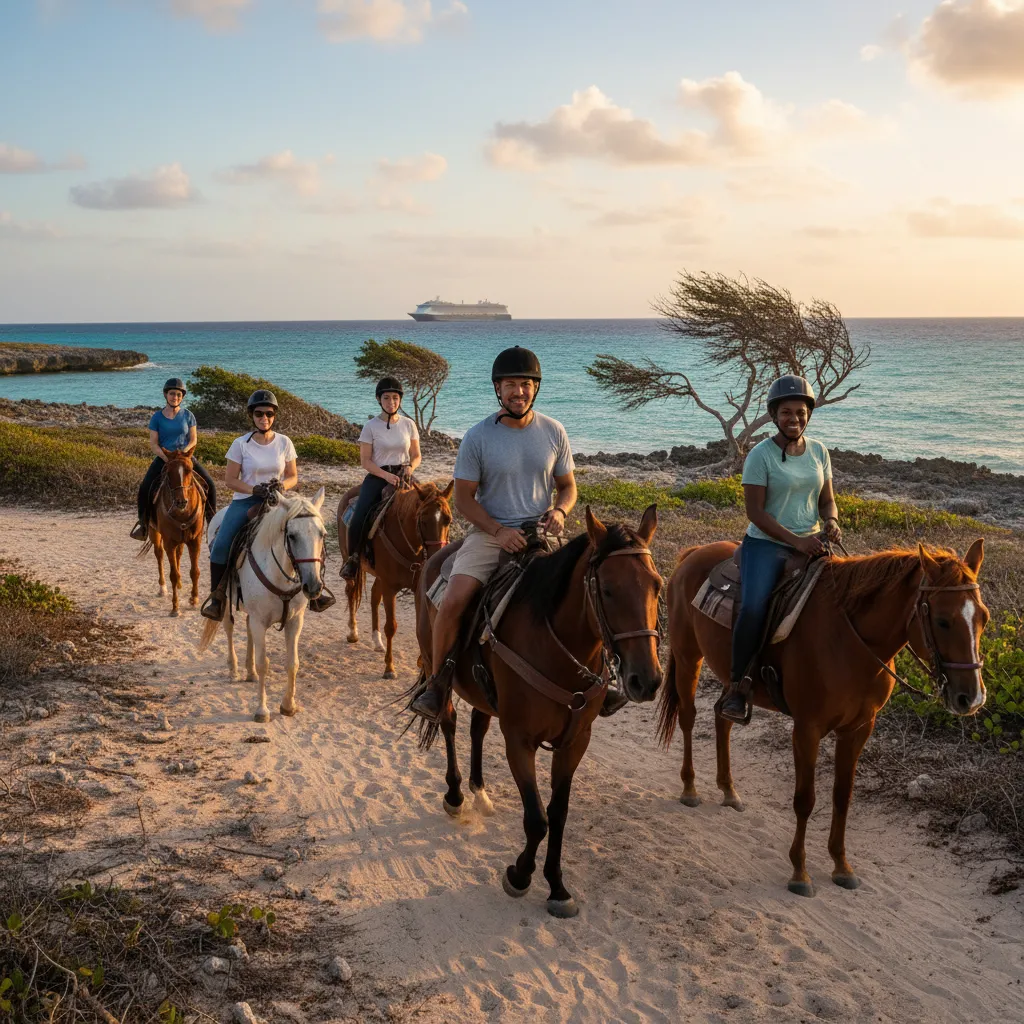
Trying to decide if an Aruba horseback riding tour is worth making time for? For many travelers, it is — especially if you want a quieter, more scenic kind of adventure than a typical sightseeing trip. A beach horseback ride can be a great fit if you love ocean views, open space, and a slower-paced experience that still feels memorable.
The Aruba coastal ranch sits where scrub meets sand, and many routes pass places like Bushiribana Gold Mill Ruins, Budui Beach, Wariruri Beach, and other rugged stretches of coastline. That mix of scenery, history, and peaceful riding is a big part of why so many travelers enjoy it.
Guests say it best. “The beach horse ride was peaceful and the guide pointed out hidden coves we never would’ve found,” said Emily from Boston. Another traveler, Carlos from Miami, shared, “This Aruba horseback tour felt more like an adventure than a tourist stop—great for photos and quiet moments.”
Practical details matter too. For helpful horseback riding tips, wear long pants, closed shoes, and reef-safe sunscreen, and check the weight limit and departure times before you book. Those small details can make a big difference in how comfortable the ride feels.
✅ Browse Aruba Tours On Viator
Planning what to do? Explore our Aruba Tours & Things to Do guide for tours, activities, and trip ideas.
Planning a trip to Aruba? Explore our Aruba Guides for hotels, tours, beaches, and travel tips.
What to Expect on a Horseback Riding Tour in Aruba
This ride feels like a short island escape. You’ll mount up at a coastal ranch and follow trails that open onto beaches, dunes, and rocky viewpoints. Expect a guided pace that balances steady walking with photo stops so you can take in the ocean and historic sites without feeling rushed.
Overview of the coastal ranch experience
The Aruba coastal ranch beside the sea, gives riders direct beach access and a mix of terrain. Routes often thread past the Bushiribana Gold Mill Ruins, Budui Beach, Wariruri Beach, the Baby Natural Bridge viewpoints, Hidden Valley, and the Hidden Lagoon. Guides shape the Aruba horse tour itinerary to highlight these landmarks while keeping the group small for a more personalized adventure.
Rides run about 1.5 hours. That length makes the excursion easy to add to a half-day plan and leaves time for snorkeling, a beach lunch, or shopping in Oranjestad after you return.
Languages, pickup logistics, and voucher requirements
Guides typically speak English, Spanish, and Dutch, which helps when they describe geology, local flora, and island history. Most operators offer hotel pickup and drop-off from main areas like Eagle Beach and Oranjestad. Confirm pickup times when you book so you avoid delays.
Bring a printed voucher or have a digital copy ready to show the driver or ranch staff. Common start times are morning and late afternoon slots, roughly 09:00–10:30 and 16:00–17:30. Ranches may close on Sundays, so check availability in advance.
Included features and highlights
Standard Aruba horse ride inclusions generally consist of a guided ride, a safety briefing, and helmets. Tours pause at scenic photo points such as the Gold Mill Ruins and Baby Natural Bridge area. Small-group emphasis means more stops and tailored instruction for first-time riders.
- Guided trail with trained guides and safety orientation
- Multiple scenic stops for photos and short walks
- Helmet use and bottled water often noted in the Aruba horse ride inclusions
Confirm specifics like photography options, exact helmet policy, and any seasonal highlights before you book so the Aruba horseback riding what to expect matches the reality on your day of riding.
Who This Tour Is Best For — Ideal Riders and Travel Styles
Aruba horseback riding fits travelers who like a slower, more intimate way to explore the coast. If you enjoy ocean views, photo stops at ruins and natural bridges, and a rhythm that favors discovery over speed, this ride will appeal. Think of it as a compact island tour that blends beach time with light adventure.
Adventure seekers and beach lovers
Riders who crave shoreline scenery and hidden viewpoints will value the mix of sand, dunes, and short trail sections. Stops at spots such as Bushiribana Gold Mill Ruins give you a chance to step off the horse and soak in history and landscape. For anyone asking who should do Aruba horseback riding, list those who want memorable coastal photos and the kind of quiet exploration cars can’t deliver.
Families, couples, and small groups
Small-group rides are designed for intimacy. Couples enjoy the relaxed pace, families appreciate hands-on guidance, and friend groups like the shared, unhurried time together.
If you’re wondering whether this is the best for families Aruba horse ride options, note that half-day formats suit parents who want a curated outing without a full-day commitment. Guides keep things safe and personal, which helps younger riders feel comfortable.
First-time riders versus experienced equestrians
Beginners find the guided format welcoming. Instructors offer clear briefings and steady mounts, which makes Aruba beach ride beginners feel secure. Wear long pants and firm shoes, and avoid loose hats that strong breezes could take.
Experienced riders will like varied terrain, though the pace stays guided rather than freeform. Check rider limits before booking: typical horseback riding Aruba weight limit lands near 104 kg (about 229 lbs). Verify medical and pregnancy restrictions to be sure the outing fits your needs.
What To Know Before You Book — Practical Tips, Safety, and Packing Advice
A few practical details make a big difference on the ranch. Aruba’s climate stays warm year-round with steady trade winds, so mornings and late afternoons feel best for a ride. Small-group slots move fast, and some operators close on Sundays, so check availability early and keep your itinerary flexible.
Booking windows, seasonality, and weather considerations
Book preferred times as soon as you confirm travel dates to lock in morning or sunset departures. Tours run year-round thanks to Aruba’s position outside the hurricane belt, but gusty winds can change start times. Ask the ranch about holiday schedules before you finalize plans.
What to wear and bring
Wear long pants and firm shoes such as sneakers; flip-flops are unsafe for riding. A secure, low-profile hat helps with sun and wind. Pack reef-safe sunscreen Aruba requires, plus water and a phone or camera for the shoreline photo stops.
If you get motion sick, bring remedies. Sunglasses and a lightweight long-sleeve shirt add sun protection without heat. These simple choices improve comfort and safety during the ride.
Health, weight limits, and accessibility
Confirm weight limits before booking; many ranches set a maximum near 104 kg (229 lbs). If you have a recent injury, are pregnant, or have chronic medical concerns, check restrictions and consult a physician when needed. Accessibility can be limited by sand and uneven terrain, so contact the operator about assistance options.
Logistics: pickup, vouchers, and timing
Verify hotel pickup zones—common areas include Eagle Beach and Oranjestad—and leave extra time for transport. Bring your printed Aruba tour vouchers, as many ranches require a hard copy to redeem the activity. Confirm what’s included in the price, such as helmets, bottled water, and photos, so there are no surprises on arrival.
How the Ride Compares to Other Aruba Activities — Value and Experience Tradeoffs
Picking between island experiences comes down to pace and perspective. A horseback ride offers a slower, sensory-led way to meet Aruba’s coastline. You feel the rhythm of the horse, hear surf at the edges of dunes, and stop at spots you might miss from a moving vehicle.
Unique selling points versus jeep safaris and beach tours
Jeep safaris such as Island Ultimate cover many sites fast and add rugged off-road thrills. A horseback tour narrows the focus to coastal views, beach edges, and close-up historic sites like the Bushiribana Gold Mill Ruins. That quieter, deliberate tempo appeals if you want connection rather than a checklist.
Photo opportunities and Instagram-worthy moments
Small-group rides pause at standout locations: the Gold Mill Ruins, Baby Natural Bridge area, Hidden Lagoon, and white-sand dunes. These Aruba photo spots provide golden-hour shots and less-touristy angles. Guides have time to frame scenes and help with camera positioning, so you get more composed photos than you might on crowded beach tours.
Cost vs. time investment
At about 1.5 hours, horseback outings fit neatly into half-day Aruba tours plans. They deliver a memorable highlight without using your whole day. Compare prices against full-day jeep safaris or guided snorkeling trips based on what matters most: duration, variety, or the horseback element itself.
- Good if you want intimacy, scenery, and calm.
- Less ideal if you prefer many sites and rugged off-road sections.
- Works well combined with snorkeling or beach time the same day.
For a balanced Aruba activities comparison, think about vibe over volume. If you value quieter photography spots and a sensory, slow pace, horseback vs jeep safari Aruba often tips toward horseback. If you want maximum site variety and a longer outing, pick a jeep or full-day tour instead.
Guest Quotes and Real Experiences — What Visitors Say About the Tour
Visitors often sum up their trip with vivid details about the coast, the horses, and the guides. Reading Aruba horseback rider reviews and rider experiences gives a clear picture of what most guests value: views that stop you mid-ride, patient instruction for beginners, and a pace that feels relaxed yet adventurous.
Common compliments from past guests highlight three things.
- Scenery: many riders praise the coastal panoramas and key stops like the Gold Mill Ruins and the Hidden Lagoon.
- Guides: guests mention friendly, attentive guides who tailor the ride to skill levels.
- Group size and timing: the half-day format and small groups make the outing feel personal and memorable.
Typical constructive feedback tends to be practical and easy to address.
- Clothing: several riders recommend long pants for comfort and protection while in the saddle.
- Wind and hats: beach breezes can be strong; secure headwear is a common tip.
- Logistics: double-check weight limits and bring a printed voucher to speed check-in.
Below are short, representative testimonials you can use as guest quotes Aruba horse tour entries.
- “Amazing coastal ride — photo spots were unreal and the guides were great with beginners.”
- “Perfect half-day activity. Small group vibe made it feel personal and adventurous.”
- “Bring long pants and a printed voucher — made the check-in smooth.”
- “Watch for wind on the beaches; secure your hat.”
Scanning Aruba horseback rider reviews and guest quotes Aruba horse tour helps set expectations. Rider experiences Aruba repeat the same themes: beautiful views, helpful staff, and a few simple prep steps for a smoother day on the trail.
Conclusion
For the straightforward Aruba horseback riding final verdict: this tour is worth it for beach lovers, couples, families with riders who meet the ranch’s limits, and independent travelers who want a scenic activity without spending a whole day. The small-group coastal format delivers real local scenery, calm guided rides, and memorable photo stops like the Gold Mill Ruins, Baby Natural Bridge, and the Hidden Lagoon. These moments make the question is horseback riding Aruba worth it land on the side of yes for many visitors.
To get the most from your time, book early and pick a morning or late-afternoon slot. When you book Aruba horse tour tips into your plan, confirm hotel pickup, printed voucher rules, and guide language options (English, Spanish, Dutch). Check the ranch’s maximum weight policy (around 104 kg) and any health or pregnancy restrictions before you go.
Packing smart matters: bring reef-safe sunscreen, long pants, firm shoes, a secure hat, and a camera for standout shots. Compare departure times, read recent guest reviews, and confirm logistics with the operator. If you want a curated coastal experience that blends natural beauty, local history, and gentle adventure, go ahead and book a spot — you’ll likely leave with strong memories and great photos.