
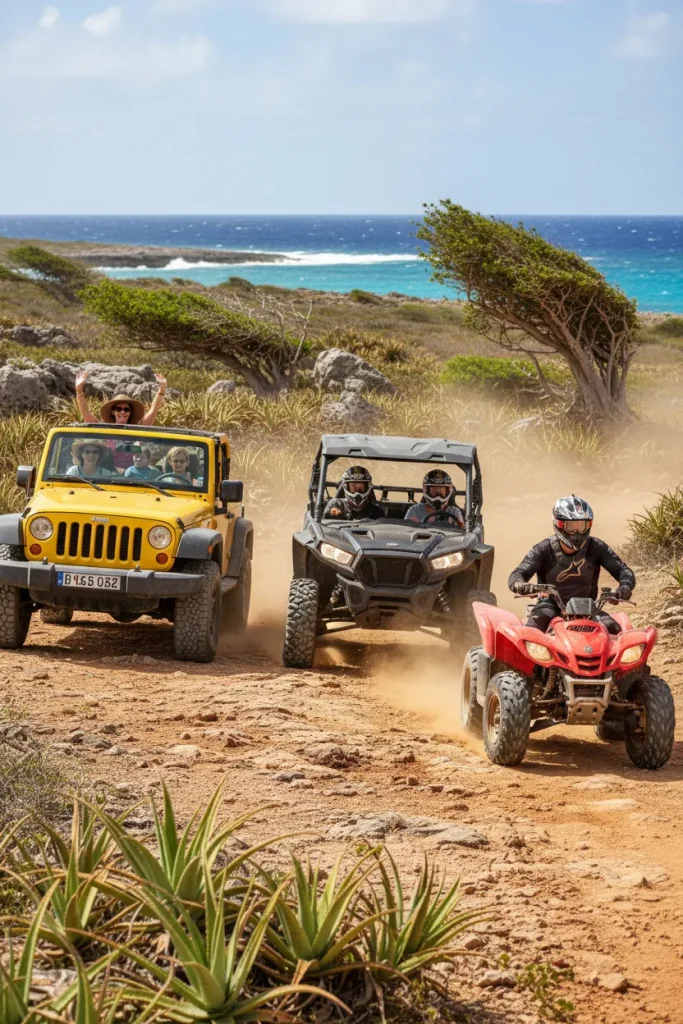
Trying to decide whether a Aruba Jeep Vs UTV Vs ATV Tour is the better fit for your trip? The short answer is that it depends on your travel style: a Jeep tour is usually the better choice for comfort and families, a UTV tour suits travelers who want a smaller-group off-road adventure, and an ATV tour is often best for a more rugged, adrenaline-filled ride. Either way, Aruba off-road tours are one of the fastest and most exciting ways to see the island’s wild side.
Aruba’s size and steady weather make adventure tours practical and fun year-round. Stops like the California Lighthouse, the Bushiribana Gold Mill ruins, and viewpoints inside Arikok National Park pack a lot of scenery into a single day. Many operators pair a Jeep tour or an ATV tour with snorkeling or a sunset dinner for an even more memorable island experience.
Guests often share useful impressions. One traveler wrote on TripAdvisor that a UTV tour felt like a private safari—our guide pointed out iguanas and told the history of the Natural Bridge lookout.
Another guest praised a Jeep tour, saying the pace was relaxed and perfect for families. On travel forums, visitors mention combo experiences near the California Lighthouse as unforgettable but recommend booking ahead.
✅ Browse Aruba Tours On Viator
Planning what to do? Explore our Aruba Tours & Things to Do guide for tours, activities, and trip ideas.
Planning a trip to Aruba? Explore our Aruba Guides for hotels, tours, beaches, and travel tips.
Why Choose an Off‑Road Tour in Aruba: Jeep, UTV, or ATV Adventures
Aruba’s landscape invites exploration. The island’s arid hills, coastal cliffs, and sandy tracks make it perfect for 4×4 outings. You can go far in a short time, so a half‑day tour often packs in several highlights without long drives between stops.
What makes Aruba ideal for off‑road touring
Dry, open trails and reliable weather mean tours run year‑round with fewer cancellations than many Caribbean islands. That consistency keeps plans simple for families and independent travelers alike.
Many routes thread through rugged coastlines and parklands best reached off the beaten path. Guides point out landmark spots such as Alto Vista Chapel, the Bushiribana Gold Mill ruins, and the Natural Bridge lookout while adding local stories that bring each stop to life.
Types of experiences offered by local operators
Operators design trips to match tastes and energy levels. You can choose from relaxed, scenic drives to adrenaline‑packed rides over Aruba off-road terrain. Family groups often favor Aruba scenic jeep tours for their balance of comfort and views.
Combination excursions are popular. Expect options like an off-road snorkeling combo Aruba that pairs coastal driving with underwater stops, or private outings that end near the California Lighthouse tour area for sunset photos and snacks.
Arikok National Park tours focus on nature, history, and short walks to hidden pools. Transfer and tour companies, including local transport specialists, often handle pick-up and drop-off so you can focus on the day rather than logistics.
- Guided history — short talks at ruins and memorials to add context.
- Active options — stops for snorkeling, cave pools, or brief hikes.
- Customized routes — private tours that match pace and interests.
Whether you rent a vehicle for solo exploration or book a licensed operator for a curated route, off‑road adventures let you see more of Aruba in an authentic way while staying safe and comfortable.
Aruba Jeep Vs UTV Vs ATV Tour
Choosing between a Jeep, UTV, or ATV shapes the pace and feel of your Aruba day. Each vehicle has a distinct personality that affects routes you can take, how you pack, and what kind of protection you get from sun and wind. Use this comparison to match the ride to your group, energy level, and appetite for hands‑on driving.
Key differences in vehicles and ride style
Jeep tours use enclosed or open 4x4s and SUVs that steer smoothly on paved stretches and hold their own on rough tracks. They suit mixed itineraries and larger groups who prefer shaded seats and room for luggage or picnic gear.
UTVs are side‑by‑side machines seating two to four people. They have roll cages and seat belts, so you get a stronger sense of control and shared driving without sacrificing basic protection. Couples and small groups who want a spirited yet safe ride lean toward UTVs.
ATVs are single or tandem quads built for nimble handling and tighter trails. They cost less and deliver direct feedback from the terrain. Thrill seekers and solo riders who enjoy hands‑on control pick ATVs for a more exposed adventure.
Safety and comfort considerations for each option
Jeeps give the most shelter from sun, dust, and wind, making them a good choice if comfort or limited mobility matters. You trade some intimacy in driving for stability and shade. For families, a Jeep often ranks high when looking for the best Aruba tour for families.
UTVs balance protection and exposure. They include safety features like roll cages and belts, but you still feel the breeze and dust. Pack sun protection and goggles if you choose a UTV. Confirm age and license requirements before you book to avoid surprises.
ATVs expose riders to the elements and require balance and basic riding skill. Operators typically insist on helmets and a short safety briefing. If you prioritize maximum maneuverability and local trail access, ATVs win on that front, though Aruba adventure safety depends on following operator rules and wearing proper gear.
Think about itinerary needs: UTVs and ATVs reach narrow coastal tracks that Jeeps cannot, while Jeeps carry more people and gear across mixed roads. For a quick Aruba vehicle tour comparison, list who will ride, how much gear you have, and how much driving you want to do.
- Jeep: comfort, shade, mixed‑terrain access.
- UTV: shared driving, moderate protection, trail agility.
- ATV: nimble, low cost, high exposure.
Who Each Tour Type Is Best For — Choosing by Traveler Profile
Pick a vehicle that matches your energy, mobility, and idea of fun. Aruba’s landscape rewards different kinds of rides. Below are quick profiles to help you decide whether a Jeep, UTV, or ATV fits your group and day.
Family travel and travelers seeking comfort
Families and guests who prefer shade, steady seating, and space do best in Jeeps. A Jeep tour lets kids and older adults sit comfortably while a guide points out sights like the California Lighthouse or flamingo lagoons. For those planning meal stops or easy photo ops, a Jeep offers the ease and shelter many families want and often represents the best Aruba tour for families.
Adventure seekers and small groups
Couples and close friends who want a mix of control and comfort should consider UTVs. These vehicles handle rougher tracks than Jeeps and still provide seat belts and roll cages for safety. For a hands-on day driving through Arikok National Park or along coastal trails, a UTV for small groups creates social, photo-friendly moments and ranks high among Aruba tour for couples looking for shared adventure.
Budget travelers and solo explorers
Solo travelers on a budget often choose ATVs for their low price and nimble access to ruins, natural pools, and narrow trails. Riding an ATV suits people comfortable with manual controls and exposure to sun, wind, and dust. If you’re planning Aruba solo travel ATV, expect closer contact with the landscape and more freedom to steer where you want.
- Consider mobility needs and whether participants prefer to drive or ride as a passenger.
- Think about tolerance for sun, dust, and a bumpy ride when choosing a vehicle.
- Small friend groups often favor a Aruba UTV for small groups for balance between comfort and thrill.
Match your group’s priorities to the ride: comfort and inclusivity point to a Jeep, shared hands-on fun points to a UTV, and low-cost, high-thrill trips point to an ATV. Use these quick profiles to pick the tour that fits your pace and purpose.
What To Know Before You Book: Practical Tips, Rules, and What To Pack
Booking ahead saves stress. Reserve early for peak season tours, sunset dinners at Faro Blanco, and flamingo visits at Renaissance Island. Read guest reviews and check operator credentials before you pay. Many local companies, including Kini Kini Transfer & Tours, list testimonials and payment options; search Kini Kini Transfer reviews to confirm reliability and pickup details.
Aruba tour booking tips include confirming pickup times and whether airport or hotel transfers are included. Ask about group size and whether the route visits Arikok National Park or swimming stops. If you plan to dine after the tour, book your table before you go.
Rules protect you and the island. Verify age limits and license requirements for drivers. Expect a safety briefing and required helmets or other gear. Guides will show you safe lines and sensitive areas to avoid, such as cultural sites and fragile habitats.
Aruba off-road safety means following guide instructions and staying on marked trails. Respect Arikok National Park rules and do not touch or remove artifacts. Operators emphasize protective measures to keep guests and the environment safe.
Pack light, but pack right. Essentials include reef-safe sunscreen, closed-toe shoes, sunglasses, a hat, and a light long-sleeve layer for sun protection. Bring water, a small backpack, and cash for tips or snacks even if cards are accepted.
If you’ll ride an ATV, think about what to bring for comfort and protection. A simple checklist for what to pack Aruba ATV: reef-safe sunscreen, sturdy shoes, a dry pouch for electronics, and a spare shirt. Waterproof or dustproof pouches keep your phone and camera safe during pool or cave stops.
Practical choices make the day smoother. Renting a car gives freedom, but guided tours give local navigation, history, and curated routes without guesswork. Double-check cancellation policies and ask about weather plans before finalizing your booking.
Real Guest Quotes and Typical Guest Experience Highlights
Travelers often sum up Aruba off‑road days with clear, specific memories. Read through recent Aruba tour reviews and you get a sense of why guides who share local history stand out. Guests mention stops like the Natural Bridge, Bushiribana Ruins, and California Lighthouse as photo highlights that make the ride feel like a short island education.
Voices from recent travelers
“ATV/UTV Tour of the island was not only fun but eye‑opening to learn the history of the island.”
“We loved renting a UTV to explore sights like the Natural Bridge, Bushiribana Ruins, and California Lighthouse.”
“Book a sunset dinner at Faro Blanco months in advance.”
These common notes appear in Aruba UTV testimonials and ATV tour guest quotes. Guests praise guides for mixing scenic driving with cultural context. They point to well‑timed photo stops and friendly briefings before each trail. When transfers are included, reviews often name the transport team for being punctual and professional.
Common praise and complaints to watch for
Frequent praise in Aruba tour reviews highlights knowledgeable guides, modern fleets, and scenic variety. Visitors compliment routes that alternate coastline views, ruins, chapels, and natural pools. Many reviews mention that a Faro Blanco sunset review was the perfect way to end a day of exploring.
Typical complaints in ATV tour guest quotes focus on rushed itineraries and surprise fees. Some guests felt the schedule tried to cover too much ground, which reduced time at favorite stops. Others reported unexpected add‑ons when pricing details were unclear.
Kini Kini Transfer testimonials appear in posts that emphasize smooth logistics. Operators who list clear pricing and include transfers get higher consistency in positive feedback. Guests who prepare for dust and sun—helmets, eyewear, long sleeves, water—report more comfort and better photos.
- Pick an operator with transparent pricing and safety notes.
- Read Aruba UTV testimonials for repeated praise about guide quality.
- Check ATV tour guest quotes to confirm itinerary pace and stops.
- Reserve evening plans early if you want a Faro Blanco sunset review to end your day.
Conclusion
Choosing between Aruba Jeep Vs UTV Vs ATV Tour comes down to the kind of day you want. If you want comfort, space, and a relaxed drive with family or mixed mobility, a Jeep tour is the smart pick. For a balance of protection and hands-on adventure, choose Aruba UTV Jeep ATV — UTVs are ideal for couples and small groups who want rugged trails without full exposure.
If raw thrill and close-to-the-land access are your goals, an ATV delivers the most excitement and the tightest trail access at a lower price, provided you’re comfortable with manual handling and wind in your face. No matter which vehicle you pick, look for the best Aruba off-road tour operators, read recent guest testimonials, and verify credentials, age rules, and safety briefings before you book.
Pack reef-safe sunscreen, closed-toe shoes, a hat, sunglasses, water, and gear protection for dust and electronics. Reserve popular add-ons early — like Faro Blanco sunset dinners or flamingo visits — so your day flows without surprises. Follow local rules, respect natural sites, and you’ll get the most authentic and freeing off-road experience Aruba has to offer.