
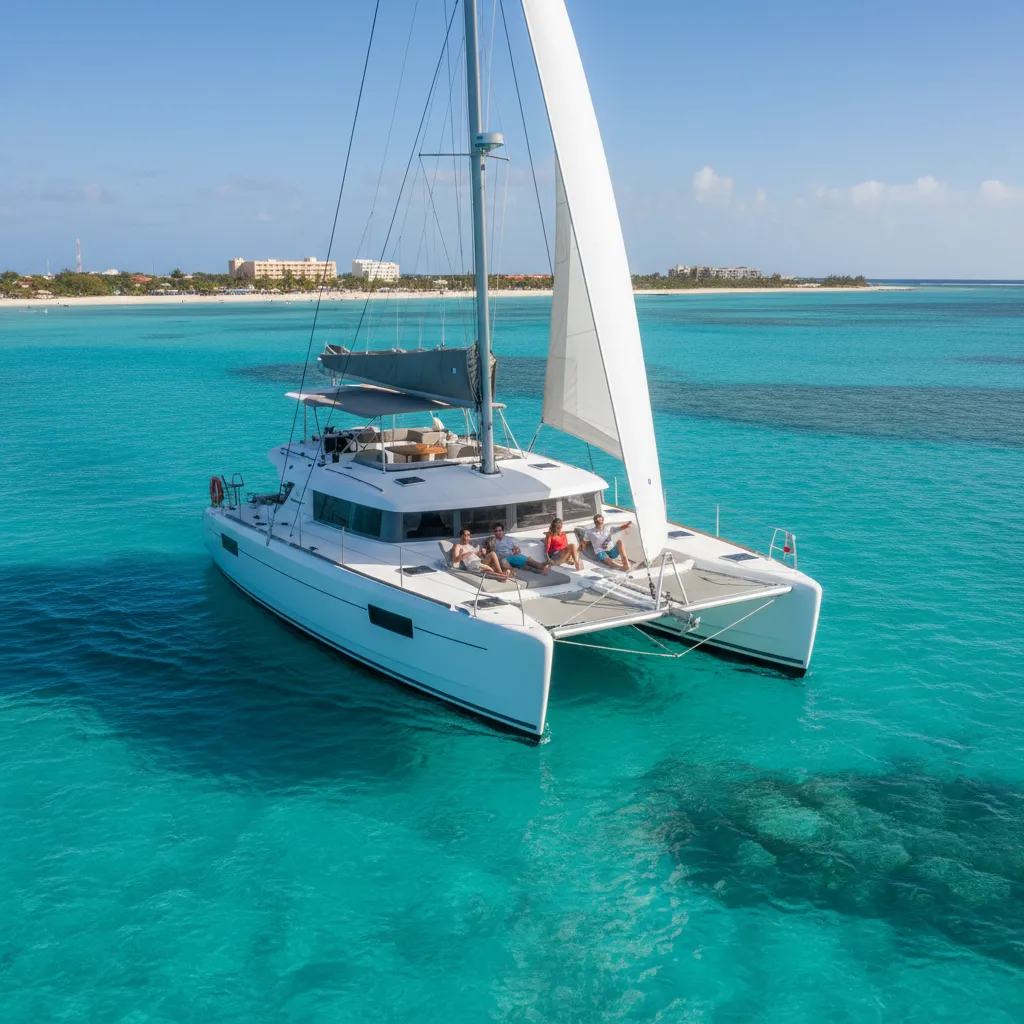
Wondering if a catamaran tour in Aruba is the right fit for your trip? For many travelers, it is — especially if you want an easy mix of scenery, snorkeling, and time to relax on the water. The key is choosing the right style: a shared sail for a fun social vibe, a sunset cruise for a more romantic feel, or a private catamaran for a more personal experience.
Most catamaran tours leave from the Palm Beach area near Pelican Pier, which makes logistics simple for many hotel guests. These trips often include guided snorkeling in Aruba at popular spots like Malmok Reef or the Antilla shipwreck, along with shaded seating and helpful crew support.
If you want more privacy, a private catamaran tours can work especially well for birthdays, anniversaries, weddings, or a honeymoon sunset. Shared tours are usually better for travelers who want a lively atmosphere, drinks, music, and an easier price point.
Guests say it best. “We booked a private catamaran for our anniversary and watched the sun melt into the sea—perfect.” That kind of feedback explains why catamaran trips are one of the easiest ways to match Aruba’s water-and-sunset vibe to your travel style.
✅ Browse Aruba Tours On Viator
Planning what to do? Explore our Aruba Tours & Things to Do guide for tours, activities, and trip ideas.
Planning a trip to Aruba? Explore our Aruba Guides for hotels, tours, beaches, and travel tips.
What a Catamaran Tour Experience In Aruba Actually Looks Like
A catamaran outing in Aruba blends relaxed pacing with a few set steps: check-in, a short safety briefing, and then time on the water. You get a clear idea of logistics before anyone unties lines, which helps you relax into the day and spot the right camera angles for island shots.
Typical departure point and logistics
Most shared sailings meet at Pelican Pier, the small marina behind the Holiday Inn Resort on J.E. Irausquin Blvd. Plan to arrive about 30 minutes early to check in and store a bag. If you book a private charter, operators often use the same dock and may offer complimentary transfers from high-rise hotels like Marriott or Barceló.
Booking and payment are flexible. Operators accept credit cards or cash, and you can reserve by website, email, WhatsApp, or through your hotel concierge at properties such as Playa Linda or Marriott Ocean Club. For families, early arrival smooths the boarding of kids and gear.
Onboard layout, amenities, and safety
Catamarans are designed for comfort and socializing. Expect shaded lounge areas, open foredecks for sunbathing, and onboard restrooms. Crew keep spaces tidy and help passengers move around the vessel safely.
Safety gear is standard: life jackets for all ages, snorkel vests required for water entry, and a stocked first-aid kit. Crew perform regular vessel inspections and offer brief snorkeling lessons for beginners. This hands-on support makes the experience welcoming for first-timers.
Boat amenities Aruba travelers appreciate include sanitized masks and fins, snorkel jackets, and cooler storage for phones. Many tours include unlimited beverage service—cocktails, mocktails, wine or soft drinks—while private charters often provide an open bar and a wider snack selection like wraps, fruit sticks, and local pastries.
Typical itinerary and stops
Most snorkeling-focused routes aim for clear, protected sites. Common stops include Malmok Reef, Boca Catalina, Catalina Bay, the Antilla Shipwreck, and Spanish Lagoon. Captains adjust the sequence based on sea conditions, visibility, and guest skill levels.
Morning departures often deliver calmer water and brighter underwater views. Sunset cruises trade snorkeling time for sweeping horizon colors and a relaxed atmosphere. If seas get choppy, crews shift to sheltered spots or invite guests to enjoy scenic cruising instead of swimming.
Private charters let you set priorities: your preferred Aruba catamaran departure time, specific Aruba snorkeling stops, how long to linger at each site, and which boat amenities Aruba will include for your group. That control turns a good trip into a personalized island memory.
Who Should Book a Catamaran Tour Aruba — Best Fit by Traveler Type
Catamaran trips suit many travelers. Pick a shared cruise for lively company or a private charter when you want control over pace, food, and stops. Below are practical notes to help you choose the style that fits your group.
Families and kids
Parents find a family catamaran Aruba trip easy to manage. Crews hand out snorkel vests and offer beginner guidance, so children can try snorkeling safely while others stay on deck. Private charters give families room for naps, picky eaters, and timing around toddlers’ schedules.
Couples and honeymooners
Couples often reserve a private sail for a quiet experience. A romantic sunset Aruba cruise creates the backdrop many couples want for anniversaries or vow renewals. You can request specific music, champagne, and a secluded anchorage to make the moment feel personal.
Party groups and celebrations
Groups booking an Aruba bachelorette boat will find operators experienced with celebrations. Boats commonly carry a dozen to two dozen guests and come set up for music, open-bar options, and catered snacks. Choose a private charter when your group needs a full-party vibe and dedicated crew service.
Non-swimmers and guests with mobility considerations
Non-swimmers can enjoy the view from deck while guides stay close at swim stops. Catamarans are steady platforms, which eases seasickness worries for many. Mobility limitations require a quick call: some vessels offer boarding assistance but not full wheelchair access. Private bookings help match the right boat and crew to your needs.
What’s Included and What to Expect in Price and Value
Before you book, know what a typical shared sailing includes and what you might pay to upgrade. Shared trips usually supply sanitized masks, fins, snorkel jackets and basic instruction so everyone can enjoy the reef. You’ll find shaded seating, onboard restrooms, life jackets and light snacks on many departures. Some operators offer unlimited beverages as part of the package.
Meetups are most often at Pelican Pier; transportation is not always provided. Crew members handle safety checks and follow local eco-guidelines to minimize reef impact. Ask about the exact list of catamaran inclusions Aruba offers for the tour you pick so there are no surprises on arrival.
Private charters give a different level of service and flexibility. A private booking comes with exclusive use of the vessel, captain and crew, fuel and standard safety equipment. Basic snorkel sets arrive with most private boats, and many packages feature an open bar Aruba style with cocktails and nonalcoholic options included.
Food on private charters often ranges from simple wraps and sandwiches to fruit platters, bagels with smoked salmon and local bites like pastechi. Beer may be excluded from the base price on some boats but operators can add it on request. Optional extras such as water toys, professional photos and power snorkeling devices raise the comfort and fun factor for an extra fee.
Price for private trips varies widely. Expect a typical range roughly between $800 and $4,000 based on vessel size, duration and extras. Half-day charters usually cost about 60–70% of a full-day rate. Keep Aruba private charter prices in mind when planning groups or celebrations, because splitting the total can make a private experience more affordable per person.
To evaluate per-person value, compare what’s included rather than the headline cost. A $2,400 charter for 20 guests equals about $120 each, which can beat shared fares once you factor in exclusivity, music choices and tailored timing. Check whether transfers, beer, premium drink brands and quality snorkeling gear Aruba provide are covered before you commit.
Peak-season demand from December through April pushes rates up and reduces availability. Booking earlier secures better slots and can lock in lower rates. In shoulder months you may get more flexibility and add-ons at a discount, so weigh seasonal timing when assessing total value.
How to Book, Timing, and Cancellation Policy You Should Know
Ready to lock in a sailing day? Planning ahead makes a big difference, especially when you want to book catamaran Aruba trips during busy periods. Below are clear steps and timing tips to help you secure the right boat, time, and terms for your group.
Booking timeline and peak-season advice
- Private charters: aim to reserve 2–6 weeks ahead in peak season Aruba, which runs December–April.
- Large groups or special dates: book 4–12 weeks out for holidays, weddings, or events to get the larger-capacity catamarans you need.
- Off-season flexibility: May–November offers more last-minute options, but sunset cruises book fastest year-round.
- Group size matters: small parties often find same-week slots; big groups need more lead time to secure space and crew.
How to book and what to confirm
- Research trusted operators via TripAdvisor reviews and hotel concierge suggestions, then contact companies directly by website form, email, or WhatsApp for quotes.
- When enquiring, give exact details: total guests, preferred date and start time, trip length, snorkel versus sightseeing priorities, food needs, and any mobility concerns.
- Confirm in writing the meeting point and time, included amenities such as open bar and snorkel gear, whether transfers are provided, restroom availability, and maximum guest capacity.
- Ask about extra fees for add-ons and get the specific cancellation policy Aruba operators apply before you pay a deposit.
- Deposits commonly run 25–50% to secure the booking; the balance is due before departure or on the day of the cruise.
Cancellation, rescheduling, and weather policies
- Many operators offer full refunds for cancellations at least 72 hours before departure; cancellations inside 72 hours or no-shows are often non-refundable.
- Rescheduling is often allowed without penalty when space is available; transferring a reservation to another guest usually works with ID verification.
- Weather rules: light rain rarely cancels a trip. Operators cancel only for unsafe sea conditions or severe weather, then offer a reschedule or full refund.
- Refund timing depends on your payment provider and usually posts within 3–5 business days.
- Late arrivals typically do not get refunds, but crews will often help find an alternative date when possible.
If you want to book catamaran Aruba options now, start by narrowing dates and guest count, then reach out to a few reputable operators for comparisons. Clear written confirmation of the Aruba charter booking details and the cancellation policy Aruba will save time and reduce stress on the day of your cruise.
Safety, Gear, and Eco-Friendly Practices to Expect
Before you step aboard, crews run clear pre-departure briefings that cover Aruba snorkeling safety and basic sea etiquette. Guides give short snorkeling lessons, show how to fit masks and fins, and remain close to novice swimmers. Vessels are checked regularly, carry first aid kits, and have life jackets and snorkel vest Aruba options for guests who want extra buoyancy.
Safety measures and onboard procedures
Captains explain emergency procedures, point out shaded lounges and non-slip decking, and note where restrooms and handrails are. If a guest has medical concerns or is pregnant, operators ask that you disclose this in advance so they can advise which activities to avoid. Crew members trained in CPR and rescue techniques monitor the water while passengers snorkel.
Gear quality and options to bring your own
Most operators supply sanitized, high-quality masks, snorkels, and fins. If you prefer personal gear, bring it and staff will help ensure a proper fit. Private charters often add water toys and optional devices like battery-powered underwater scooters for extra cost.
Pack reef-safe sunscreen Aruba, a dry bag, a towel, and non-slip sandals. Motion-sickness meds are useful for choppy days. If you need extra flotation, request a snorkel vest Aruba before the trip so you feel confident in the water.
Eco-friendly and respectful wildlife practices
Good operators teach a Snorkel Kindly Aruba approach: keep distance from turtles and fish, never touch coral, and follow guide directions to avoid disturbing marine life. Boats often carry refillable water jugs to reduce single-use plastic and encourage reusable bottles onboard.
Turtle sightings can be unforgettable, but guides stress observation from afar to protect their natural behavior. These small, practical rules help preserve Aruba’s reefs while letting you enjoy the island’s marine world responsibly.
Real Guest Quotes and Typical Feedback from Recent Sailings
Guests often write about the crew first. Kind, skilled teams who teach snorkeling basics and guide families get repeated praise in Aruba catamaran reviews. You hear about calm morning sails with clear water and sunset trips that deliver those postcard skies.
Positive highlights guests mention
- Crew professionalism and friendly guidance that makes beginners feel safe and confident.
- Comfort features like shaded lounges and onboard restrooms that keep the trip relaxed.
- Open bars and varied snacks—sandwiches, fruit platters, local pastechi—are called out as crowd-pleasers.
- Private charters get high marks for flexible itineraries and success hosting birthdays, vow renewals, and bachelor/bachelorette parties.
- Morning snorkeling trips earn compliments for calm seas and excellent visibility; sunset cruises win for ambiance and photos.
Common criticisms and cautions from guests
- Weather changes can force schedule shifts. Some guests are disappointed when swimming is limited for safety reasons.
- Beer may be excluded from open-bar packages or cost extra, which surprises travelers expecting full pours.
- Accessibility limits matter. Many tours are not wheelchair accessible and some land excursions suit only those without certain medical conditions.
- Peak-season availability is tight. Popular sunset slots and larger catamarans fill fast if you wait to book.
How to interpret reviews when choosing an operator
- Seek recent TripAdvisor or Google comments that mention crew responsiveness, snorkel gear cleanliness, and whether advertised inclusions were honored.
- Distinguish weather-related complaints from repeated sanitation or safety issues. A single cancellation for storms is different from a pattern of neglect.
- Prefer operators that state policies in writing—cancellation windows, reschedule options, and deposit terms—and who answer questions by email or WhatsApp promptly.
- For special needs or events, find reviews that describe successful accommodations. Guest feedback Aruba that references handling of private parties or mobility requests is particularly useful.
- Compare verdicts across platforms to see consistent trends. That helps you pick the best catamaran Aruba operator for your trip goals.
Conclusion
If you’re asking should I book a catamaran tour in Aruba, the short answer is: yes, if you want easy access to clear water, guided snorkeling, and a relaxed day on a stable boat. Morning sails give the best visibility for reefs, while sunset cruises make for a low-effort romantic option. Private charters offer the most flexibility for families or celebrations and often deliver the best catamaran value travelers mention in reviews.
Book it when you want skilled crews, good-quality snorkel gear, and a comfortable platform for a mix of swimming, sightseeing, and social time. Skip or look for alternatives if you need full wheelchair access, expect guaranteed wildlife sightings, or aren’t willing to reserve ahead during high season. Many operators meet near Pelican Pier, include open bar and snacks, and follow a 72-hour refund or change window—confirm those details before you go.
Bring reef-safe sunscreen, a towel, and an open attitude for local culture and ocean life. Use this conclusion as your checklist: clarity of purpose (snorkel vs. sunset), accessibility needs, and what’s included in price. When those boxes line up, a catamaran tour can turn a good beach day into a memorable adventure on Aruba’s blue water.